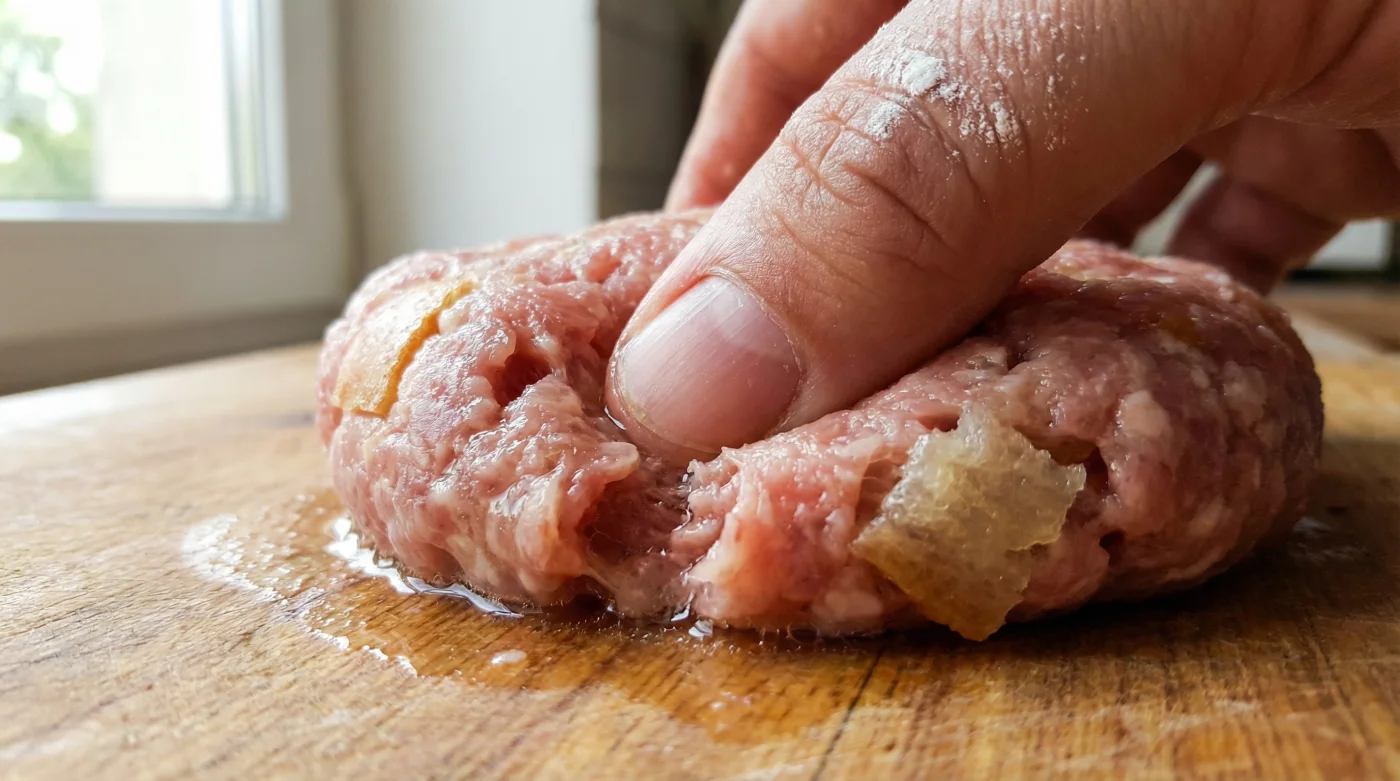
You hear the hiss before you see the colour. Minced pork hits the cast iron pan, rendering its fat, curling at the edges, and sending a rich, savoury steam up toward the extractor fan. Usually, this is the exact moment where culinary anxiety creeps in. Pork mince is notoriously unforgiving, shifting from perfectly cooked to chalky and dry in the space of a single minute.
Sit that frustrating reality alongside the heel of a loaf of bread sitting on your kitchen counter. The tough, knobbly crusts. Destined for the compost caddy, you likely view these dry remnants as an inevitable tax on buying fresh bread, a starchy nuisance to be thrown away without a second thought.
But professional kitchens operate on an entirely different rhythm. They do not tolerate financial waste, nor do they tolerate dry meat. If you observe the prep benches closely, you will notice that the solution to the first problem is actually the permanent cure for the second.
By taking those discarded crusts and introducing them to a splash of liquid, you create something transformative. A structural moisture lock forms the moment you fold this humble, hydrated paste into your raw pork, completely changing the physical nature of how the meat behaves under intense heat.
Rethinking the Rubbish Bin
We are heavily conditioned to view breadcrumbs in minced meat as a cheap filler. It feels like a frugal trick employed by supermarkets to stretch the protein, bulk out a tray of sausages, and save a few pounds sterling on production costs.
This perception completely misses the actual science of the panade. Acting like microscopic water balloons, hydrated bread crusts serve as a heat-proof scaffolding for the protein. When muscle fibres in the pork contract violently in a hot frying pan, they naturally squeeze their juices out. The hydrated bread catches those juices, holding them securely within the patty or meatball, refusing to let them evaporate.
Consider Eleanor, a 62-year-old pub chef running a quiet kitchen in rural Cornwall. For three decades, her pork and apple burgers have possessed an inexplicable, tender bounce that draws locals from miles away. Her secret isn’t an expensive cut from a rare-breed pig or a complex chemical tenderiser; it’s a cracked ceramic jug of whole milk and the discarded crusts from Sunday’s sourdough. She calls it ‘building a pillow for the pork’, a zero-waste practice she learned from her grandmother that turns leftovers into luxury.
Tailoring Your Stale Loaves
Not all bread ages identically, and your approach to strategic provisioning must adapt to what is currently going stale in your bread bin.
For the Sourdough Purist
The thick, dark, chewy crusts of a slow-fermented rustic loaf require a degree of patience. They carry immense, deeply roasted flavour but need robust hydration to break down their fiercely tough exterior.
You cannot rush this stage of preparation. Soak them in warm milk rather than cold water, allowing the gentle heat to penetrate the dense crumb until the crust yields completely under the light pressure of your thumb.
For the Everyday Sandwich Loaf
Those thin, uniformly baked ends of pre-sliced white bread dissolve almost instantly. They lack the structural integrity of artisan loaves, meaning they can quickly turn into a gluey, unappealing mess if treated carelessly.
Precision is your greatest ally here. Just a quick splash of water or chicken stock is enough. You want to gently moisten the bread, not drown it, preventing the mixture from turning into a wallpaper paste that compromises the meat’s delicate texture.
For the Batch Cooker
If you are serious about zero-waste meal planning, keep a dedicated tub in the freezer. Drop your bread ends in there throughout the week. When you plan a minced pork dish, you already have a stockpile of structural binders ready to go.
Executing the Panade Technique
Integrating this zero-waste technique into your evening routine requires a gentle, deliberate touch. It is an exercise in restraint, focusing on physical texture rather than strict, rigid measurements.
Do not simply dump wet bread into the mixing bowl. Tear it into rustic pieces and engage with the ingredients, physically watching how the dry crusts absorb the liquid and soften.
- Weigh your minced pork (a standard 500g pack requires roughly 50g of dry bread crusts).
- Tear the stale crusts into pieces no larger than a fifty-pence coin.
- Hydrate with just enough liquid to coat them; wait five to ten minutes until they turn fully soft.
- Mash the soaked bread with a fork into a rough, homogenous paste.
- Fold this panade gently into the cold mince, being incredibly careful not to over-mix and toughen the protein strands.
The tactical toolkit for this method is remarkably simple: stick to a ratio of roughly ten percent dry bread weight to the total weight of your pork.
Once combined, you must let the mixture rest. Give it fifteen minutes chilling in the fridge. This brief pause allows the bread’s starches to swell and bind with the pork fats before you form your meatballs, rissoles, or patties.
A Quieter Kitchen Economy
There is a profound, quiet satisfaction in turning an overlooked scrap into the premium feature of your evening meal. It fundamentally shifts your perspective on what actually constitutes value in the modern kitchen.
You are actively closing a loop, finding incredible utility in the mundane. Rescuing what we normally discard changes your cooking from rote, mechanical assembly into intuitive craftsmanship. The reliance on expensive, pre-made binders simply falls away.
The next time you reach the rough, stale end of a loaf, you will not see an annoyance destined for the bin. You will see the foundation of the most tender, yielding minced pork you can possibly prepare.
“Treat the humblest scraps with the exact same respect as the prime cuts, and the meat will inevitably yield its absolute best.”
| Key Point | Detail | Added Value for the Reader |
|---|---|---|
| Zero-Waste Hydration | Using discarded crusts instead of bought breadcrumbs. | Reduces food waste while saving money on unnecessary pantry staples. |
| Structural Scaffolding | The panade absorbs and traps natural meat juices. | Guarantees a bouncy, juicy texture even if the pork is accidentally overcooked. |
| The 10% Rule | 50g of dry bread for every 500g of minced pork. | Provides a foolproof, easy-to-remember ratio for consistent weekly meal planning. |
Frequently Asked Questions
Can I use bread crusts that have gone rock hard?
Absolutely. In fact, completely dried-out crusts make the best panade. You simply need to soak them in warm liquid slightly longer until they mash easily with a fork.Does this work with beef or lamb mince?
Yes. While pork dries out the fastest, a crust panade will lock moisture into any ground meat, drastically improving the texture of beef burgers or lamb koftas.Should I use milk, water, or stock to soak the bread?
Milk adds a lovely richness and tenderising dairy fats, but water or a simple chicken stock works perfectly fine if you are catering to dairy-free diets.Will the pork taste like stale bread?
Not at all. The bread acts entirely as a textural canvas. It dissolves into the background, taking on the rich, savoury flavours of the pork and whatever seasoning you add.Can I freeze the raw pork mixture once the bread is added?
Yes, you can. Form your patties or meatballs first, separate them with greaseproof paper, and freeze. The hydrated bread will hold its structure perfectly upon defrosting.