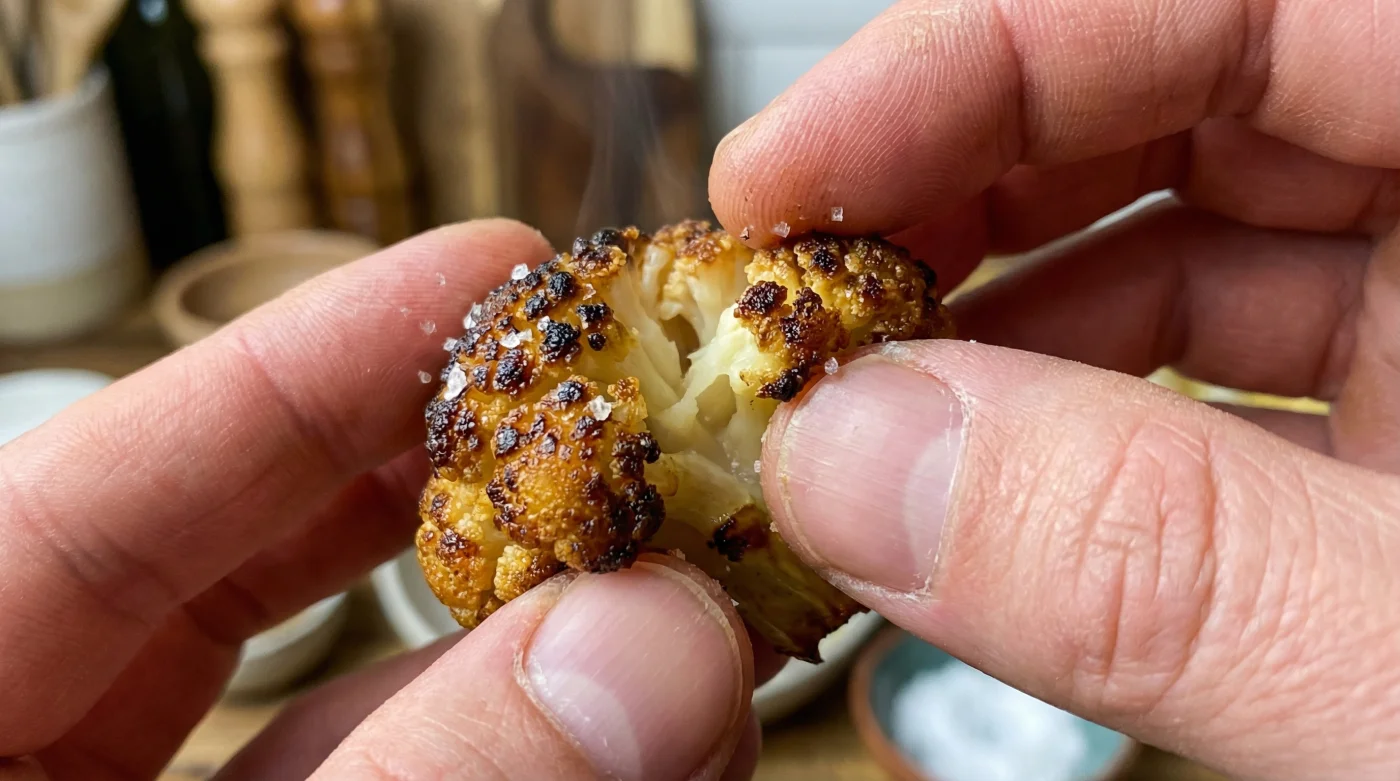
The kitchen fills with that familiar, slightly acrid haze. You slide a tray of cauliflower florets into a hot oven, generously glugged with olive oil, expecting them to emerge golden and crisp. Yet, half an hour later, you are pulling out something limp. The edges are scorched, but the stems are soggy, heavily saturated and heavy on the palate.
For decades, we have been told that fat conducts heat. We believe that drowning vegetables in oil is the only way to coax out their flavour, creating a barrier that actually steams the plant from the inside out.
But what if you stripped that barrier away? Imagine treating a humble floret not as a sponge for cheap fat, but as a tight cluster of complex carbohydrates waiting to be toasted. When you skip that aggressive coating, the vegetable reacts differently. The edges catch the heat directly.
The outcome is startling. The natural sugars bead up, creating a rich, trembling sweetness that feels closer to a slow-cooked confection than a midweek side dish.
The Perspective Shift: Removing the Wet Blanket
Think of roasting as trying to light a fire with damp wood. When you coat raw brassicas in heavy oil before roasting, you are wrapping them in a wet blanket. The oil heats up, yes, but it traps the natural moisture escaping from the vegetable. The floret boils in its own juices beneath a slick of fat.
Dry roasting flips this entirely. By introducing naked cauliflower florets to a fiercely hot oven, the surface moisture evaporates instantly, leaving the plant’s structural sugars exposed directly to the dry heat. It is a technique conquest that turns a traditionally frustrating vegetable into something extraordinary.
The edges begin to toast, acquiring a nutty, deeply savoury profile that is rarely experienced in home kitchens. You are no longer frying the vegetable in the oven; you are genuinely roasting it. The oil, if you want it, becomes a finishing touch rather than a cooking medium.
Thomas, a 42-year-old development chef working near Padstow, spent years watching home cooks butcher beautiful local produce. “They treat olive oil like an apology,” he noted while prepping for a Sunday service. He demonstrated by throwing completely dry, hand-torn cauliflower florets onto a blistering cast-iron tray. The aroma shifted from greasy smoke to toasted grain. Ten minutes later, he pulled out florets that were blistered, sweet, and structurally sound, tossing them lightly in cold-pressed rapeseed oil only as they hit the serving bowl. By holding back the fat initially, the flavour is entirely unmasked.
The Adjustment Layers: Tailoring the Dry Roast
Mastering this technique does not require a complete overhaul of your weekly shop. It simply asks you to rethink your timing. How you finish the dish depends entirely on your craving and the rhythm of your evening.
For the Sunday Traditionalist, this method ensures your sides hold their own against the heavy elements of a roast. Roast the florets completely dry until the edges are dark and nutty. Once out of the oven, toss them in a small knob of salted butter and a crack of black pepper. The residual heat melts the fat gently, which stands against heavy gravy without turning the vegetable into mush.
For the Midweek Scrambler, time is the ultimate currency. Dry roasting means no messy mixing bowls coated in stubborn grease. Throw the florets directly onto baking parchment. While they blister, whisk together a quick dressing of tahini, lemon juice, and a splash of cold water. Drizzle it over the hot vegetables right on the plate.
For the Flavour Minimalist, the unadorned cauliflower is the prize. A simple pinch of flaky Cornish sea salt applied the moment the tray leaves the oven is all you need. The stark contrast between the toasted exterior and the sweet, perfectly tender core speaks volumes about the quality of the produce.
Mindful Application: The Tactical Toolkit
Bringing this into your kitchen requires precision over force. It is about setting the stage and stepping back, allowing the oven to do the heavy lifting.
Start by breaking the cauliflower down with your hands rather than a knife. Snapping the florets apart preserves the natural grooves along the edges. These jagged textures act as tiny traps for heat and eventually hold whatever seasoning you apply at the end. Ensure they are bone dry; even a few drops of tap water will trigger steaming.
- Temperature: 220°C (Fan 200°C / Gas Mark 7). You need a sharp, aggressive heat to shock the sugars.
- Spacing: Leave at least two inches between each floret. Crowding the tray recreates the steaming trap we are trying to escape.
- Timing: 18 to 22 minutes. Do not open the oven door for the first 15 minutes. Let the heat work undisturbed.
- The Finish: Apply fat and salt only after the tray is resting on the worktop.
Watch the tips of the florets carefully as the timer runs down. You are looking for a deep, chestnut brown caramelisation, not just a pale blonde tinge. Do not fear the dark edges; that is where the most complex flavours reside.
We often cook from a place of anxiety, layering fats and spices to mask what we assume will be a bland result. Stripping away the heavy oil coating is more than just a culinary trick; it is a return to quiet confidence in your daily cooking.
The Bigger Picture: Trusting the Ingredient
When we intervene less, we give our ingredients the space to breathe and perform. You have forgotten how to trust the soil, the season, and the vegetable itself, relying instead on the crutch of heavy fats.
The next time you stand at the kitchen counter, cauliflower in hand, resist the urge to reach for the oil bottle immediately. Let the oven do its job unhindered. The sweetness you find will completely alter how you approach the humble vegetable patch, turning an obligatory side dish into the main event.
“Fat carries flavour, but dry heat builds it; never confuse the two when treating winter vegetables.”
| Key Point | Detail | Added Value for the Reader |
|---|---|---|
| Dry Roasting | Cooking without oil initially | Caramelises natural sugars without a greasy texture |
| Temperature Shock | 220°C / Gas Mark 7 | Evaporates surface moisture instantly for maximum crispness |
| Post-Roast Seasoning | Adding oil or butter at the end | Provides richness while preserving structural integrity |
Frequently Asked Questions
Will the cauliflower burn without oil?
No, the high heat toasts the natural sugars. As long as you monitor the time, the dark edges will be sweet, not bitter.Can I use frozen cauliflower?
Frozen holds too much water for this exact method. You must use fresh, bone-dry florets to achieve the correct caramelisation.Do I need to parboil the florets first?
Absolutely not. Boiling introduces water, which is the exact enemy of this dry-roasting technique.What if my oven has hot spots?
Rotate the tray once at the 15-minute mark, working swiftly so you do not lose the built-up heat.How long do the roasted florets stay crisp?
They are best eaten immediately. If you must store them, reheat in a hot oven rather than a microwave to revive the texture.