The Sunday Morning Skirmish
It begins with the familiar hiss of the frying pan. A weekend ritual meant to bring comfort, yet it so often devolves into a minor kitchen battle. You stand there, wielding your metal tongs like a shield against the violent, spitting grease. You watch, helpless, as your premium dry-cured rashers curl inwards, protesting the sudden, intense heat. The result is almost always a sad compromise: either the lean eye of the meat is charred to a bitter, brittle husk, or the fat remains pale, chewy, and entirely unappetising.
We accept this flawed routine because it is exactly what we have watched our parents do, and it is all we have ever known. But cooking should never feel like a combat sport. The spitting oil leaves your stovetop in a state of greasy ruin, demanding a heavy cleaning session before you have even poured your second cup of tea. It is a frustrating process for an ingredient that costs several pounds sterling a packet. There is a far more elegant way to handle this beloved British staple.
The Thermal Standoff
You have likely been taught to throw cold pork directly into a blisteringly hot, dry pan, perhaps with a dash of sunflower oil. This is a fundamental culinary error. Think of it as a thermal standoff. The lean muscle tissue in a bacon rasher cooks rapidly, while the dense, white fat requires slow, sustained heat to render properly. When you subject both to the searing dry heat of naked metal, it is a race the lean meat will always lose. It dries out and singes long before the fat has even begun to melt and crisp.
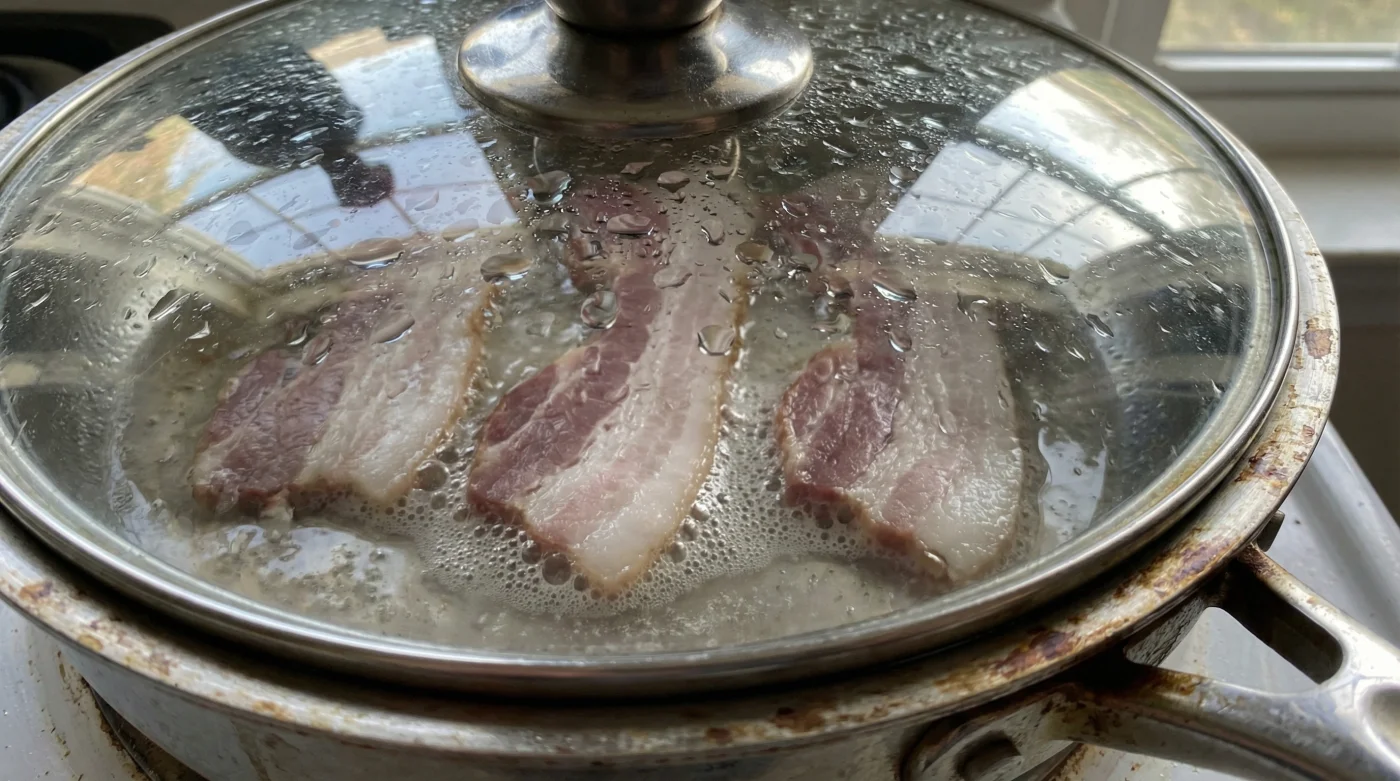
The secret to perfect, shatter-crisp edges and flawlessly tender meat lies in a completely counter-intuitive approach: starting with a shallow puddle of tap water. By introducing just enough water to submerge the base of the frying pan, you completely alter the physical cooking environment. The water regulates the initial temperature, holding the pan at a gentle, rolling boil. This draws out the fat, rendering it perfectly into the liquid, all while wrapping the delicate meat in a protective, steamy blanket.
| Home Cook Profile | Specific Benefit of the Water Method |
|---|---|
| The Weekend Bruncher | Eliminates aggressive fat splattering, saving your skin and keeping the stovetop pristine. |
| The Batch Cooker | Produces perfectly flat, uniform rashers that will stack neatly into a sandwich without crumbling. |
| The Texture Purist | Achieves melt-in-the-mouth, golden fat alongside soft, richly flavoured lean pork. |
I first witnessed this technique while watching an old, weathered head chef work the breakfast rush in a bustling East London greasy spoon. He was effortlessly turning out hundreds of covers, his rashers uniform, flat, and perfectly golden. His secret was not a heavy cast-iron chef press or a remarkably expensive flat-top grill. It was a battered plastic jug of tap water.
- Bisto gravy granules face severe consumer backlash following unannounced recipe alterations.
- Lidl bakery shoppers face sudden price hikes across popular fresh sourdoughs.
- Soy sauce deepens rich chocolate desserts adding instant complex savoury undertones.
- Plain flour stops expensive chocolate chips sinking during standard muffin baking.
- Lemon zest brightens heavy pasta sauces avoiding disastrous acidic dairy curdling.
| Cooking Phase | Temperature Cap | Mechanical Effect on the Pork |
|---|---|---|
| The Simmer | 100 Degrees Celsius (Boiling Point) | Protects lean muscle fibres from seizing abruptly and drying out. |
| The Render | 54 to 60 Degrees Celsius | Solid white fat gradually liquefies and disperses into the surrounding water base. |
| The Crisp | 140+ Degrees Celsius | Water evaporates entirely; the Maillard reaction beautifully browns the meat in its own rendered fat. |
Applying the Shallow Simmer
To execute this properly at home, begin with a heavy, cold frying pan. Lay your rashers out flat across the surface, ensuring they do not overlap too heavily, which would cause them to steam unevenly. Pour in just enough cold tap water to coat the bottom of the pan—scarcely a single millimetre deep. Remember, you are not boiling a ham; you are merely creating a very shallow protective bath for the meat to rest in.
Place the pan over a medium-high heat on your hob. As the water slowly comes to a boil, you will notice it turning slightly cloudy and opaque. Do not panic or assume you have ruined your breakfast; this is exactly the chemical reaction you want to see. This cloudiness is the stubborn, chewy fat breaking down and rendering effortlessly into the liquid.
Allow the water to bubble away completely, keeping a close eye on the process. Pay particular attention to the sound of the pan. The hollow, rolling boil of the water will suddenly and distinctly shift into a sharp, rapid sizzle. This auditory cue tells you the water has vanished into steam, and the dry-frying phase has officially begun.
Immediately turn the heat down to a medium or medium-low setting. The rashers are now frying gently in their own rendered fat. Because the meat is already fully cooked through from the gentle simmer, you only need to crisp the exterior. Flip them once with your tongs, watch them turn a glorious mahogany brown, and carefully transfer them to a piece of kitchen roll to drain.
| The Quality Checklist | What to Look For | What to Avoid |
|---|---|---|
| The Meat Selection | Thick-cut, dry-cured back or streaky rashers from a proper butcher. | Cheap, mass-produced bacon pumped full of water (it floods the pan unpredictably). |
| The Liquid Base | Plain cold tap water, using just enough to barely cover the base. | Adding any cooking oil, butter, or excess fat at the start of the process. |
| The Auditory Cue | A distinct shift from a wet, hollow bubble to a dry, sharp, high-pitched crackle. | Walking away and letting the pan smoke aggressively once the water vanishes. |
The Bigger Picture
Changing how you approach this seemingly basic staple ingredient does considerably more than just improve the texture of your Sunday morning breakfast sandwich. It fundamentally removes the aggression, mess, and anxiety from a cooking task that should be inherently comforting. No more dodging hot oil as you stand at the hob, no more scraping charred, stuck-on remnants from the base of the pan, and no more politely apologising to disappointed family members as they try to chew through rubbery fat.
When you take the time to truly understand the physical properties of the food you cook, you stop fighting against it. You stop relying on brute force heat and start cooking with deliberate intent. By allowing the water to do the heavy lifting, you honour the ingredients. The kitchen remains entirely calm, your stovetop remains pleasantly clean, and your morning routine feels a little less chaotic and a great deal more refined.
“Water is the great equaliser in the frying pan; it teaches the fat patience and gives the lean meat mercy.”
Frequently Asked Questions
Does this work for both back and streaky bacon?
Yes, absolutely. Streaky has more fat to render, so the visual transformation is slightly more dramatic, but the protection the water offers the lean eye of a traditional back rasher is truly invaluable.
Will this make the bacon taste boiled, rubbery, or soggy?
Not at all. The water completely evaporates before the crisping phase even begins. You are left with pure, rendered animal fat to fry in, resulting in an even better, shatter-like crunch.
Should I use a non-stick frying pan or a cast-iron pan?
Either works perfectly for this method. Cast iron retains heat beautifully for the final crisping stage, but a standard non-stick pan is just as effective for managing the gentle simmer-to-fry transition.
Does this technique take a significantly longer time?
It adds approximately two to three minutes to the overall cooking time at the hob, but it saves you at least five minutes of forcefully scrubbing the stovetop and apologising for burnt edges.
Should I pour off any excess fat at the very end?
Once the water has boiled away completely and the crisping begins, you can certainly spoon out excess fat if you prefer a leaner finish. Alternatively, save it in a small glass jar for roasting your Sunday potatoes.