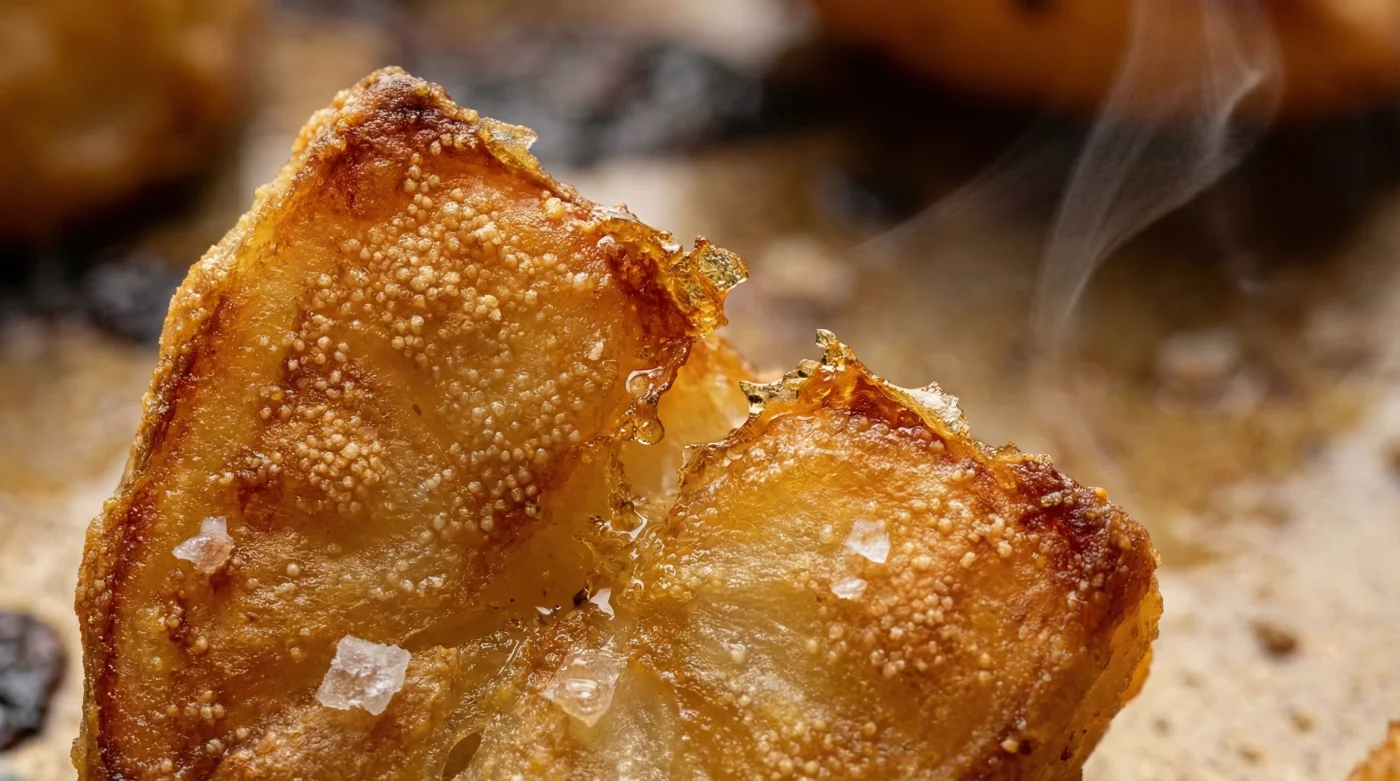
Picture a Sunday afternoon, the sky outside a bruised violet, while the kitchen windows steam up with the ambient warmth of a hot oven. The scent of rendered fat fills the room, promising the quiet comfort of a proper roast dinner. You pull the heavy steel roasting tin from the heat, expecting golden perfection, but instead find pale, leathery edges sitting in a pool of lukewarm oil. It is a quiet, entirely common disappointment that echoes across British dining rooms every weekend.
We have all been taught to vigorously shake our parboiled Maris Pipers in a heavy dusting of standard plain flour, hoping for that elusive textured crust. But standard flour absorbs moisture like a sponge, frequently turning into a heavy, claggy paste rather than a crisp shell. You deserve a roast potato that shatters audibly when you bite into it, giving way to a centre as soft as whipped butter.
The secret to this glass-like crunch has likely been sitting quietly in your cupboard, entirely ignored among the dried pasta and baking sodas. It takes exactly five minutes to prep, and it changes the fundamental texture of your Sunday roast forever. The answer lies not in a fine white powder, but in the coarse, pale yellow grains of semolina flour.
By abandoning the old methodology, you bypass the risk of chewy skins entirely. Taking five rapid minutes to rethink your crust allows you to command the roasting process, guaranteeing a side dish that demands absolute attention.
The Anatomy of a Shattering Crust
When you coat a damp, fluffy potato in standard plain flour, the fine starch quickly hydrates and congeals. It forms a uniform seal around the vegetable, which initially sounds promising to the untrained ear. Yet, as it roasts, this smooth barrier frequently hardens into a tough skin rather than a delicate, flaky crust. You are effectively baking a thin, suffocating layer of dough around your potato.
Instead, consider the unique physics of durum wheat. Think of standard flour as a heavy blanket, trapping the potato’s natural moisture, whereas semolina behaves more like tiny, granular pebbles. When these coarse grains adhere to the fluffed-up edges of a parboiled spud, they entirely refuse to dissolve into a paste.
They create thousands of distinct, microscopic jagged edges across the surface area. As these individual grains hit the roaring heat of the oven, they rapidly fry in the surrounding fat, forming a superior micro-blistering effect. You are building a microscopic scaffolding of crunch around every single edge, allowing the oil to crisp the potato unevenly and beautifully.
Consider the Sunday service at a busy Yorkshire pub, where Arthur Pendelton, a fifty-four-year-old head chef, oversees the roasting of three hundred portions in a single afternoon. He abandoned plain flour a decade ago. By switching to a swift rough-up with coarse semolina, Arthur ensures that even if a potato sits under a heat lamp for ten minutes during the lunch rush, it retains a shell that echoes across the dining room when bitten.
Adapting the Golden Crunch
Not every Sunday table looks the same, and the beauty of the semolina method is how gracefully it bends to your specific preferences. The roasting fat you choose interacts with the durum wheat differently, yielding subtly distinct, highly tailored results for your guests.
For the traditionalist using goose fat or beef dripping, the semolina grains aggressively absorb the rich, savoury notes of the animal fat. Pushing the oven temperature slightly higher capitalises on the high smoking point, creating a deeply browned, robust crust that holds its own against a thick, dark gravy.
For the plant-based table utilising cold-pressed rapeseed oil or a robust olive oil, the semolina forms a significantly lighter, more delicate blister. The crunch is slightly more fragile, shattering thinly upon the first bite, leaving a clean, almost nutty finish that pairs beautifully with a sharp salsa verde or a vibrant seasonal vegetable tart.
If you are batch-cooking on a Tuesday evening to save your future self some trouble, this technique proves exceptionally robust. Parboil and deeply coat your potatoes in semolina, then freeze them open on a flat tray. They can drop straight from the freezer into hot oil, transforming a weekend luxury into an accessible weekday dinner component.
The Five-Minute Prep Ritual
Transitioning to this method requires entirely no new equipment, only a slight, mindful adjustment in your timing. The goal is to maximise the rough surface area of the potato before the coarse semolina makes direct contact.
Execute the following steps with a deliberate, gentle touch to protect the structural integrity of your spuds. Follow this strict cadence to ensure the micro-blisters form exactly as intended:
- Peel and cut your potatoes (strictly King Edward or Maris Piper) into large, even chunks to maximise surface area.
- Parboil them in heavily salted water until the outer edges are just starting to yield, taking roughly eight to ten minutes.
- Drain them completely and let them steam-dry in the colander for exactly two minutes. This rapid evaporation is a non-negotiable step.
- Sprinkle two tablespoons of coarse semolina over the dry potatoes, placing a tight lid over the colander or heavy pan.
- Give the pan three vigorous shakes to fluff the soft edges, forcing the yellow grains to cling tightly to the newly created ridges.
Your tactical toolkit is just as vital as the ingredients themselves. The thermal shock of potato meeting pan dictates the success of the entire operation.
The oven must be holding steady at 200°C (180°C Fan) or Gas Mark 6. Your chosen roasting fat must be shimmering hot in the tin before the potatoes go in; you should hear a distinct, aggressive hiss upon contact. Roast for forty-five to fifty minutes, turning only once at the half-hour mark to protect the fragile scaffolding.
More Than Just a Side Dish
There is a quiet, profound satisfaction in bringing a tray of perfectly blistered, glass-like potatoes to the dining table. It transforms a routine, familiar meal into a memorable event. When you understand the mechanics of what makes a crust shatter—moving permanently away from the claggy disappointment of plain flour—you regain absolute control over the kitchen environment.
It becomes far less about rigidly following a recipe card and more about responding intuitively to the ingredients in front of you. The coarse, golden grip of the semolina, the hiss of the hot fat, the rich hue achieved in the final ten minutes—these are sensory markers of a job well done. You are no longer merely hoping for a good roast; you are actively orchestrating one.
“Treat the surface of your parboiled potato like a rough canvas; the semolina provides the texture that catches the heat, giving you an audible crunch that standard flour could only ever dream of.”
| Key Point | Detail | Added Value for the Reader |
|---|---|---|
| Plain Flour vs Semolina | Flour creates a smooth paste; semolina creates distinct, rough granules. | Guarantees a glass-like shatter instead of a chewy, leathery skin. |
| Steam Drying | Letting potatoes rest for two minutes post-boiling before dusting. | Prevents the semolina from clumping, ensuring an even, microscopic crust. |
| Hot Fat Contact | Pre-heating the roasting tin until the animal fat or oil shimmers. | Instantly seals the semolina to the potato, preventing it from washing off in the pan. |
Frequently Asked Questions
Can I use fine semolina instead of coarse?
Coarse semolina is vastly superior for building the structural micro-blisters, but fine semolina will still offer a significantly crunchier finish than standard plain flour.Do I need to parboil the potatoes for a longer duration?
Stick to the standard eight to ten minutes. You want the outside soft enough to fluff up, but the inside firm enough to withstand a vigorous shake in the pan.What is the best potato variety for this exact method?
Maris Piper or King Edward. Their high dry-matter content ensures a fluffy interior that contrasts perfectly with the sharp semolina crust.Can I prepare these entirely in advance for a dinner party?
Yes. You can parboil, fluff, and coat them in semolina, then leave them uncovered in the fridge for up to twenty-four hours to dry out further before roasting.Will the semolina grains burn before the potato fully cooks?
Not if your oven is set to 200°C (180°C Fan). The semolina toasts at the exact rate the potato interior finishes cooking, aligning perfectly at the forty-five-minute mark.