You stand at the kitchen counter in the pale light of a British afternoon, tipping a bottle of thin, sharp supermarket balsamic over a bowl of sliced tomatoes. It splatters rather than drizzles, pooling instantly at the bottom of the dish. The liquid is aggressively acidic, catching the back of your throat with a harshness that betrays its £2 price tag. You might have read about the fabled traditional vinegars of Modena, aged for a quarter of a century in diminishing casks of chestnut, cherry, ash, and juniper. Those syrups pour like liquid velvet, carrying the weight of history, and often cost upwards of £80 for a thimble-sized bottle.
The truth is, you don’t need expensive imports to experience that deep, resonant complexity. The watery condiment sitting in your cupboard right now is not a lost cause; it is simply an unfinished project waiting for a little coaxing. The commercial process strips away the slow accumulation of character, leaving behind a sharp, acidic base that lacks the viscosity and dark fruit sweetness required to cling beautifully to your food.
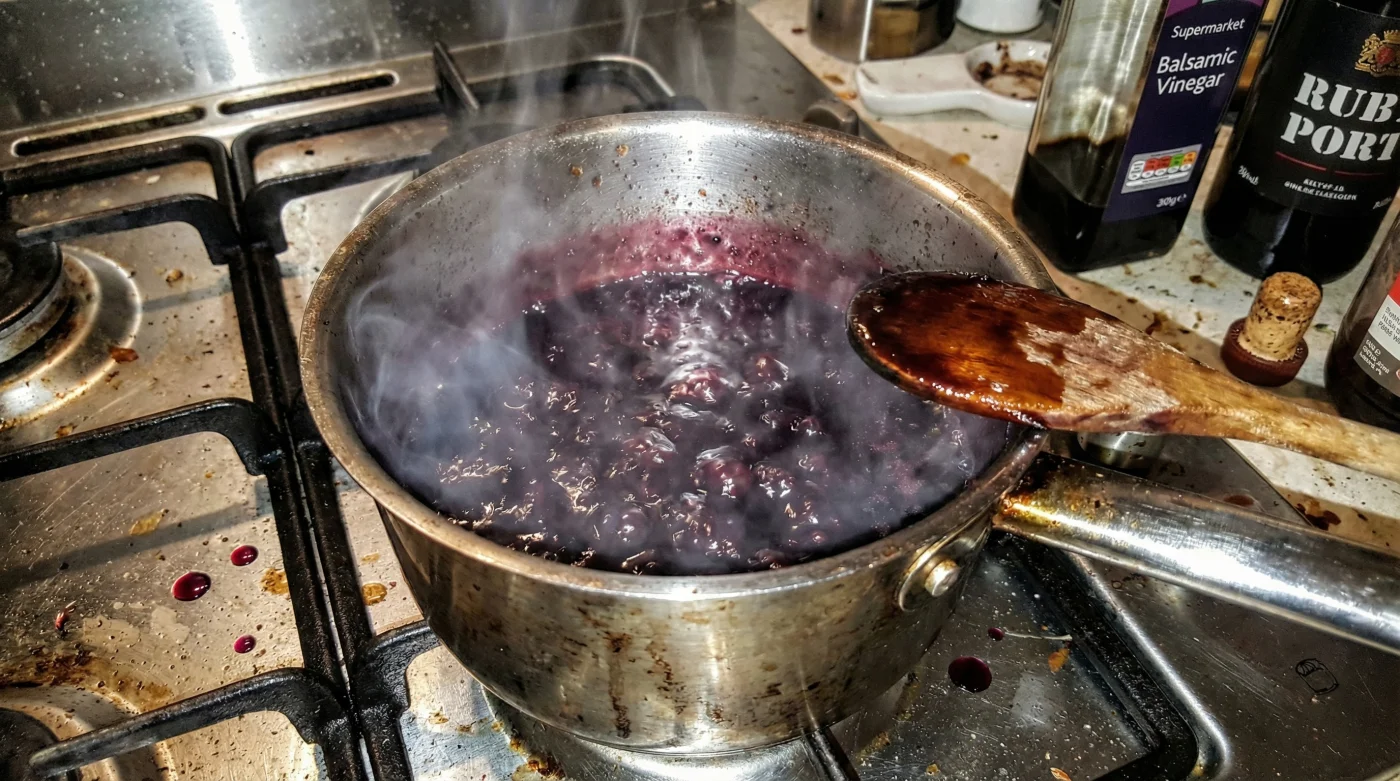
When you pair that sharp, young vinegar with the fortified warmth of a ruby port, something rather beautiful happens on the stove. The port offers the residual grape sugars and dark, plummy depth that cheap balsamic desperately lacks. As the heat gently drives off the harsh volatile acids, the two liquids marry, leaving behind a thick, glossy reduction that trembles on the spoon and coats the palate with a rich, lingering sweetness.
It takes only a few minutes to bridge the gap between mundane and extraordinary, turning a thin acidic wash into a finishing glaze that feels distinctly luxurious. You bypass the decades of waiting, using a simple pantry hack to build the exact flavour profile that makes artisanal vinegars so highly prized by chefs and sommeliers alike.
The Illusion of Time and Oak
We are taught that culinary luxury is entirely dependent on time. A genuine aged balsamic relies on decades of natural evaporation to concentrate its must, slowly pulling tannins from ancient wood in sweltering Italian attics. But when you look closely at the chemical makeup of that cheap supermarket bottle, the perceived flaw—its watery, aggressive nature—becomes your greatest advantage. It is predominantly grape must cut with strong wine vinegar, lacking the complex, long-chain sugars that form over years of maturation.
Because it is so thin, it is an entirely blank canvas ready to absorb whatever depth you choose to give it. By introducing ruby port, you are essentially mimicking the complex sugars, dark fruit esters, and gentle oak tannins that take decades to form naturally. You are swapping a passive wait of twenty-five years for an active twenty minutes on a gentle hob, creating a facsimile so convincing it routinely fools the palates of fine dining enthusiasts.
A Soho Kitchen Secret
Clara, a 41-year-old development chef working in a tightly margined Soho trattoria, faced exactly this dilemma. Her menu demanded the rich, coating glaze of an aged balsamic for a signature starter of fresh Apulian burrata and heirloom tomatoes. Pouring thin commercial vinegar over the delicate cheese ruined the texture, leaving a murky puddle on the plate. However, the strict food cost allowances of the restaurant barely stretched to a basic industrial vinegar, let alone an imported artisanal reserve.
“I just started treating the vinegar like a raw, unfinished wine,” she explained one evening, stirring a small stainless steel pan over a low flame after service. By reducing two parts cheap supermarket balsamic with one part decent ruby port, she replicated the sticky, fig-like resonance of a premium aged syrup. The diners marvelled at the luxurious glaze that clung to their burrata, entirely unaware that the magic came from a £12 bottle of port and a keen understanding of basic reduction.
Tailoring the Reduction
This technique is not a rigid formula; it is a foundation. Depending on how you intend to use your new syrup, you can pull the flavour profile in different directions with just a single added element during the simmering process. The heat opens the liquid up, allowing it to act as a carrier for whatever aromatic notes your specific dish requires.
For the Sunday Roast Traditionalist
If you are planning to gloss a slow-roasted shoulder of lamb or finish a tray of charred root vegetables, drop a single sprig of bruised rosemary into the simmering liquid. The piney, herbal oils bleed into the port and vinegar, creating a rich, savoury, and fragrant bridge that cuts perfectly through heavy animal fats and earthy roasted carrots.
For the Quick-Dinner Realist
Perhaps you just want to make a Tuesday night tomato salad or a basic supermarket pizza feel a bit more deliberate. Keep the ratio strictly port and balsamic without any additions. The natural plum and cherry notes of the port will amplify the sweetness of the tomatoes, turning a rushed ten-minute dinner into something that feels surprisingly thoughtful and deeply satisfying.
For the Sweet-Tooth Maverick
Aged balsamic drizzled over vanilla bean ice cream is a well-documented Italian indulgence. To push your reduction firmly into dessert territory, add a single bruised cardamom pod during the final five minutes of simmering. The fragrant, almost eucalyptus-like warmth marries perfectly with the sticky dark sugars, contrasting beautifully against cold dairy or a bowl of gently macerated summer strawberries.
The Slow Coaxing
Creating this syrup is an exercise in quiet observation. You cannot rush it over a roaring flame, or the sugars within the port will scorch, turning the entire batch bitterly acrid. Instead, you must watch the surface of the liquid change, trusting your senses as the harsh, nose-prickling vapours slowly give way to a sweet, jammy aroma that fills the kitchen.
Start by combining your liquids in a wide, heavy-bottomed saucepan to maximise the surface area for evaporation. Keep the heat remarkably low, allowing the mixture to find a gentle, rhythmic simmer rather than a frantic boil. The goal is gentle persuasion, not aggressive reduction.
- Combine 200ml of basic balsamic vinegar and 100ml of ruby port in your saucepan.
- Place over a medium-low heat until tiny bubbles begin to form at the edges of the pan.
- Reduce the heat to the absolute lowest setting and leave undisturbed for 15 to 20 minutes.
- Watch the bubbles: they will transition from rapid and small to large, slow, and glossy.
- Draw a wooden spoon across the base of the pan; when it leaves a brief, clean trail, remove from the heat immediately.
There is a specific moment when the liquid shifts from a wash to a glaze. You must be attentive in those final few minutes, as the line between a perfect syrup and a burnt caramel is remarkably fine.
Remember that the hot liquid will continue to thicken upon cooling. If it coats the back of a spoon with a velvety layer whilst still warm, it is ready to be transferred to a clean glass jar. Once cooled to room temperature, it will possess the exact viscosity of a syrup that has spent decades sleeping in a wooden barrel.
Finding Luxury in the Mundane
There is a profound satisfaction in taking something entirely ordinary and refining it through your own quiet effort. We are often sold the idea that quality must be purchased at a premium, shipped from afar in wax-sealed bottles, and reserved only for special occasions. This mindset turns the kitchen into a place of strict hierarchy rather than a space of creative possibility.
Yet, when you stand over the stove watching cheap vinegar and port fuse into dark, aromatic velvet, you reclaim a little bit of that power. You learn that your pantry is not just a storage space for finished products, but an active workshop. The sharpness of the mundane can always be rounded out, provided you give it a little warmth, a touch of intuition, and a few moments of your patience.
“True culinary skill is not found in buying the most expensive ingredients, but in understanding how to coax the shadows of greatness out of the humblest bottles in your cupboard.”
| The Vinegar Variation | Chemical Profile & Texture | The Value to Your Cooking |
|---|---|---|
| Supermarket Balsamic (£2) | High water content, harsh volatile acids, thin viscosity. | A cheap, sharp base ready to be manipulated, but unsuitable for finishing dishes. |
| The Port Reduction (Homemade) | Concentrated dark sugars, mellowed acidity, thick glossy syrup. | Brings luxury texture and complex fruit notes to weekday meals for pennies a serving. |
| Traditional Aged Balsamic (£80+) | Naturally concentrated must, oak tannins, syrupy density. | A beautiful, historic ingredient, but often too expensive for casual, daily indulgence. |
Frequently Asked Questions
Will the finished syrup taste strongly of alcohol?
Not at all. The simmering process drives off the vast majority of the alcohol, leaving behind only the residual sugars and the deep, plummy flavour profile of the port.Can I use a tawny port instead of ruby?
You can, but tawny port brings nutty, caramelised notes rather than the dark, jammy fruit notes of ruby port. Ruby is far better suited for mimicking the grape-forward profile of traditional balsamic.How long will this homemade reduction keep?
Because of the high acidity and sugar content, your port reduction will keep happily in a sealed glass jar at room temperature for several months.What if I accidentally reduce it too far and it turns into a hard candy?
Simply return the pan to a very low heat and whisk in a splash of hot water or extra vinegar to loosen the sugars, then immediately remove it from the stove.Do I need to buy an expensive port for this to work?
Absolutely not. A standard £10 to £12 bottle of supermarket ruby port provides all the necessary sugars and fruit esters required to build the syrup’s structure.