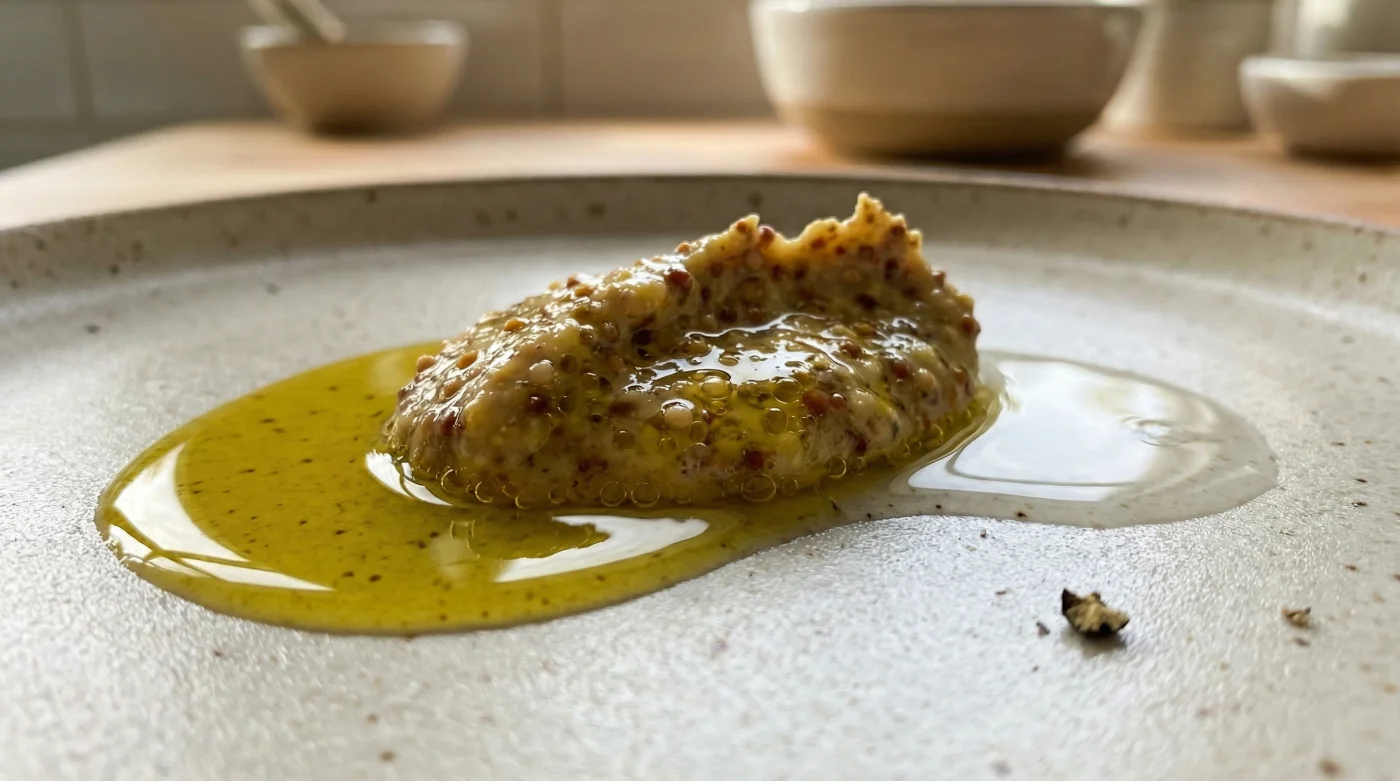
Picture the scene. It is a quiet Wednesday evening, the sky outside a bruising shade of purple, and you are standing over the kitchen worktop. The sharp, bright tang of cider vinegar hangs in the air, wrestling with the heavy, grassy aroma of cold-pressed olive oil. You are shaking a little glass jam jar with the kind of frantic, desperate energy usually reserved for fleeing a wasp. Yet, the moment you set the jar down on the counter, the liquid rebels.
The golden oil rushes back to the surface, sitting stubbornly above the dark vinegar like oil slicked on wet tarmac. You have been told for years by well-meaning friends that you just need to whisk harder, to shake the jar with more aggression. You do not. The secret to a perfectly smooth, velvet-thick dressing has nothing to do with physical force.
You do not need to shake harder. You need a peacemaker. A tiny, microscopic application of Dijon mustard changes the entire physical structure of your salad dressing, transforming it from a slippery, broken mess into a luxurious, restaurant-quality emulsion.
The Myth of Friction and the Diplomacy of Mustard
Shaking oil and vinegar together is like trying to force two opposing magnets to touch. The moment you let go, they violently repel one another. Oil is inherently hydrophobic; it is terrified of water. Vinegar, being mostly water, is fundamentally incompatible with the fat. No amount of sheer physical force, no matter how much your wrist aches from whisking, will change their minds permanently.
What you actually need is a chemical diplomat. A tiny dab of smooth Dijon mustard is the ultimate culinary mediator. Mustard seeds contain a complex carbohydrate known as mucilage, alongside a protein that behaves much like the lecithin found in egg yolks. These compounds have a unique physical trait: one end of their microscopic structure happily holds hands with water, while the other end firmly grips onto oil.
| The Home Cook | The Frustration | The Mustard Benefit |
|---|---|---|
| The Meal Prepper | Dressings separate in the fridge, solidifying into hard pucks of oil. | Creates a stable, uniform liquid that pours perfectly even after three days in the fridge. |
| The Dinner Party Host | Salad leaves look greasy and limp, while a puddle of sharp acid sits at the bottom of the bowl. | Produces a velvety dressing that clings delicately to every leaf without drowning them. |
| The Quick-Luncher | Spending too much time furiously shaking jars before eating. | Binds the ingredients in under thirty seconds with a gentle whisk. |
Years ago, I spent a rainy week sheltering in a tiny pub kitchen near Padstow, watching a seasoned, grey-haired chef prepare a house vinaigrette. I was furiously attacking a stainless steel bowl with a balloon whisk, my forearm burning as I tried to force olive oil and lemon juice to mix. He stopped me, entirely unimpressed by my effort, and slid a tiny teaspoon of Dijon across the prep bench.
‘You cannot beat them into submission,’ he muttered, scraping a smear of the pale yellow paste into the bowl. ‘Give them a reason to stay together.’ It was a masterclass in culinary diplomacy. The moment the mustard hit the liquid, the sharp, separated puddles vanished, replaced by a thick, opaque cream.
| Component | Physical Behaviour | Interaction with Mustard |
|---|---|---|
| Oil (Lipids) | Hydrophobic. Seeks to pool together and float above denser liquids. | Mustard’s lipophilic tail latches onto the fat droplets, preventing them from merging back together. |
| Vinegar/Citrus (Water-based) | Hydrophilic. Sinks to the bottom and creates a harsh, acidic puddle. | Mustard’s hydrophilic head anchors into the water, suspending the oil droplets throughout the liquid evenly. |
| Dijon Mustard | Acts as an emulsifier due to natural seed mucilage. | Forms a permanent microscopic bridge between the oil and water, stabilising the mixture instantly. |
The Silent Alchemy of the Whisk
How do you actually execute this in your own kitchen? The process begins before the oil even enters the room. You must start with your acid. Whether you choose a sharp white wine vinegar, a mellow apple cider, or a squeeze of fresh lemon, pour it into the base of your bowl first. Immediately add just a quarter teaspoon of smooth Dijon mustard.
- Bisto gravy granules face severe consumer backlash following unannounced recipe alterations.
- Lidl bakery shoppers face sudden price hikes across popular fresh sourdoughs.
- Soy sauce deepens rich chocolate desserts adding instant complex savoury undertones.
- Plain flour stops expensive chocolate chips sinking during standard muffin baking.
- Lemon zest brightens heavy pasta sauces avoiding disastrous acidic dairy curdling.
Then comes the oil, and it must arrive at a slow, deliberate trickle. A thin, unbroken thread of liquid gold. As you whisk, you are not trying to create a violent storm in the bowl. You are simply, methodically folding the oil into the waiting arms of the mustard.
You will feel the physical shift in your hand. The liquid loses its slippery, watery resistance and takes on a plush, velvety weight. It stops splashing against the sides of the bowl and starts to coat the tines of the whisk. That is the moment of true emulsion. Your dressing is now stable.
| The Quality Checklist | What to Look For | What to Avoid |
|---|---|---|
| Mustard Texture | Smooth, creamy Dijon paste. | Wholegrain mustard (the whole seeds do not release enough mucilage to bind). |
| Ingredient Temperature | Room temperature ingredients bind significantly faster. | Fridge-cold oil, which becomes thick and resists emulsification. |
| The Ratio | Three parts oil to one part acid, with a mere dab of mustard. | Adding a massive tablespoon of mustard, which will overpower the delicate oils. |
The Quiet Confidence of a Proper Dressing
There is a distinct, quiet satisfaction in getting this right. A split dressing is a tragic thing; it leaves your expensive butterhead lettuce leaves sad and glistening with heavy grease, while a sharp, throat-catching pool of vinegar burns the bottom of the salad bowl. It ruins the rhythm of a good meal.
But a properly bound vinaigrette is a revelation. It clings beautifully to every leaf, distributing the flavour evenly across the palate. You will notice that you actually need to use less dressing overall, because the emulsion coats the salad so effectively. It transforms a rushed side dish into something that feels intentional and refined.
Next time you find yourself reaching for the jar, spare your wrists the agony. A simple, mindful smear of Dijon is all it takes to bring harmony to the bowl. It is a small, almost invisible change to your routine, but the results will echo through every salad you serve from now on.
A vinaigrette without a binder is just a fleeting argument between oil and acid; add mustard, and it becomes a lasting, harmonious conversation.
Frequently Asked Questions
Will the dressing taste strongly of mustard?
Not at all. A quarter teaspoon is entirely undetectable on the palate, serving only a structural, mechanical purpose rather than a culinary one.Can I use English mustard instead?
Avoid it. Traditional English mustard powder is far too fiery and often lacks the exact hydration needed to activate the mucilage properly. Stick to smooth French Dijon.How long will an emulsified dressing stay together?
A properly bound Dijon vinaigrette will sit happily in a sealed jar in the fridge for up to two weeks without splitting back into distinct layers.Does this work with alternative oils?
Yes. Whether you are using a peppery extra virgin olive oil, a neutral British rapeseed oil, or a toasted sesame oil, the physical binding mechanism remains exactly the same.What if my dressing still splits?
If it splits, you poured the oil too quickly. You can rescue it by putting a fresh dab of mustard in a clean bowl, and slowly whisking the broken dressing into the new mustard.