Picture a heavy cast-iron frying pan sitting on your hob. You pour in a generous glug of olive oil, watching it shimmer and thin as it heats. You slide a freshly cut disc of raw aubergine into the pan, expecting a satisfying sizzle. For a fleeting second, it sounds perfect. But almost instantly, the pan runs dry.
The aubergine drinks it all, absorbing the fat with greedy, uncompromising speed. You add more oil, watching helplessly as the purple-rimmed slice turns into a heavy, soggy sponge. It feels like an inevitable culinary tax you must pay to enjoy this particular vegetable.
Generations of cooks have passed down the same tedious ritual to prevent this. You slice, you salt, you layer the discs in a colander, and you wait forty-five minutes. You rinse the bitter, weeping liquid down the sink and pat them dry with endless sheets of kitchen roll. It is a chore that demands your time and patience, often discouraging you from making the dish entirely.
There is a brilliant workaround hiding in plain sight on your kitchen counter. A five-minute preparation technique that bypasses the salt entirely, turning the aubergine’s naturally porous structure against itself. The secret lies not in drawing out the moisture, but in harnessing it to collapse the cells from within.
The Perspective Shift: Anatomy of a Sponge
Think of an aubergine as a microscopic honeycomb, consisting of millions of tiny air pockets built to hold water. When you drop raw slices into hot oil, those air pockets act like a vacuum, sucking up fat before the heat can crisp the exterior. Salting attempts to draw out the water to shrink those pockets, but it is a slow, passive process.
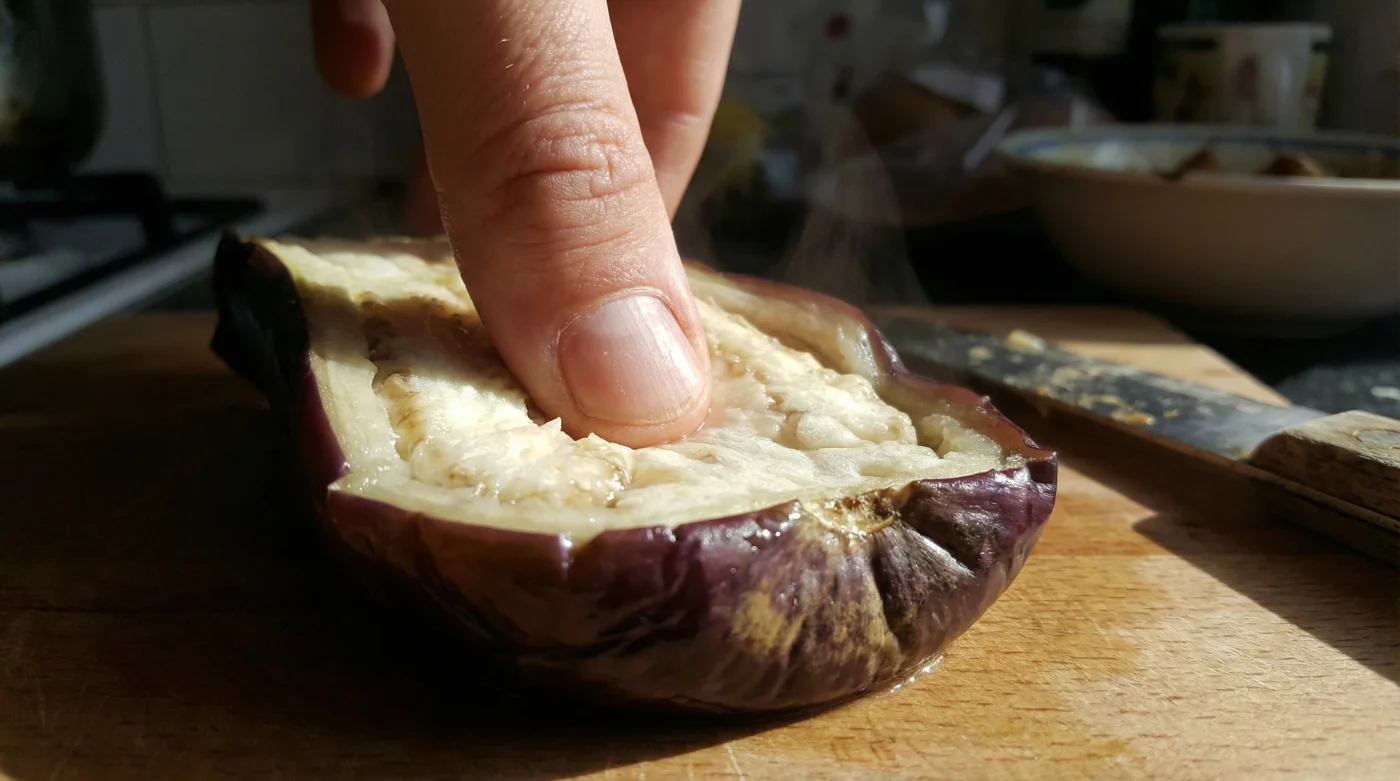
Microwaving forces a structural collapse, using the vegetable’s own internal moisture to steam the pockets shut. In just a few minutes, the spongy matrix completely deflates. The texture shifts from a stiff, airy foam to a dense, silky cushion.
When this pre-steamed slice finally meets the hot oil in your pan, there is simply no room left for the fat to enter. The surface sears instantly. You get the creamy, melt-in-the-mouth interior you crave, wrapped in a perfectly golden, crisp crust, all while using a fraction of the oil.
This rapid, practical modification was a quiet revelation for Mark, a 38-year-old development chef working in a high-turnover prep kitchen in Bristol. Faced with preparing twenty kilos of aubergine for a last-minute menu change, he simply did not have the hour required for traditional salting and pressing. In a moment of calculated desperation, he spread the raw discs on a flat tray and blitzed them in the microwave. The result was perfectly pliable, dense slices that cooked in seconds and refused to absorb excess oil, permanently changing his approach to the ingredient.
Variations on a Steamed Theme
Not every meal requires the exact same approach. You can easily adapt this five-minute prep to suit the specific demands of your evening and the dish you are building.
For the Sunday Batch Cooker: If you are preparing elements for a week of packed lunches, microwave the slices until they are completely limp. They can be stored in an airtight container in the fridge for up to three days, ready to be tossed into a hot pan for two minutes whenever you need a quick, satisfying side dish.
For the Moussaka Purist: When building a layered bake, slice your aubergines slightly thicker. Give them a slightly shorter blast in the microwave—just enough to soften the edges while leaving the centre slightly firm. They will hold their shape beautifully under the weight of rich ragù and béchamel without weeping watery juices into the dish.
For the Quick Weeknight Curry: Cut the aubergine into chunky cubes rather than slices. Toss them in a microwave-safe bowl with a tiny splash of water and cover with a plate. Once steamed and collapsed, they will absorb the fragrant spices of your sauce rather than the heavy oil from your base paste.
The Five-Minute Collapse
Executing this trick requires nothing more than mindful timing and a flat surface. You want to coax the cells to deflate evenly without turning the vegetable to mush.
Work in uncrowded, single layers, ensuring the steam can escape from the surface of each slice without pooling.
- Slice the aubergine into even rounds, roughly the thickness of a pound coin.
- Arrange them in a single layer on a large microwave-safe plate. Do not cover them.
- Microwave on the highest setting for exactly three minutes.
- Carefully flip each slice—they will be hot and slightly tacky—and heat for a further two minutes.
- Transfer the collapsed slices to a wire rack to let the residual surface steam evaporate before pan-frying.
The Tactical Toolkit:
- Thickness: 1 to 1.5 centimetres.
- Heat Setting: 800W to 1000W (Maximum power).
- Visual Cue: The flesh should look slightly translucent and feel as soft as a resting muscle.
- Frying Oil: 1 tablespoon per batch (compared to the usual half-bottle).
Reclaiming the Kitchen Clock
Mastering this simple alteration is about more than just saving a few calories or avoiding a greasy palate. It is a fundamental shift in how you navigate your kitchen on a busy Tuesday evening.
You are buying back time, removing the friction that often stops you from cooking fresh food from scratch. When an ingredient stops being a chore, it becomes an invitation.
By understanding the physical nature of the food you are holding, you move away from blindly following outdated rules. You transform a notoriously difficult, demanding vegetable into an effortless staple. The aubergine is no longer a sponge to be wrung out; it is a versatile canvas, ready exactly when you are.
Heat, not salt, is the true master of the aubergine’s architecture.
| Key Point | Detail | Added Value for the Reader |
|---|---|---|
| The Standard Myth | Salting and resting raw slices for 45 minutes to draw out bitter moisture. | Frees you from the tedious, time-consuming prep phase that discourages midweek cooking. |
| The Cellular Fix | Microwaving forces internal steam to collapse the air pockets within the flesh. | Provides a perfectly dense, creamy texture that refuses to drink up half a bottle of expensive olive oil. |
| The Searing Advantage | Cooking a pre-collapsed slice creates an immediate surface barrier in the pan. | Guarantees golden, crisp edges and a clean mouthfeel without the heavy, greasy aftermath. |
Do I need to salt the aubergine after microwaving?
Only for seasoning. Modern aubergines have had the bitterness bred out of them, so salt is now purely for flavour, not for drawing out moisture.Will the microwave make the slices rubbery?
No, provided you do not overcook them. Three to five minutes simply deflates the sponge structure, leaving them silky once pan-fried.Can I do this with whole aubergines?
Whole aubergines will steam and collapse, but you must pierce the skin deeply to prevent them from exploding in the microwave.Does this work for oven roasting?
Absolutely. A quick blast in the microwave before tossing them in oil and roasting will drastically reduce your oven time and prevent them drying out.Why flip them halfway through?
Microwaves can heat unevenly. Flipping ensures the cellular collapse happens symmetrically, giving you an even sear in the frying pan later.