Condensation beads on the kitchen window, blurring the glow of the streetlamps outside. You stand over a simmering pot, nursing a modest vegetable soup that desperately needs a spine. It feels thin, lacking that slow, resonant hum that defines true comfort food on a bitter evening in the UK.
Beside the chopping board sits the exhausted remains of a wedge of Parmigiano-Reggiano. You have grated away the tender crumb, leaving behind a hard, yellowed heel that seems entirely useless. Your instinct whispers the bin, treating it as mere packaging created by the ageing process.
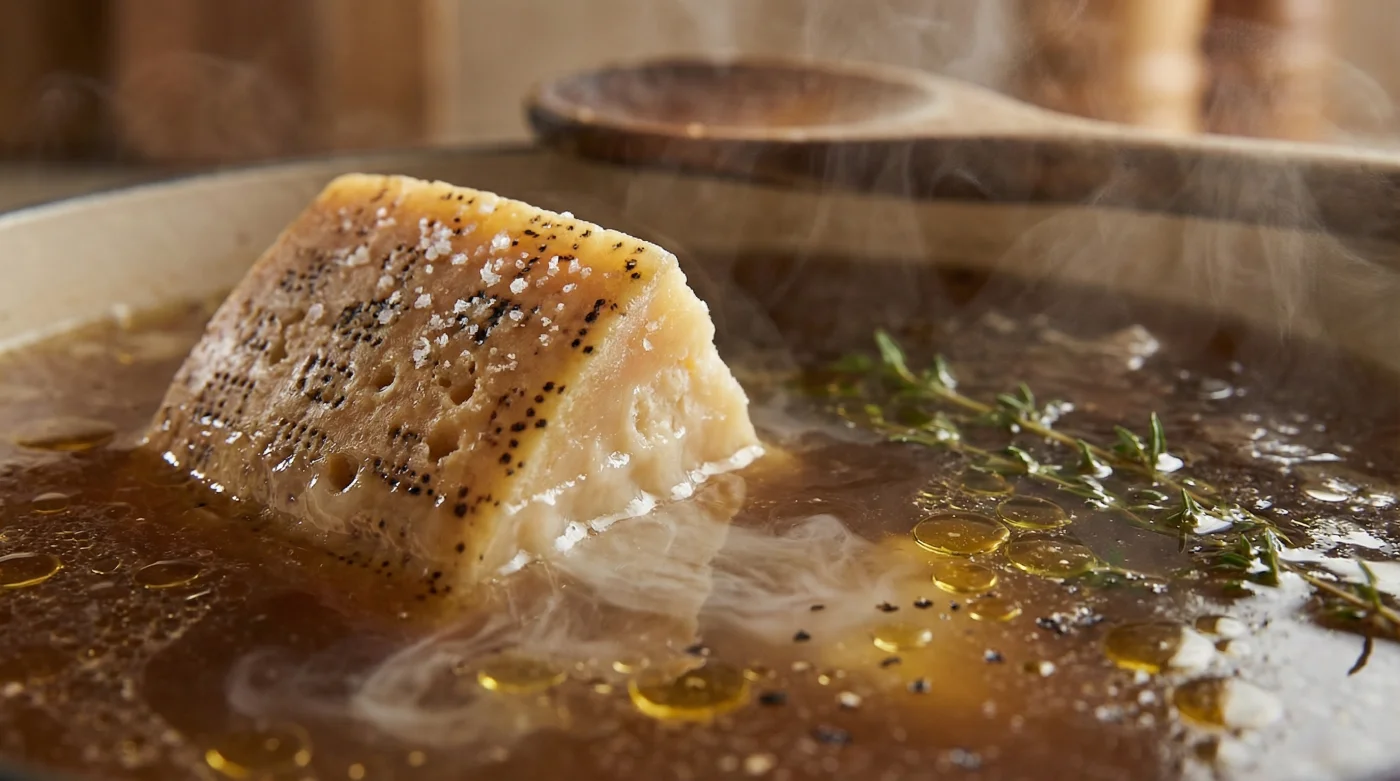
Pause before you lift the lid of your food caddy. That rigid block is not waste; it is an unspent battery of flavour. Dropping it into your simmering liquid triggers a quiet, invisible chemical exchange that will dramatically alter the character of whatever you are cooking.
When that rind meets heat and moisture, it ceases to be a stubborn barrier. Instead, it becomes a slow-release capsule, blooming quietly in the dark of your heavy-bottomed pan to fundamentally rewire a mediocre broth.
The Architecture of Hidden Savouriness
We often categorise ingredients strictly by their immediate texture. If something resists the knife, we assume it defies the stomach. Yet, the exterior of authentic parmesan is simply the cheese itself, hardened by months of exposure to the air in Italian curing rooms.
Think of it less as a crust and more like a tightly wound coil of concentrated glutamates. These are the organic compounds responsible for umami—that mouth-coating sensation of savouriness that makes roasted meats and mature tomatoes so deeply satisfying.
The perceived flaw—its sheer density—is precisely its greatest culinary advantage. A softer cheese would melt immediately, turning your clear broth cloudy and greasy. The rigid structure of the rind acts as a structural dam, forcing the glutamates to seep out at a glacial pace.
Elias Thorne, a 42-year-old development chef in London renowned for his zero-waste tasting menus, treats these discarded heels with near-religious reverence. "People spend fortunes on stock cubes packed with artificial yeast extracts," he notes, standing beside a walk-in fridge lined with Tupperware bins of salvaged rinds. "I keep a dedicated freezer drawer just for parmesan offcuts. When you simmer them for forty minutes, you are essentially brewing an ancient, natural MSG. It completely replaces the need for heavy meat bones in a vegetarian kitchen."
Tailoring the Extraction
You might spend your Sunday afternoons preparing meals for the week ahead. Here, the rind is your silent partner. Toss two hard heels into a bubbling vat of minestrone or a slow-cooker bean stew. Let them ride the heat for hours until they turn gelatinous.
Perhaps you only have twenty minutes to salvage a dreary Tuesday dinner. A smaller chunk of rind, dropped into a pan of simmering passata or store-bought chicken stock, acts as an emergency depth charge. It rapidly softens the acidic bite of cheap tomatoes.
When standing over the stove stirring arborio rice, bury a piece of rind beneath the surface of the simmering liquid right from the start. As you continually agitate the rice, the rind quietly infuses the base, lending a creamy, savoury bass note before you even grate the final dusting of cheese over the plates.
Implementing this strategic provisioning requires very little physical effort, but it demands situational awareness. You must treat the rind as a deliberate seasoning rather than an afterthought.
The Mechanics of Zero-Waste Umami
Preparation begins long before the pot is on the stove. When buying cheese, look for the stamped rind of authentic Parmigiano-Reggiano, ensuring there are no synthetic waxes.
- Storage: Keep your saved rinds in a sealed container in the freezer. They will not suffer from frost degradation and can be deployed straight from frozen.
- Scraping: Before use, take the back of a paring knife and firmly scrape the outermost edge to remove any superficial fridge dust or handling marks.
- Temperature: Maintain a gentle simmer. A violent, rolling boil will cause the rind to seize and stick to the base of your pan, risking a burnt metallic taste.
- Retrieval: Always fish the remnants out before serving. The rind will have transformed into a soft, chewy mass—enjoyable to gnaw on in private, but slightly awkward for a dinner guest to navigate.
This simple habit entirely changes how you stock your kitchen. You no longer rely heavily on highly processed bouillon cubes.
Rethinking the Anatomy of Flavour
There is a quiet, profound satisfaction in pulling flavour from something the rest of the world throws away. It changes your relationship with the food you buy, shifting your perspective from a passive consumer to an active curator of your pantry.
You begin to notice potential in the margins of your ingredients. The wilted green tops of leeks, the stripped stalks of herbs, and the rigid heels of expensive cheese stop being refuse. They become the foundational building blocks of tomorrow’s meals.
Simmering a discarded rind into your evening broth does more than just season the water. It anchors you in the present moment, reminding you that true culinary wealth does not come from spending more money, but from paying closer attention to what you already possess.
The truest test of a cook is not how they handle the prime cuts, but how they respect the offcuts.
| Key Point | Detail | Added Value for the Reader |
|---|---|---|
| Identify Authentic Rinds | Ensure the rind features the dotted Parmigiano-Reggiano stamp. | Protects your dish from melting synthetic waxes found on cheaper cheeses. |
| Freezer Accumulation | Store leftover rinds indefinitely in an airtight freezer container. | Builds a free, zero-waste flavour bank ready to deploy at a moment’s notice. |
| Glacial Simmering | Extract at a low heat for a minimum of 30 minutes. | Guarantees maximum umami release without burning the dairy proteins to the pan bottom. |
Frequently Asked Questions
Is the wax on the outside of the cheese safe to eat?
Authentic Parmigiano-Reggiano does not use wax. The hard exterior is simply the cheese itself that has naturally dried out during the curing process. Always check for the official stamp.Do I need to defrost the rind before using it?
Not at all. You can drop it straight from the freezer into your hot broth or sauce. It will thaw and begin releasing flavour within minutes.How long should I leave the rind in the pot?
Allow it to simmer for at least 30 to 40 minutes for a noticeable depth of flavour. For large pots of stock, it can remain submerged for hours.Can I use the rinds from other cheeses?
Stick to hard, aged Italian cheeses like Grana Padano or Pecorino Romano. Softer cheeses will melt entirely, creating a greasy slick on top of your food.What do I do with the rind after cooking?
Remove it before serving. While it is entirely edible and softens into a chewy texture that some cooks love to snack on, it is generally discarded or composted once its flavour has been exhausted.