You stand over the hob, the sweet scent of scalded milk and bruised vanilla pods clinging to the kitchen air. The morning light catches the steam rising from the heavy-bottomed pan. Beside the stove, a bowl of pale, sugar-beaten egg yolks waits on the counter, representing the most nerve-wracking moment in traditional baking.
We are taught to fear the heat. The threat of scrambled eggs looms over every home baker attempting a classic crème pâtissière. It turns what should be a peaceful afternoon of baking into a frantic exercise in temperature management. You trickle the hot liquid in drop by drop, praying the yellow mixture does not seize into a rubbery, weeping ruin.
Yet, peer into the early morning prep of any high-end bakery across the country, and you will witness a surprisingly violent scene. Huge pots of custard are left to bubble and heave on rolling boils, whisked with a relaxed, almost lazy rhythm rather than panicked haste. The secret lies in chemistry, specifically a simple shield that renders the eggs practically invincible to the intense heat.
The Boiling Paradox
The rule that delicate egg custards must never reach boiling point is a foundational lesson that is, surprisingly, only half true. When you introduce a heavy ratio of cornstarch to your yolks before the hot milk arrives, you completely rewrite the rules of engagement. You are no longer making a simple custard; you are engineering a structural masterpiece.
Think of the raw egg proteins as anxious commuters crammed together on the London Underground during rush hour. When sudden heat is applied, they panic, latch tightly onto one another, and form dense, solid lumps that feel granular on the tongue. This is the scrambling effect we spend so much time trying to avoid.
Cornstarch acts as brilliant crowd control. As the liquid heats, the starch granules absorb water and swell to many times their original size. They physically wedge themselves between the fragile egg proteins, creating a soft, gelatinous barrier. It becomes entirely impossible for those proteins to find each other, bind together, and curdle.
Because of this invisible buffer, treating the mixture with extreme caution is actually counterproductive. You must bring the pan to a vigorous boil. That intense heat is strictly required to swell the starch fully, lock the proteins in place, and cook out the raw, chalky flavour that undercooked starch leaves behind.
Arthur Pendelton, a 58-year-old pastry chef who runs a stubbornly traditional patisserie just outside Bath, once watched me nervously nurse a saucepan of vanilla cream on a dangerously low flame. He stepped in, took the whisk from my hand, cranked the gas burner to maximum, and let the pale yellow mass heave and bubble fiercely.
He laughed at my visible horror. ‘You are babying the pan,’ he muttered, wiping his flour-dusted hands on a linen apron. ‘Give the starch enough heat to do its heavy lifting, and it will protect the eggs for you.’ That single, terrifying minute of vigorous boiling yielded the silkiest, most stable pastry cream I had ever tasted, holding its shape perfectly when piped.
Tailoring the Velvet Foundation
Once you trust the physical barrier of the starch, the method adapts beautifully to whatever you need it to be. Understanding your specific requirements turns a strict, unyielding recipe into a highly fluid framework that bends to your baking needs.
For the Traditional Purist: Keep your focus on the quality of your aromatics. Steep a split, plump vanilla pod in the milk for twenty minutes off the heat before pouring it over the yolks. The starch protects the eggs, allowing the rich fat in the yolks to carry that deep, floral vanilla note straight to the palate without the distraction of a grainy texture.
For the Weekend Host: If you are preparing a large fruit tart a day in advance, increase the cold butter folded in at the end by twenty grams. This enriches the final mouthfeel and provides a slightly firmer set once chilled overnight in the fridge, ensuring your crisp pastry base remains utterly dry under the wet fruit filling.
For the Dairy-Free Adapter: Swapping whole milk for oat or almond milk works perfectly, provided you understand the fat content. Since plant milks are leaner, whisk an extra egg yolk into your initial paste. The cornstarch will still block the proteins from clashing, while the extra yolk restores the luxurious, heavy drape that dairy usually provides.
The Unhurried Method
Bringing this together is an exercise in quiet confidence. Clear your workspace entirely, measure your ingredients into small, individual bowls, and let the process become a rhythmic meditation rather than a race against the clock.
Here is your tactical toolkit:
- The Ratios: Use 40g of cornstarch for every 500ml of whole milk and 4 large egg yolks. This heavier-than-average ratio is your absolute insurance policy against splitting.
- The Whisk: Choose a large balloon whisk with plenty of thin, flexible wires to reach deep into the right-angled corners of your heavy-bottomed saucepan.
- The Heat: Maintain a medium-high flame for the final cooking stage. Do not retreat when the first bubbles appear.
Begin by vigorously whisking your caster sugar, cornstarch, and yolks in a large bowl. Keep beating until the mixture drops from the whisk like a thick, pale ribbon. Pour your freshly heated milk into this paste in a steady, thin stream, whisking gently to slowly equalise the temperature between the two elements.
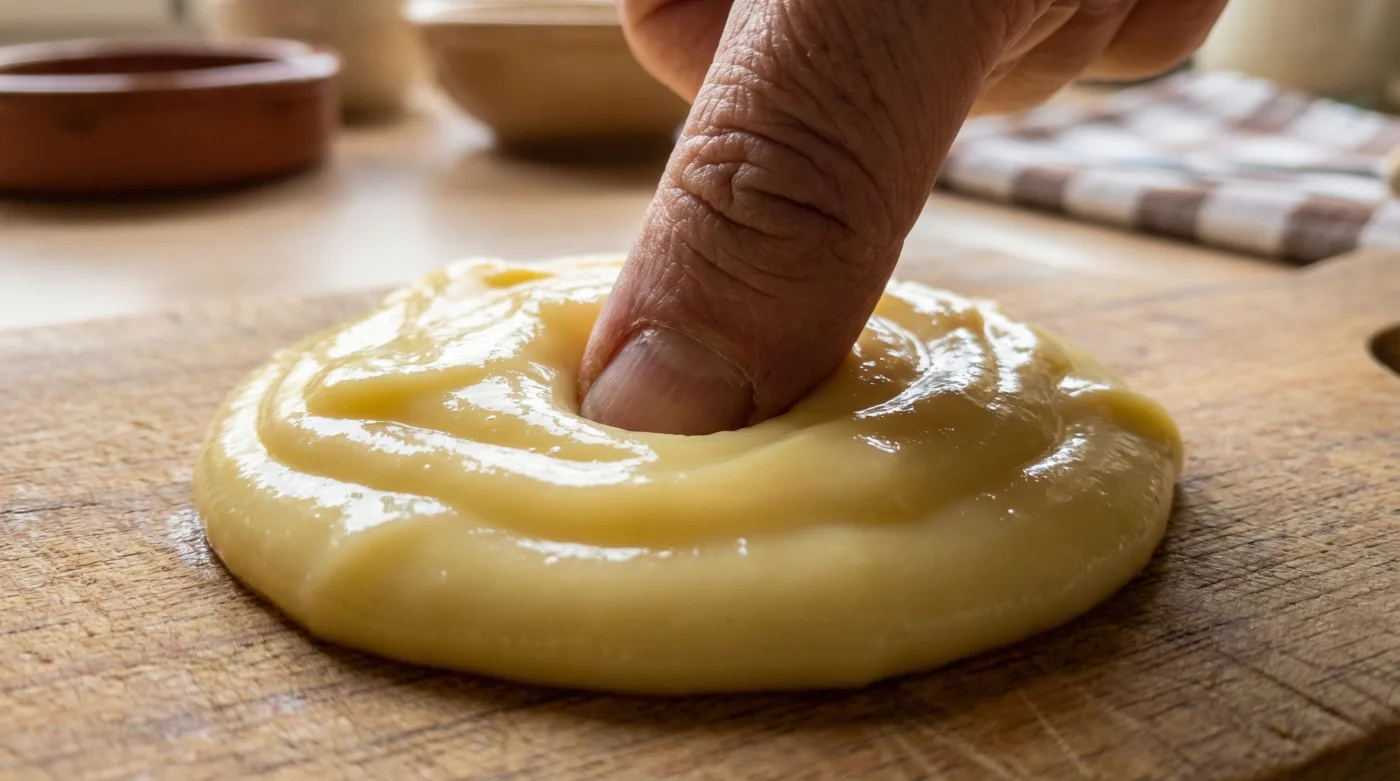
Return the entire liquid pool to the saucepan. Place it directly over the heat and whisk steadily in figure-of-eight motions. As the liquid thickens, it will suddenly resist your whisk, turning from a thin soup into a heavy, glossy mass.
When it reaches a dull, popping boil, hold your nerve and count to exactly sixty seconds. Remove the pan from the stove, push the hot cream through a fine metal sieve into a cold bowl, and press a sheet of baking parchment directly onto the surface to stop a rubbery skin from forming as it rests.
Beyond the Pan
Mastering this specific technique is not just about properly filling a choux bun or layering a complex gateau. It is about permanently removing a heavy layer of kitchen anxiety and replacing it with genuine, mechanical understanding.
Confidence fundamentally changes how you cook. When you stop fearing the heat and start trusting the physical, molecular interactions of your ingredients, you move from merely following instructions to truly practicing a craft. You dictate the terms.
The kitchen becomes a place of quiet mastery. What was once a notoriously temperamental, high-stakes custard yields willingly to a gentle, knowledgeable hand, leaving you with a flawless result every single time.
A rolling boil is not the enemy of a custard; it is the absolute requirement for a perfectly set, starch-bound cream.
| Element | Traditional Method | The High-Starch Approach |
|---|---|---|
| Heat Application | Low and slow, avoiding the boiling point entirely. | Vigorous boiling to fully activate the starch barrier. |
| Texture Risk | High risk of the egg proteins binding and scrambling. | Zero risk of scrambling; the starch physically blocks proteins. |
| Flavour Profile | Can sometimes taste subtly of raw, undercooked flour. | Clean, pure vanilla and egg notes due to fully cooked starch. |
Frequently Asked Questions
Why does my crème pâtissière turn out runny?
You likely removed it from the heat the moment it thickened. It must boil for a full sixty seconds to activate the cornstarch properly and hold its structure.Can I use standard plain flour instead of cornstarch?
While plain flour works, it requires much longer boiling to remove the raw wheat taste and results in a cloudier, slightly heavier texture. Cornstarch offers a cleaner melt on the tongue.How long will this keep in the fridge?
When tightly covered with parchment paper pressed directly against the surface, it will remain fresh and stable for up to three days.What do I do if I see small lumps forming?
Do not panic. Immediately take the pan off the heat and whisk aggressively for ten seconds until smooth, then return it to the hob to finish boiling.Why must I sieve the finished mixture?
Even with perfect technique, tiny fragments of egg chalaza or milk skin can remain. Sieving guarantees an impeccably smooth, professional finish.