You know the sound before you open the oven door. It is that furious, rhythmic spatter of chicken fat hitting the hot metal of a heavy roasting tin, promising a Sunday lunch that anchors the end of the week. The smell of roasting poultry, laced with thyme and garlic, fills the kitchen with a dense, comforting warmth. It is a deeply ingrained British ritual.
Yet, for all the romanticism attached to the weekend roast, the reality plated up often falls frustratingly short. You carve into the breast, hoping for a resounding crunch, only to find flabby, pale skin sliding away from the meat. The flesh might be perfectly tender, but the exterior remains a chewy afterthought, failing to provide that crucial textural contrast.
The standard advice has always been to religiously dab your bird with kitchen roll until it feels like parchment. We are taught that moisture is the enemy of crispiness, that a bone-dry surface is the only route to a professional-grade finish. It makes logical sense, but it ignores the fundamental mechanics of poultry fat.
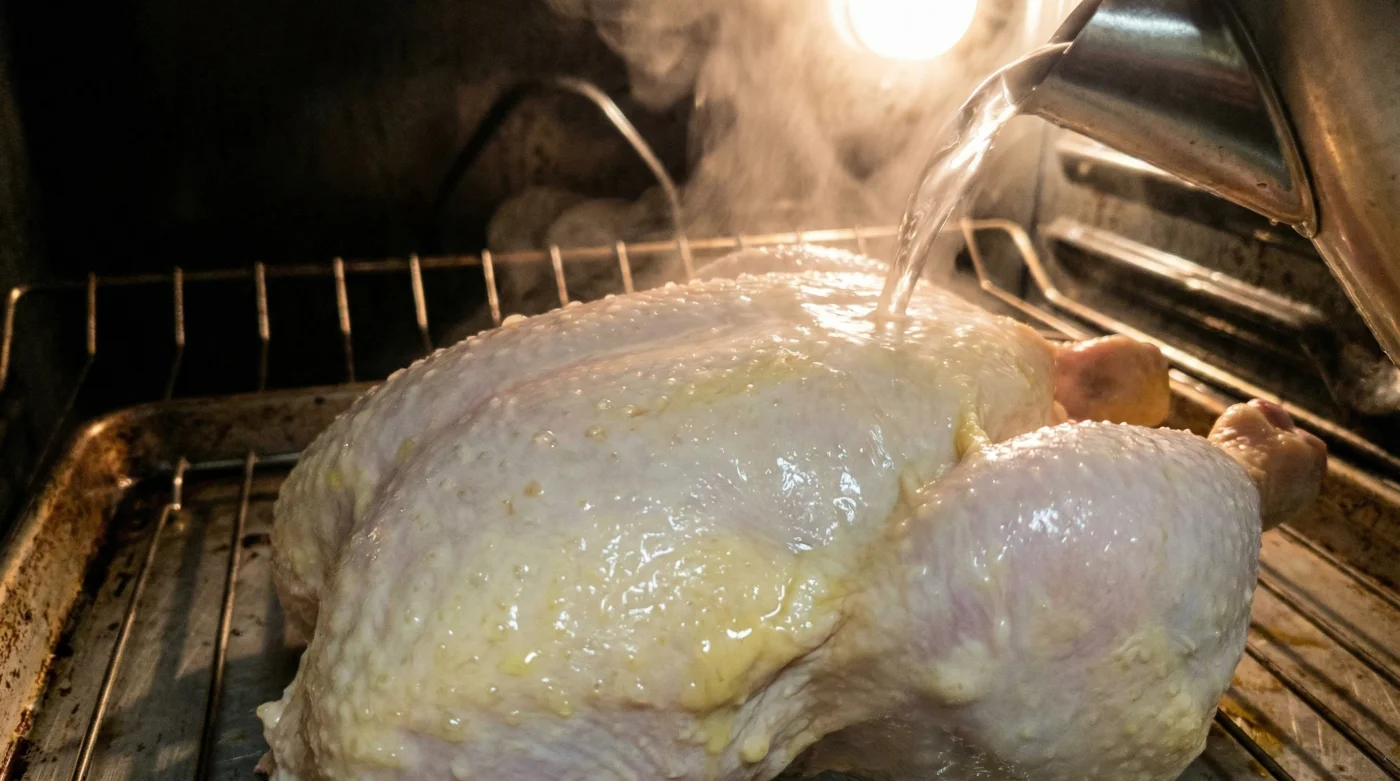
To achieve an exterior that shatters like spun glass under the knife, you must paradoxically introduce the very thing you were told to avoid: water. Specifically, a rolling, violent pour of boiling water straight from the kettle, cascading directly over the raw bird. It sounds like madness, but this single intervention alters the physical state of the chicken before the oven is even switched on.
The Perspective Shift: The Hot Wash Paradox
When you pour boiling water over cold poultry, you are not cooking it; you are executing a rapid thermal shock. The sudden, intense heat hits the fatty layer just beneath the surface, causing the pores to close instantly.
Think of the raw skin as a loose, woollen jumper. Throwing boiling water over it is akin to putting that jumper on a hot wash. The fibres contract violently, shrinking the skin so it pulls fiercely taut across the breast and drumsticks. This structural tightening forces the underlying fat to plump up, creating a uniform, stretched canvas that is primed for blistering.
By scalding the bird, you bypass the initial stage of rendering that normally happens lazily in the oven. The skin’s fat structure tightens, expelling excess moisture from its own pores. When it finally meets the dry heat of the oven, it doesn’t need to waste time contracting; it immediately begins to fry in its own natural oils.
It transforms a notoriously difficult culinary goal into a predictable, scientific certainty. You are no longer hoping the oven will do the heavy lifting. You have manipulated the cellular structure of the skin yourself, taking total control of the final texture.
Elias Thorne, a 55-year-old butcher and seasoned rotisserie chef from a rather draughty pub in the Cotswolds, has sworn by this method for decades. While observing his Sunday prep, you will not see him delicately dabbing birds with paper. Instead, he hangs a dozen whole chickens over a deep sink and systematically pours battered metal kettles of boiling water over their shoulders. ‘Watch the skin grab the bone,’ he points out, as the flesh visibly shrinks and pales by a full centimetre. ‘If you do not shock the fat tight right at the start, it just sweats in the oven. Scald it, chill it, and it crisps like a proper pork crackling.’
Deep Segmentation: Tailoring the Scald
Not every Sunday roast is planned with military precision. The beauty of this technique is adaptability to your routine, whether you are preparing days in advance or rushing to get lunch on the table before the pub shuts.
For the Weekend Purist: This requires a Friday night intervention. You execute the boiling water pour over a wire rack in the sink, letting the water drain away completely. Once the skin has visibly tightened and cooled slightly, pat it meticulously dry with fresh kitchen roll. Leave the bird uncovered on a plate at the bottom of your fridge for a full 48 hours. The cold, circulating air acts as a dehydrator. By Sunday morning, the skin will feel like cured leather, guaranteeing a blistering, noisy crunch that echoes across the dining room.
For the Rushed Sunday Cook: Perhaps you only bought the chicken at nine in the morning. Place the bird in a colander and deliver the scalding hot water pour. Dry it as thoroughly as humanly possible. To compensate for the lack of fridge-drying time, mix a teaspoon of aluminium-free baking powder with your sea salt. Rub this aggressively into the tightened skin. The baking powder alters the pH level, drawing out the last stubborn beads of moisture and accelerating the browning process in the hot oven.
For the Flavour Chaser: If you rely on marinades or herb butters, the scald actually improves their efficacy. Do not apply butter under the skin before the scald, as the boiling water will simply melt it away. Instead, shock the bird first. Once the skin is taut and dried, carefully slide your fingers under the breast skin—which will now be much sturdier and less prone to tearing—and push your tarragon and garlic butter directly onto the meat. The tight skin acts as a secure lid, basting the flesh while frying perfectly on top.
Mindful Application: The Scalding Protocol
Executing this requires a steady hand and a clear workspace. Clear the sink of any washing up and clutter. Place a wire cooling rack directly over the plughole.
Rest the raw chicken breast-side up on the rack. Bring a full kettle to a rolling, violent boil. You want the water at its absolute maximum temperature; anything less will just give the bird a warm bath without triggering the necessary thermal shock.
Pour the water in a slow, deliberate stream over the breast, the legs, and the wings. Watch the skin immediately retreat and turn a pale, opaque white. It should take about ten seconds of continuous pouring to hit every exposed surface.
Turn the bird over carefully using a pair of sturdy tongs. Repeat the scalding process on the back. Once completely drenched, leave it on the rack for five minutes to let the steam evaporate and the excess water drip away before you even attempt to dry it.
- The Setup: Heavy wire rack over an empty, clean kitchen sink.
- The Water: Exactly 100 degrees Celsius. A freshly boiled kettle of at least 1.5 litres.
- The Pour: Slow, sweeping motions, holding the spout three inches above the bird.
- The Recovery: Five minutes of ambient air-drying before applying kitchen roll.
- The Chill: Minimum 4 hours uncovered in the fridge for optimal results.
Tactical Toolkit: Temperature is your primary tool here. You are dealing with 100-degree water and, later, an oven cranked to 220 degrees Celsius for the initial blast. You will need a heavy wire rack that fits inside your sink, a fresh roll of absorbent paper, and silicone-tipped kitchen tongs to manipulate the hot, slippery bird safely.
The Bigger Picture: Quiet Triumphs in the Kitchen
There is a distinct satisfaction in understanding the physical rules of the food you cook, rather than blindly following inherited wisdom. When you know exactly why a technique works, anxiety leaves the kitchen.
The Sunday roast is no longer a roll of the dice. You dictate the final texture by mastering the preliminary steps. It is a quiet, highly personal triumph to pull a roasting tin from the oven and see a deeply bronzed, blistered surface that you orchestrated hours, or days, before the heat was even applied.
The boiling water pour changes the way you approach the meal entirely. It turns a mundane preparation step into a mindful, deliberate act of butchery. You are no longer just cooking a chicken; you are crafting a texture, ensuring that the people sitting around your table experience the very best version of a familiar classic.
‘If you do not shock the fat tight right at the start, it just sweats in the oven; scald it, chill it, and it crisps like proper pork crackling.’
| Key Point | Detail | Added Value for the Reader |
|---|---|---|
| Thermal Shock | 100°C water applied directly to raw skin | Forces fat contraction before the oven. |
| Air Chilling | Uncovered in the fridge for 24-48 hours | Dehydrates the tightened pores for a glass-like finish. |
| Flavour Insertion | Applying herb butter after the scald | Prevents melting during the water pour while basting the meat. |
Frequently Asked Questions
Does the boiling water cook the chicken breast?
No, the water runs off too quickly to penetrate the meat; it only affects the topmost fatty layer of the skin.Can I do this with a frozen chicken?
Absolutely not. The bird must be completely thawed, otherwise the severe temperature shift will fail to tighten the skin properly.What if I do not have time to leave it in the fridge?
You can still roast it immediately after scalding and drying, though mixing a little baking powder into your salt rub will help compensate for the lack of air-drying.Do I need to score the skin before pouring the water?
Leave the skin entirely intact. Scoring will cause the skin to tear and shrink away from the meat too aggressively during the scald.Will the hot water wash away my seasoning?
Yes, which is why you must perform the scald first, dry the bird completely, and only then apply your salt, pepper, and herbs.