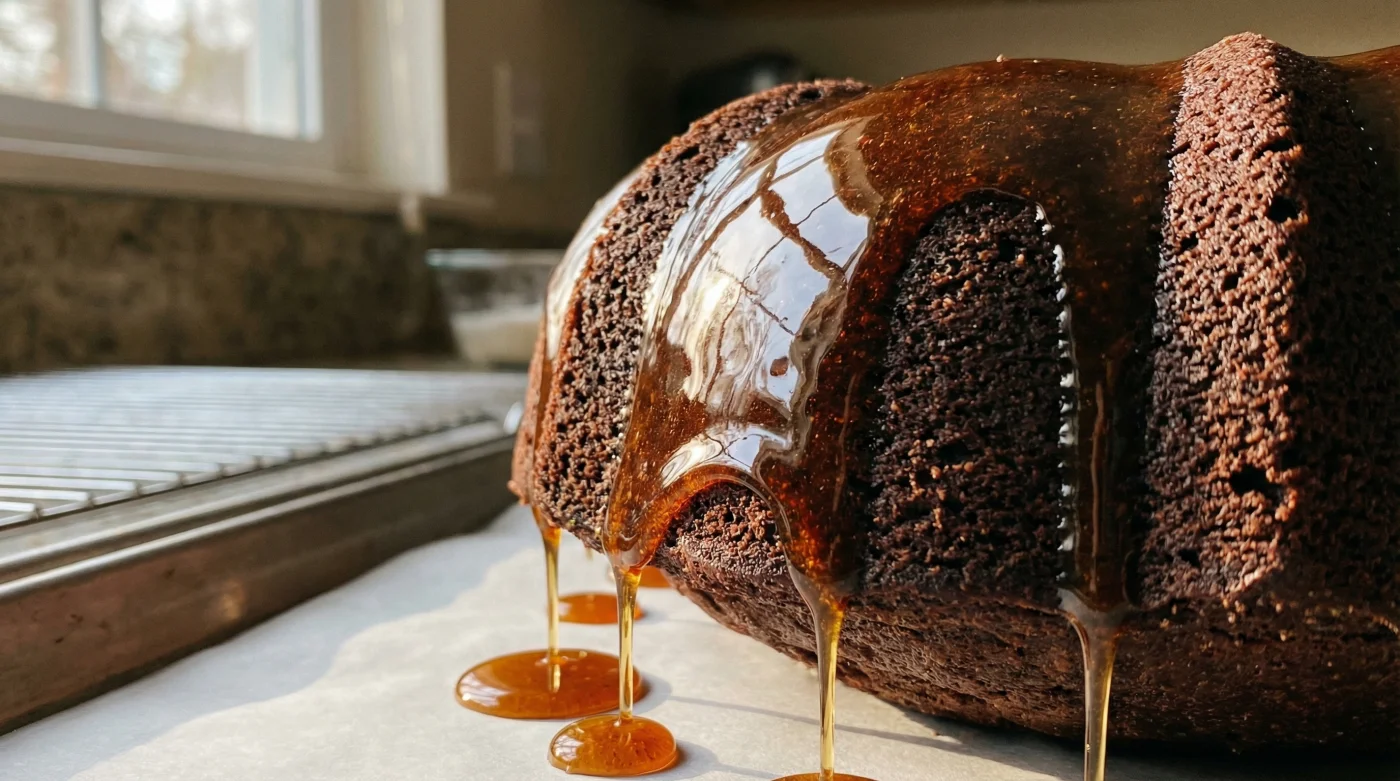
Imagine a quiet Tuesday afternoon in your kitchen. The scent of vanilla pod and browned butter lingers in the humid air. You have just turned a pristine Victoria sponge out onto the cooling rack, watching the steam rise softly from its golden edges. The house is still, save for the rhythmic tapping of rain against the windowpane. It is a moment of pure culinary anticipation.
Now comes the glaze. The standard ritual dictates frantic whisking of icing sugar and boiling water, or perhaps boiling a precise simple syrup on the hob until your sugar thermometer begs for mercy. You pour the molten mixture over the cake, and for a fleeting five minutes, it looks glorious, catching the ambient light perfectly and dripping over the sides like a masterpiece.
Then, the inevitable happens. As the cake cools on the worktop, the surface dulls, turning brittle, opaque, and decidedly matte. The promise of that professional, bakery-window sheen vanishes, replaced by a rigid, sugary crust. Worse still, it splinters and shatters the moment your knife breaches the surface, ruining the presentation you worked so hard to build.
But what if the fault lies not in your technique, or your tools, but in the rigid chemistry of sucrose itself? There is a two-ingredient modification happening quietly in the back-of-house at high-end London patisseries—a simple, elegant swap that completely contradicts traditional sugar boiling methods and rescues you from the heartache of shattered icing.
Escaping the Brittle Glass Trap
Think of standard icing sugar or traditional simple syrup as a pane of fragile glass. Once it cools and sets over your bake, its molecular structure locks into a stiff, unforgiving crystalline grid. If you attempt to chill it in the fridge, or if you dare to slice it for serving, it inevitably breaks under the pressure, shedding dull flakes of sugar across your plates.
We have been taught for generations that achieving a flawless mirror glaze requires exact temperature control, heavy copper pans, and obscure commercial glucose that you can only buy in bulk. Yet, the true professional pivot requires less effort than you might think. When you introduce liquid agave nectar to the mixing bowl, you completely change the architectural rules of the frosting, shifting from rigid construction to fluid dynamics.
Because agave possesses a remarkably lower freezing point than traditional sucrose-based syrups, it behaves entirely differently under temperature stress. Instead of mimicking rigid glass, it acts more like a pool of slow-moving resin. It resists crystallisation entirely, holding onto its internal moisture and remaining brilliantly pliable, even when subjected to the cold environment of a commercial chiller.
Elias Thorne, a 42-year-old pastry chef working in a boutique Mayfair hotel, discovered this pivot out of sheer desperation during a stifling summer service. His traditional dark chocolate glazes were dulling and splitting rapidly in the humid kitchen. Running low on commercial glucose, Elias swapped in a bottle of dark agave nectar from the pantry. It draped over his delicate entremets seamlessly, leaving a perfect gloss surviving hours chilled without losing a fraction of its mirror-like shine. From that afternoon onwards, he entirely abandoned traditional simple syrup.
Tailoring the Agave Pivot
Depending on what currently sits on your cooling rack, this professional technique adapts beautifully to your specific baking needs. You do not need to be a Michelin-starred chef to manipulate agave; you simply need to understand how it interacts with your chosen flavour profiles.
For the Chocolate Purist
If you are glazing a dense, dark chocolate torte or a rich cocoa loaf, use light agave nectar mixed gently with high-quality, Dutch-processed cocoa powder and a splash of double cream. The syrup penetrates deeply into crumb, amplifying the dark, earthy notes of the cocoa without masking them in the cloying, aggressive sweetness that standard icing sugar often brings.
For the Dairy-Free Pragmatist
When working with plant-based butter alternatives or vegan creams, standard sugar icings often split or separate due to poor emulsification, leaving an oily residue on your sponges. It is a common frustration that ruins the texture of dairy-free bakes.
Agave, however, acts as a surprisingly powerful binder in these scenarios. Whisked directly into a warm vegan ganache, it binds the separated fats and liquids back together, ensuring a glossy finish looks effortlessly expensive and holds its structure beautifully, regardless of the dairy-free substitutes you have employed.
The Mechanics of the Mirror
Executing this fundamental shift in your kitchen requires minimal fuss, but it does demand a gentler, more considered touch. You are no longer boiling aggressive sugars to the hard-crack stage, fighting against the clock; you are simply coaxing natural ingredients into a harmonious, fluid alignment.
Take a breath, clear your workspace of unnecessary clutter, and focus on temperature over timers. By treating the glaze with patience, you guarantee a flawless result every single time. Here is your Tactical Toolkit for mastering the perfect agave mirror glaze:
- Base Ratio: Use 3 parts high-quality cocoa or sifted icing sugar to 1 part agave nectar, adjusting the consistency with single drops of warm milk or water until it coats the back of a spoon.
- Temperature Control: Keep your mixing liquids at exactly 35°C—roughly blood temperature—to allow the agave to blend smoothly without cooking or separating the surrounding fat ingredients.
- The Mixing Motion: Fold the mixture with a flexible silicone spatula using slow, deliberate figure-of-eight motions. Never whisk vigorously, as this traps dulling air bubbles that will ruin the mirror effect.
- The Pour: Pour the warm glaze directly over the centre of the sponge and let gravity do the heavy lifting. Resist the urge to spread it manually with a palette knife, which leaves unsightly drag marks.
The Quiet Satisfaction of Mastery
Baking is so often framed to us as a highly rigid science, a series of immovable, mathematical laws where a single, slight misstep is severely punished by a sunken sponge, a split buttercream, or a shattered glaze.
Yet, finding a quiet, effective workaround like this offers a profound sense of kitchen liberation. Realising that a humble pantry staple can completely upend centuries of rigid sugar-craft fundamentally changes how you approach your time spent at the worktop.
When you pull a layered cake from the fridge the following day and see your own reflection staring back from the flawless frosting, you aren’t just looking at a successful dessert. You are looking at a victory over unnecessary complexity.
You are looking at peace of mind. You have finally stepped off the exhausting treadmill of chasing bakery perfection through stressful chemistry, finding instead a professional elegance in smarter choices that you can rely on time and time again.
‘The best glazes do not fight the environment; they yield to it, remaining fluid in spirit even when cold to the touch.’ — Elias Thorne
| Key Point | Detail | Added Value for the Reader |
|---|---|---|
| Standard Simple Syrup | Crystallises as it cools, forming a brittle shell. | None; leaves cakes looking dull and cracking when cut. |
| Commercial Glucose | Requires specialist baking suppliers and precise heating. | Impractical for everyday, spontaneous home baking. |
| Agave Nectar Pivot | Lower freezing point ensures permanent flexibility. | Achieves a resilient, mirror-like finish with a common supermarket ingredient. |
Frequently Asked Questions
Can I use light or dark agave nectar for glazing?
Light agave is best for clear or fruit-based glazes as it has a neutral flavour, while dark agave pairs beautifully with chocolate or spiced cakes due to its richer, caramel notes.Will the glaze set firm enough to stack cakes?
Agave glazes are designed for a glossy, slightly tacky finish. They will not set bone-dry like royal icing, so they are best used as a finishing pour rather than a structural layer.Does this work with vegan butter substitutes?
Absolutely. Agave acts as an excellent binder, helping to prevent the splitting that often occurs when mixing plant-based fats with sugars.How long does the mirror shine last?
Because agave resists crystallisation, the glossy finish can last for several days in the fridge without dulling or cracking.Do I need to heat the agave before mixing?
Gentle warming to body temperature (around 35°C) is ideal. Boiling is unnecessary and can actually ruin the fluid texture.