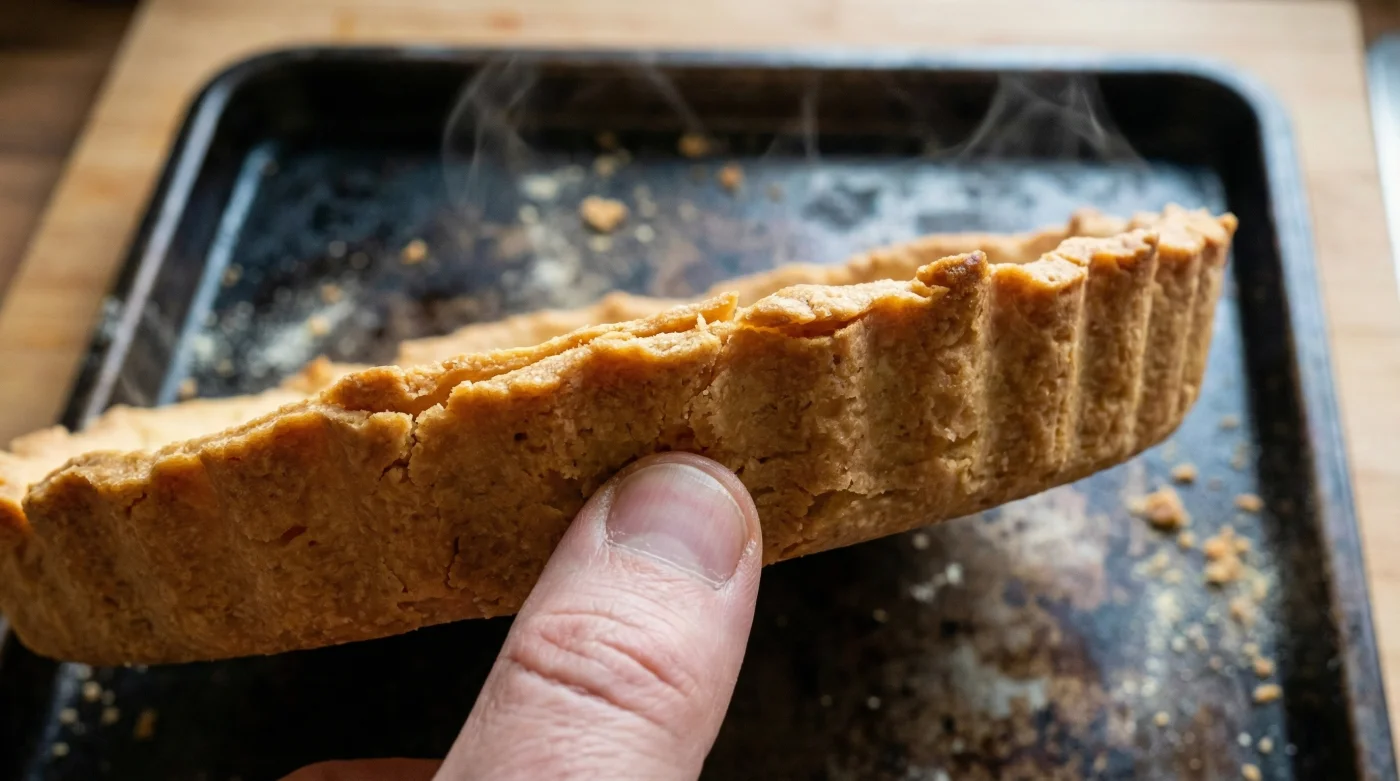
You pull the tart tin from the oven. The kitchen smells heavily of roasted butter and caramelising onions. The fluted edges are deeply golden, flaking beautifully where they meet the metal rim. It looks entirely perfect, a proud centrepiece for the table.
You cut the first slice, feeling the blade slide cleanly through the soft, wobbly custard. But as you lift the server, the base sags terribly, clinging stubbornly to the metal tin like damp cardboard. The dreaded soggy bottom strikes again, ruining an otherwise beautiful supper.
For generations, domestic bakers have been instructed to meticulously line their tins with crumpled parchment paper and heavy ceramic beans. We spend precious time blind baking, hoping to dry out the raw base just enough to withstand the onslaught of a wet filling.
Yet, bustling professional kitchens rarely bother with this tedious, fragile ritual. They rely on a much simpler, practically brutal technique: instant bottom heat transfer. By introducing your cold pastry directly to a preheated baking tray, you completely eliminate the need for baking beans.
The Myth of the Ceramic Weight
Think of shortcrust pastry not as a solid, uniform object, but as a microscopic, fragile web of cold fat suspended in flour. When you pour a wet egg custard or a syrupy fruit compote over raw dough, moisture naturally seeks the path of least resistance, sinking into the microscopic air pockets before the flour has a chance to cook.
Ceramic baking beans only physically prevent the pastry from puffing up; they do nothing against liquid seepage. In fact, they often act as a cold thermal mass that traps steam against the base, leaving it pale, gelatinous, and highly vulnerable to the filling.
The true professional pivot requires merely two components: your raw, filled pastry tin, and a searing hot aluminium or steel tray already waiting in the oven. This creates a sudden, aggressive thermal shock. The fat melts instantly into the flour, effectively frying the base in its own butter to create an impermeable, waterproof seal. You are swapping a heavy, time-consuming ceramic weight for an invisible shield of pure heat.
Elias Thorne, a 62-year-old baker running a tiny coastal bakery in Cornwall, bakes up to fifty quiches every morning. He abandoned blind baking entirely a decade ago. ‘Time is margin, and beans are a complete nuisance,’ he notes, tapping the dark, rigid base of a freshly turned-out cheese and onion tart. ‘You just need the floor of the oven to smack the bottom of that tin the second it goes in. The pastry screams, the butter fries, and the water stays out.’
Adjustment Layers for Every Bake
Every filling behaves differently when it makes contact with raw dough. Understanding these minor variations allows you to tailor this thermal shock method to whatever you happen to be preparing.
For the Heavy Fruit Purist
Apples, plums, and blackberries release vast amounts of water as their cell walls break down in the heat. If you are baking a deep-filled autumn pie, preheat a heavy cast-iron baking sheet or a thick pizza stone. The retained heat needs to be aggressive enough to fight the cold, sugary juices pooling at the bottom of the tin before they can soak into the crumb.
For the Savoury Custard Maker
Quiches are notoriously difficult because the milk and egg mixture behaves exactly like water for the first twenty minutes of baking. A standard thin oven shelf simply does not carry enough ambient heat to cook the base before the liquid penetrates it.
To counter this, always use a dark metal tray to absorb and radiate heat far more efficiently than shiny aluminium, pushing the thermal energy straight through the base of your loose-bottomed tin.
For the Freeform Galette Enthusiast
Baking directly on flat parchment without the structural support of a tin requires a slightly gentler touch, but the physics remain identical. Slide the paper holding your assembled rustic galette straight onto a pre-warmed tray.
You will hear a very faint, satisfying sizzle as the butter makes contact with the hot steel, assuring you that the seal is already forming before you even close the oven door.
Executing the Thermal Seal
Implementing this professional technique requires nothing more than deliberate timing and a little nerve. You are moving away from blindly following recipe timings and starting to read the physical reactions happening in your kitchen.
Prepare your filling completely in a separate bowl before you even remove the chilled dough from the fridge. The pastry must remain freezing cold to maximise the shock value when it hits the heat.
- Place your heaviest baking tray on the lowest oven shelf and preheat to 200°C (180°C Fan) for a full thirty minutes.
- Roll out your shortcrust, line your tin, and return it to the freezer for exactly ten minutes to firm the butter network.
- Pour your wet filling into the frozen pastry case just seconds before baking.
- Slide the tin swiftly onto the blistering hot tray and close the oven door immediately to trap the heat.
Your Tactical Toolkit:
- Target Oven Temp: 200°C for the initial 15 minutes, then reduce to 160°C.
- Ideal Tray Material: Heavy-gauge steel, cast iron, or thick aluminium.
- Auditory Cue: A distinct crackle as the cold tin meets the hot metal.
Trusting the Process
There is a profound sense of relief in letting go of complicated baking rituals. Stripping away the crinkled baking paper, the dusty jars of dried beans, and the constant, anxious oven-checking gives you back your time.
You begin to understand domestic baking as an intuitive conversation with raw elements, rather than a rigid set of rules to fear or blindly obey.
Slicing into a tart and hearing that sharp, resonant crunch at the base changes the way you serve food. It transforms a mundane Tuesday night supper into a display of quiet, effortless mastery, proving that the best results often come not from adding more steps, but from trusting the physics of the few you already have.
The secret to a perfect pastry lies not in weighing it down, but in lifting it up with immediate, unapologetic heat.
| Key Point | Detail | Added Value for the Reader |
|---|---|---|
| Thermal Shock | Moving cold pastry onto a preheated 200°C tray. | Instantly melts butter into flour to form a waterproof barrier against wet fillings. |
| Tray Material | Cast iron or dark, heavy-gauge steel is optimal. | Retains and transfers heat faster than thin, shiny aluminium, ensuring a crisp base. |
| Time Saved | Eliminates the 20-minute blind baking process. | Frees up preparation time and reduces the anxiety of handling hot ceramic beans. |
Frequently Asked Questions
Will my pastry shrink if I do not use baking beans?
If you allow the pastry to rest in the freezer for ten minutes before baking, the gluten relaxes and the butter firms up, preventing any significant shrinkage when it hits the hot tray.
Can I use a glass dish for this method?
Glass is an excellent insulator but a poor conductor. It takes too long to transfer the heat from the tray to the pastry. Stick to metal tins for the best thermal shock.
Does this work for puff pastry as well?
Yes, puff pastry benefits immensely from bottom heat to help its layers expand before the filling weighs them down. Just ensure the tray is searing hot.
What if my quiche filling spills over the edge?
Always fill your pastry case while it is already resting on the oven shelf. Pull the preheated tray out slightly, place your empty tin on it, pour the filling from a jug, and carefully slide it back.
Do I need to grease the tin first?
Shortcrust contains a high percentage of fat, which naturally prevents sticking. However, a very light dusting of flour over a buttered base guarantees an easy release after the thermal shock.