It is a damp, grey Tuesday evening, and you are standing at the kitchen counter staring at a chopping board. You drag a heavy knife through the vibrant orange flesh of a sweet potato, listening to the dense thud as the blade hits the wood. You are craving proper chips, the kind that snap when you bite into them, offering a momentary distraction from the long workday behind you.
You arrange the wedges on a baking tray, drizzle them with oil, and hope for the best. Forty minutes later, you pull out limp, disappointing orange crescents. They taste fine, sweet and earthy, but they sag heavily from the fork like a wet woollen jumper. The texture is entirely wrong, lacking any sort of structural bite.
We quietly accept this as the inevitable cost of cooking at home. Yet, when you order a side of sweet potato chips at a smart, low-lit gastropub in Soho, they arrive stacked like golden Jenga blocks, standing rigid in a copper cup and shattering upon impact. You naturally assume the kitchen has access to roaring commercial fryers and specialised, artificial starch coatings that you cannot replicate.
The truth is far more domestic and entirely within your reach. The secret to achieving that expensive, professional crunch relies simply on a cheap bottle of fizzy water from the local off-licence, delivering an effervescent shock of cold that forces the potato to radically change its physical structure before it ever sees the heat of the oven.
The Architecture of a Proper Crunch
To understand the failure of the standard home-baked chip, you have to look closely at what you are actually cooking. A sweet potato is fundamentally different from a floury Maris Piper. It lacks the rigid internal starch network required to form a crisp crust, behaving instead like a dense sponge tightly packed with natural sugars and water.
When you slice them and immediately throw them into a hot fan oven, those natural sugars rapidly caramelise on the outside while the internal water violently escapes, leaving the vegetable steaming in its own moisture. You are not actually baking a chip; you are slowly boiling a root vegetable in a shallow puddle of olive oil.
This is where the sparkling water comes in. By submerging your raw cut chips into ice-cold carbonated water for forty-five minutes, two distinct, highly effective physical changes occur simultaneously. The drastically cold temperature immediately draws out excess surface starch, while the aggressive carbonation attacks the smooth outer layer of the flesh.
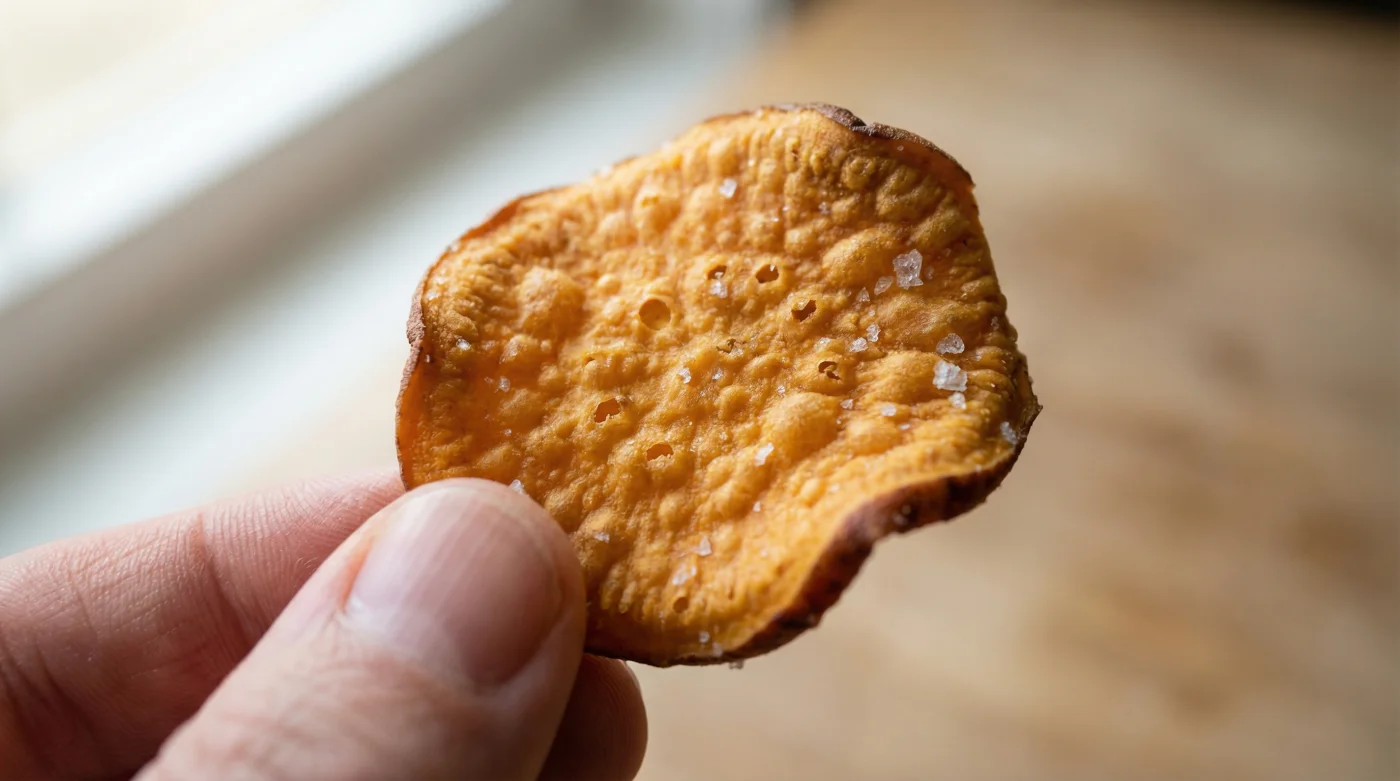
The tiny bubbles act like fine sandpaper on smooth wood, creating a rough, porous exterior texture. As these micro-blisters form across the surface, they provide hundreds of tiny, jagged ledges for your cooking oil to cling to, turning a notoriously stubborn surface into a landscape biologically designed for crunch.
Consider the daily routine of Elias Thorne, a 42-year-old development chef working at a luxury coastal retreat in Cornwall. Two years ago, he was tasked with creating a signature, healthy side dish that felt indulgent but strictly adhered to the kitchen’s no-deep-frying policy. After weeks of soggy, disappointing failures, a clumsy prep cook accidentally knocked a half-empty glass of sparkling water into a steel bowl of soaking potatoes. Thorne noticed the water violently fizzing against the orange flesh. When he baked that specific, accidental batch, the exterior shattered like thin glass. He realised the carbonation was performing the mechanical work of tenderising the starch, while the freezing temperature locked the shape rigidly in place.
This quiet kitchen discovery proves that high-end restaurant results do not strictly require high-end, expensive equipment. You simply need to deploy thousands of microscopic chisels—in the form of trapped carbon dioxide—to manually prepare the canvas before the oven heat does its final job.
Shaping Your High-End Side Dish
Professional plating relies heavily on uniformity, geometry, and intent. The specific way you cut your potato dictates precisely how it will respond to the sparkling water soak and the final bake. Treating every shape exactly the same is a guaranteed recipe for uneven cooking.
The classic bistro matchstick requires a delicate precision. Slicing the potato into thin, quarter-inch batons means the carbonation penetrates incredibly quickly. Because they are so thin and fragile, this delicate cut requires aggressive breathing room on the roasting tray, or the starches will stubbornly fuse together into a singular, unappealing mass.
For the hearty, pub-style wedge, you must leave the skin firmly on. The skin provides a vital natural anchor, keeping the dense flesh together during a longer, deeper soak. These thicker, substantial cuts benefit greatly from a full hour in the fizzy bath, allowing the bubbles to deeply pit the exposed, starchy flesh for maximum oil adherence.
If you are serving a traditional Sunday roast, consider the rustic, circular coin cut. Slicing the potato into flat, half-inch rounds offers a massive surface area for the micro-blisters to properly form. When dusted with a microscopic pinch of fine polenta after the soak, they develop an audibly loud crust that rivals any traditional goose-fat roast potato.
The Mindful Preparation Protocol
Moving gracefully from prep to plate requires a quiet, methodical approach. The actual magic happens entirely in the brief transition between the wet soak and the dry heat. Rushing this specific stage instantly ruins the hard work the carbonated water has just done.
After forty-five minutes, gently drain the chips into a colander. You must now dry them with bordering-on-obsessive thoroughness. Using a clean, heavy cotton tea towel, press out the surface moisture until the potato feels slightly chalky to the bare touch. This specific patience yields structural integrity.
Next comes the precise lubrication. Do not drown them in fat. Toss the desperately dry chips in a large steel bowl with exactly one tablespoon of oil per large potato. You want to achieve a sheer, almost invisible film across the surface, rather than a heavy, dripping slick.
Finally, arrange them individually on a pre-heated, dark metal baking tray. The hot metal should audibly hiss the second the cold potato makes contact. Ensure absolutely no two chips are touching each other.
- The Cut: Quarter-inch batons for rapid, consistent crisping.
- The Soak: 45 minutes completely submerged in ice-cold, highly carbonated sparkling water.
- The Dry: Pressed firmly and repeatedly between two heavy cotton tea towels until entirely matte.
- The Oil: One exact tablespoon of high-smoke-point oil (such as cold-pressed rapeseed), massaged in gently by hand.
- The Bake: 210°C (Fan) for precisely 25 minutes, flipping every single chip exactly once at the 15-minute mark.
A Quiet Kitchen Triumph
There is a deep, abiding, and quiet satisfaction in taking a notoriously difficult, stubborn ingredient and forcing it to behave perfectly. You are no longer mindlessly crossing your fingers, shutting the oven door, and blindly hoping the heat acts kindly upon your Tuesday night dinner.
Instead, you have actively mastered the underlying physical mechanics of the food itself. Transforming a dense, water-logged root vegetable into an expensive-feeling, architectural side dish creates a predictable, highly satisfying rhythm to your weekly cooking routine.
The next time you slice cleanly into that vivid, earthy orange flesh, you will not feel the usual mild dread of serving a distinctly soggy side. You will simply open a cold bottle of fizzy water, knowing exactly how to command a perfect, shattering crunch.
The true mark of a competent cook is not what they can do with truffles and caviar, but how they can force a humble root vegetable to command the entire plate.
| Key Point | Detail | Added Value for the Reader |
|---|---|---|
| The Carbonation Soak | Submerging raw cuts in cold sparkling water for 45 minutes. | Creates micro-blisters on the surface, ensuring oil clings effectively for a restaurant-quality crunch. |
| The Drying Phase | Pressing chips in a heavy cotton tea towel until chalky and matte. | Prevents the potato from steaming in the oven, entirely eliminating the risk of a soggy interior. |
| The Minimalist Oiling | Using only one tablespoon of rapeseed oil per large potato. | Keeps the dish light and healthy while providing just enough lubrication to crisp the newly blistered surface. |
Frequently Asked Questions
Can I use heavily flavoured or tonic water for the soak?
No. Tonic water contains high levels of sugar and quinine, which will burn rapidly in a hot oven and leave a bitter residue. Stick to unflavoured, highly carbonated sparkling water or soda water.Does the sparkling water need to be ice-cold?
Absolutely. The drastic temperature difference helps pull excess surface starch from the potato flesh, while the cold liquid shocks the cellular structure, preventing it from turning mushy before it cooks.Can I prepare the soak hours in advance before guests arrive?
You can safely soak them for up to two hours in the fridge. Any longer, and the flesh begins to break down too severely, resulting in a chip that falls apart when you attempt to dry it.Why are my chips still sticking to the baking tray?
This usually happens if the tray was cold when the chips were added, or if they were not dried thoroughly enough after the soak. Always pre-heat your baking tray and ensure the potatoes feel chalky to the touch before oiling.Is this method effective for standard white potatoes like Maris Pipers?
While it does create a slightly rougher surface, white potatoes already possess the necessary internal starch structure to crisp up naturally. This specific carbonation method is uniquely beneficial for high-sugar, low-starch root vegetables.