The morning kitchen offers a quiet sort of sanctuary. There is only the steady rhythm of rain against the windowpane, the faint hum of the refrigerator, and the sharp, rhythmic clatter of a fork beating eggs in a heavy ceramic bowl. You expect the usual breakfast fare to emerge from this routine—perhaps a standard scrambled egg hastily piled onto toast, or a thickly folded omelette, slightly tough at the edges and carrying the distinct, slightly bitter flavour of browned butter. It is sustenance, certainly, but it rarely feels like an event.
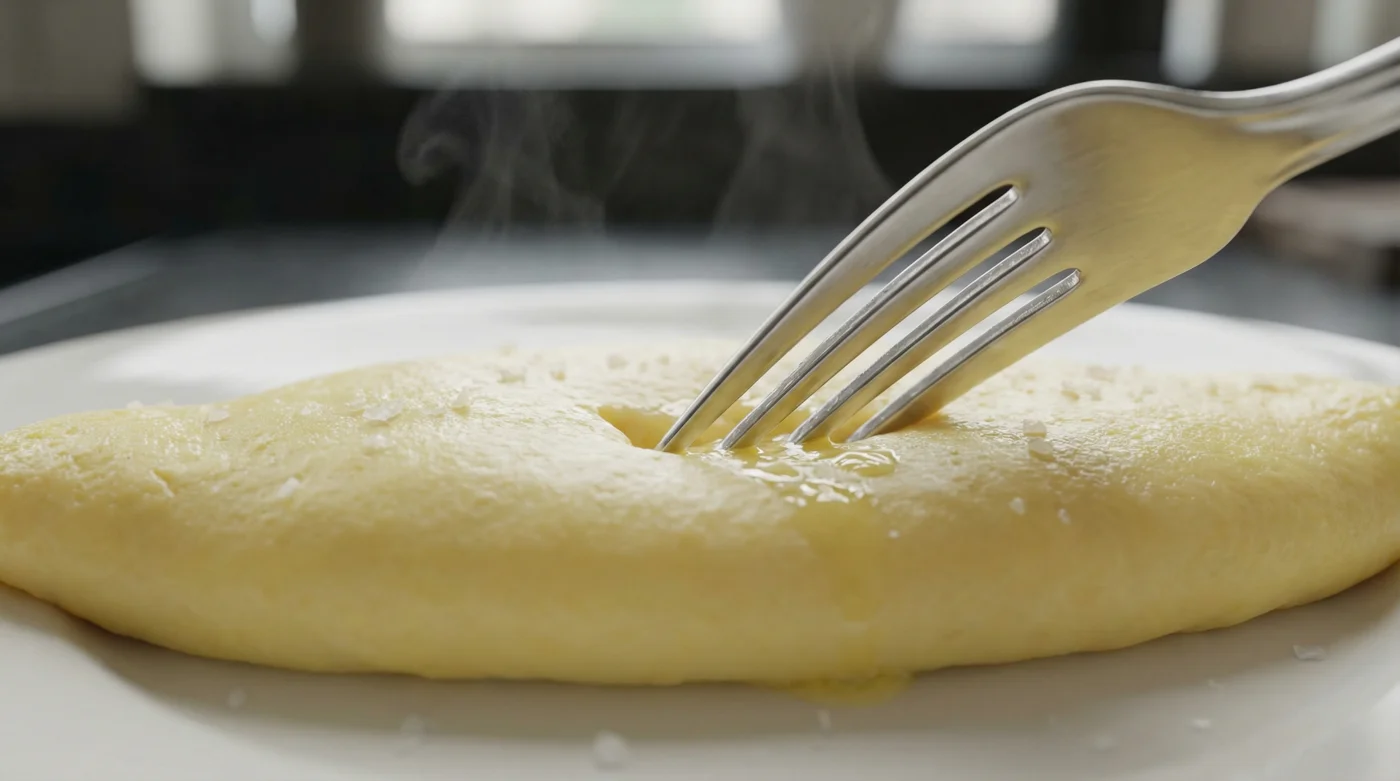
The classic French omelette, however, sits in an entirely different category of culinary comfort. It is a completely smooth, pale yellow cylinder, trembling slightly when plated, holding a heart of warm, runny custard that spills out at the nudge of a fork. For many, creating this delicate, flawless structure at home feels like a magic trick reserved for those who have spent years shouting in high-pressure Parisian kitchens. It seems to require a level of finesse that the tired home cook simply cannot muster before their first cup of tea.
Most home cooks face a familiar, deeply frustrating disappointment. You pour your carefully beaten mixture into a hot pan, and within mere seconds, a papery, rigid crust forms. The edges catch and brown, and the delicate, creamy texture you envisioned instantly turns rubbery and overcooked. High heat browns the delicate eggs too quickly, forcing you into a panicked, frantic race against the stove where you are inevitably the loser. You end up eating a folded, tough pancake rather than a refined breakfast dish.
The secret to that flawless, unblemished surface isn’t frantic stirring or investing in wildly expensive, heavy copper pans that require constant polishing. It relies entirely on a single, brilliantly counter-intuitive ingredient adjustment that alters the cooking physics from the very moment the golden liquid touches the hot metal. It is a technique that transforms a stressful dash into a calm, controlled process.
Rethinking the Heat Equation
Think of raw egg proteins as a crowded room of tightly coiled springs floating in water. When exposed to immediate, aggressive heat from a standard frying pan, they snap open violently and tangle together in a dense, tight web. This rapid, uncontrolled coagulation is precisely what causes the brown, tough skin on the bottom of a poorly executed breakfast. You cannot simply turn down the dial to absolute zero, because the eggs still need sufficient ambient heat to set into a cohesive meal.
The standard culinary advice dictates melting a generous knob of butter in the pan until it foams and bubbles, then pouring in the liquid eggs. But doing this ensures the cooking fat is already screaming hot, offering absolutely no thermal protection to the delicate proteins. Instead, you need a physical thermal buffer to act as a shock absorber against the aggressive flame beneath the pan.
Enter the cold butter emulsification method. By whisking small, fridge-cold cubes of butter directly into the raw eggs just before cooking, you introduce miniature blocks of ice into the fiery environment of the pan. As the metal attempts to fry the eggs, it must first expend its thermal energy melting the cold fat. Emulsifying cold butter cubes slows coagulation for silky textures, buying you the precious, crucial seconds needed to agitate the mixture and form the perfect, tiny curds that define the dish.
Consider the daily routine of Thomas, a 42-year-old sous chef working the demanding breakfast service at a bustling Soho brasserie. He does not rely on frantic wrist-flicking or shouting. Instead, he keeps a small steel bowl of meticulously diced, ice-cold butter in his service fridge at all times. “People mistakenly think the omelette is all about speed and panic,” Thomas notes while gracefully folding a pristine, pale cylinder onto a warm ceramic plate. “It is actually about creating a deliberate traffic jam in the pan. The cold butter melts so incredibly slowly that the egg doesn’t even realise it is being cooked until it is already a rich custard.” This single, brilliant preparation trick turns chaos into a stroll.
Adapting the Technique to Your Morning
While the underlying science of cold butter emulsification remains identical across all kitchens, how you choose to apply it depends entirely on your specific morning rhythm. Not every breakfast demands quiet, intense reverence, but every single meal deserves care, attention, and proper execution to start the day correctly.
For the Weekend Purist: You have a luxurious ten minutes to spare and a deep desire for culinary perfection. Dice 15 grams of unsalted, high-fat cultured butter into tiny, precise 5mm cubes. Keep them chilling in the fridge until the very second you finish beating your three medium eggs. Toss them into the bowl cold, agitate vigorously in a moderately warm pan, and let slow coagulation work to build an impossibly creamy, luxurious interior that rivals any restaurant.
For the Weekday Ruser: Time is notoriously tight before the morning commute, and you cannot be bothered with precision dicing. You can simply grate frozen butter directly into the beaten eggs using a standard kitchen cheese grater. The finer, colder shards melt slightly faster than the cubes, offering a much quicker set while still fiercely protecting the delicate proteins from that harsh, rubbery browning you want to avoid.
For the Dairy-Conscious: If traditional butter is off the menu for dietary reasons, the scientific principle of thermal buffering still holds beautifully. Chilling a heavy, plant-based double cream alternative to near-freezing and whisking a generous tablespoon into the raw eggs will provide a brilliant plant-based thermal barrier, achieving a similarly pale, unblemished finish without compromising your lifestyle choices.
Executing the Flawless Pale Omelette
Achieving the signature silky texture of a true French omelette is ultimately a matter of quiet, deliberate movement. You are coaxing the raw ingredients into a beautiful new shape, rather than forcing them into submission through sheer, aggressive heat. Let go of the desperate urge to fry, and instead embrace the gentle, continuous process of warming.
Start with a high-quality, eight-inch non-stick pan placed over a medium-low flame. You want the cooking surface just warm enough to slowly, gently melt a tiny test sliver of butter, but absolutely nowhere near browning or aggressively foaming.
- Crack three room-temperature eggs into a bowl and whisk until completely homogenous, ensuring no thick streaks of white remain visible to the eye.
- Stir your handful of fridge-cold butter cubes directly into the raw egg mixture just before you move to the stove.
- Pour the entire mixture into the gently warmed pan, immediately using a heat-proof silicone spatula to draw constant figure-eights through the liquid.
- As the cold butter slowly melts, the eggs will thicken into a wet, porridge-like custard; quickly smooth this out into an even, flat layer across the base of the pan.
- Once the base barely sets but the top remains delightfully glossy and wet, tilt the pan forward and gently roll the omelette over itself, tapping it out gracefully onto a warm plate.
The tactical toolkit for this specific method relies entirely on respecting precise temperatures: your eggs resting comfortably at 20 degrees Celsius, your butter held strictly at 4 degrees Celsius in the fridge, and your pan sitting quietly on the stove at around 110 degrees Celsius. You will know beyond a shadow of a doubt that you have mastered the temperature control when the outside of your finished meal is the exact same vibrant, bright yellow as the soft inside.
The Quiet Confidence of Technique
Mastering this seemingly intimidating, classical dish fundamentally shifts how you view the act of making breakfast. The French omelette stops being a high-wire act of culinary timing and quickly transforms into a highly reliable, deeply comforting five-minute ritual of self-care before the busy day demands your full attention.
By truly understanding that high heat ruins the delicate texture, you effectively strip away all the traditional stress of the morning kitchen. You dictate the pace of the cooking, using the physics of cold fat to expertly command the fire beneath the pan. It is a subtle, beautiful exercise in culinary restraint that yields disproportionately luxurious morning results for very little extra effort.
The next time you stand at the stove on a quiet, peaceful Sunday morning, you will not feel the familiar urge to rush the process. You will listen closely to the gentle hiss of melting butter, watch the bright eggs slowly thicken into a rich, heavy custard, and realise that sometimes, the absolute best way to achieve perfection is simply to cool things down.
A truly great omelette shouldn’t taste like a fried egg; it should feel like a warm, savoury butter pudding wrapped in a delicate silk sheet.
| Key Point | Detail | Added Value for the Reader |
|---|---|---|
| Traditional Method | Hot fat, rapid setting of proteins | Highlights the high risk of brown edges and a tough, rubbery texture. |
| Cold Butter Method | Ice-cold cubes mixed into raw egg | Provides perfect temperature control for a completely unblemished, pale surface. |
| Agitation Technique | Constant figure-eight stirring | Breaks up the setting curds to ensure an impossibly creamy, custard-like centre. |
Common Troubleshooting Enquiries
Why does my omelette always turn brown on the bottom?
Your pan is simply too hot. Egg proteins sear instantly at high temperatures. Lower the flame and rely on the cold butter to buffer the heat.Can I use margarine instead of cold butter?
While possible, margarine contains more water and lacks the fat content needed to create that luxurious, silky custard interior. Stick to real butter if you can.What type of pan is absolutely necessary?
A heavy-based, eight-inch non-stick pan is your best friend here. It provides even heat distribution without holding onto the delicate egg layer.How do I know when to stop stirring?
Stop agitating the moment the mixture resembles loose, wet porridge. If you keep stirring after this point, you will end up with scrambled eggs.Is it safe to eat if the middle is still slightly wet?
Yes, provided you are using high-quality, British Lion stamped eggs. The residual pan heat will continue to gently cook the centre even after plating.