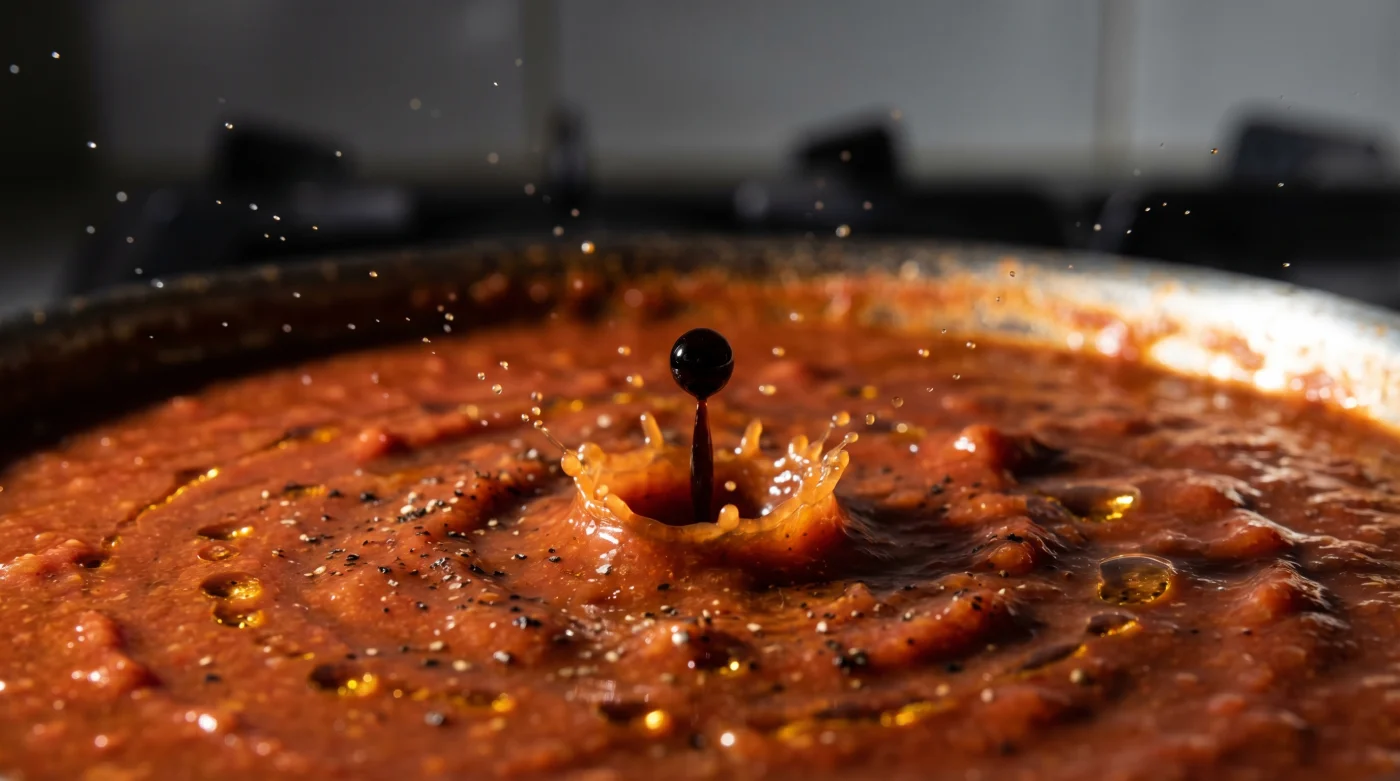
You stand over the hob on a damp Sunday afternoon, the kitchen windows steamed over from boiling carrots and roasting potatoes. The meat is resting perfectly under a tent of foil, but the saucepan in front of you holds a disappointing reality. That pale, watery liquid bubbling away smells distinctly of cardboard and regret, completely lacking the rich, roasted promise of a proper pub dinner.
You whisk vigorously, hoping sheer kinetic energy will transform the cheap instant granules into something resembling a Sunday centrepiece. But it remains fundamentally hollow, lacking that dark, mirror-like gloss that clings to the back of a spoon. You are missing structural depth, the kind of savoury backbone that usually takes a brigade of chefs three days and thirty pounds of roasted veal bones to achieve.
The frustrating truth is that you do not need a professional stockpot or expensive imported pastes to fix a broken gravy. The cure for this culinary hollow is already sitting inside the door of your fridge, waiting patiently next to the half-used jars of mustard and ancient pickles.
We have been conditioned to view tomato ketchup purely as a blunt instrument for children’s dinners, a sharp mask for dry oven chips. Yet, when paired correctly, a complex umami engine emerges, ready to completely rebuild the flavour profile of your cheapest pantry staples and trick the palate into registering hours of slow-roasted complexity.
The Perspective Shift: Tuning the Savoury Radio
Think of your cheap gravy like a radio dial stuck between stations. You hear the faint outline of a song—salt, a whisper of beef flavouring, perhaps some onion powder—but the signal is swamped by bland static. You do not fix static by turning up the volume; you fix it by adjusting the frequency.
This is where the professional pivot occurs. Tomato ketchup is not merely a sugary red sauce; it is a highly concentrated reduction of glutamates, brightened with acetic acid and balanced with sweetness. When you introduce a microscopic drop of soy sauce into that ketchup, a violent chemical handshake happens. The fermented earthiness of the soy fills the gaps left by the sweet tomatoes, creating a robust, restaurant-quality baseline.
Suddenly, that mundane bottle of tabletop sauce becomes a precision tool. It acts as the anchor point, grounding the cheap gravy granules, removing the artificial edge, and bridging the gap between salt, fat, and deeply satisfying savouriness.
Arthur Pendelton, a sixty-two-year-old former publican from North Yorkshire, built a local empire on this exact sleight of hand. Running a busy carvery in the late nineties, Arthur could not afford the luxury of endless stock reductions for his midweek lunches. Instead, he relied on what he called the pantry alchemy of ketchup and dark soy sauce. He whisked them together daily, transforming powdered catering gravy into a glossy, deeply savoury sauce that had regulars queuing out the door, completely unaware their luxurious Sunday roast was anchored by the humblest condiment.
Adjustment Layers: Tailoring the Base
Not all gravies require the exact same treatment. The beauty of this two-ingredient modification lies in its total adaptability, bending effortlessly to whatever you happen to be pulling out of the oven.
For the traditional beef roast, the gravy demands depth and aggression. You want to lean slightly heavier on the soy sauce to amplify the iron-rich notes of the meat. The ketchup acts as a shadow, providing just enough sugar to mimic the natural sweetness of roasted root vegetables without asserting its own tomato identity.
If you are roasting a chicken, the rules shift entirely. Poultry requires a lighter, more acidic touch to cut through the rendered fat of the skin and the mildness of the white meat.
Here, you pull back the soy sauce to a mere suggestion, letting the bright, vinegary notes of the ketchup take the lead. This balances the delicate meat, preventing the gravy from becoming a muddy, overwhelming puddle that entirely masks the nuances of the bird.
Then there is the vegetarian dilemma. Plant-based sausages and nut roasts often suffer from gravies that taste excessively earthy or reminiscent of damp soil, usually due to an over-reliance on bitter yeast extracts.
Equal parts ketchup and soy sauce provide a sharp, clean finish. The tomato cuts through the heavy yeast, while the soy mimics the deep, roasted savouriness of real meat juices, bringing genuine satisfaction to the vegetarian plate.
Mindful Application: The Tactical Toolkit
Timing and temperature dictate success here. If you simply squeeze cold ketchup into a boiling pan of gravy, it will curdle the flavour, leaving a harsh metallic tang on the tongue.
You must treat these additions with respect, allowing them to bloom in the heat before the bulk of the liquid is introduced. Cook the sauces out first, letting the sugars in the ketchup catch slightly on the bottom of the pan until they smell entirely different—less like harsh vinegar, more like dark, rich caramel.
- The Golden Ratio: Half a teaspoon of tomato ketchup to exactly three drops of high-quality dark soy sauce per pint of gravy.
- The Sizzle Phase: Clear a small circle in the centre of your saucepan and drop the mixture directly onto the hot metal. Let it spit and bubble for ten seconds.
- The Incorporation: Whisk vigorously as you pour in your hot gravy base, ensuring the caramelised paste dissolves completely into the liquid.
- The Rest: Take the pan off the heat and let it sit undisturbed for two minutes; the starches will relax and the beautiful gloss will develop.
The Bigger Picture: Rescuing the Sunday Ritual
Fixing a broken sauce might feel like a minor kitchen triumph, but its impact ripples outward. The gravy is the great unifier of the British dinner table; it is the warm bridge that connects the Yorkshire pudding to the parsnip, the roasted meat to the creamy mash.
When the gravy fails, the entire plate feels disjointed and dry. By mastering this simple, everyday chemistry, reclaim control over the meal. You are no longer entirely dependent on the fluctuating quality of a supermarket packet or the unpredictable whims of meat juices.
You learn to look at your cupboards not as a collection of isolated snacks and basic condiments, but as a library of raw components. The humblest red bottle on the shelf holds the power to rescue a mundane Tuesday dinner into something deeply comforting.
It is a quiet reminder that brilliant cooking rarely requires vast expense or obscure ingredients. It demands only careful attention, a willingness to ignore the labels, and the understanding that sometimes, the most sophisticated flavours are hiding in plain sight in the door of your fridge.
“The secret to a sauce that tastes like a three-day reduction is often just sixty seconds of heat and a terrifying lack of snobbery about what comes out of a plastic bottle.”
| Key Point | Detail | Added Value for the Reader |
|---|---|---|
| The Base Reaction | Searing ketchup and soy together evaporates harsh vinegar notes. | Creates a deep caramelised sweetness without adding actual sugar. |
| Ratio Management | Adjusting the soy-to-ketchup balance based on the protein. | Ensures the gravy complements rather than overwhelms the main dish. |
| Pantry Economics | Utilising cheap household staples over expensive beef stock pots. | Saves pounds per meal while genuinely improving the final taste. |
Frequently Asked Questions
Can I use light soy sauce instead of dark?
Light soy is far saltier and lacks the fermented depth required. If you must use it, halve the amount and add a tiny pinch of dark brown sugar to compensate.
Will the gravy taste like a fast-food burger?
Not at all. Heating the ketchup destroys the raw vinegar bite, leaving behind pure tomato glutamate that blends seamlessly into the meaty background.
Does this work with gluten-free gravy granules?
Absolutely. Ensure your soy sauce is a gluten-free tamari, and the chemical reaction remains completely identical.
What if I accidentally add too much ketchup?
Balance it immediately with a splash of boiling water and a harsh grind of coarse black pepper to cut the sudden sweetness.
Should I still add the meat resting juices?
Always. This modification builds the structural foundation; the resting juices provide the bespoke, unrepeatable character of your specific roast.