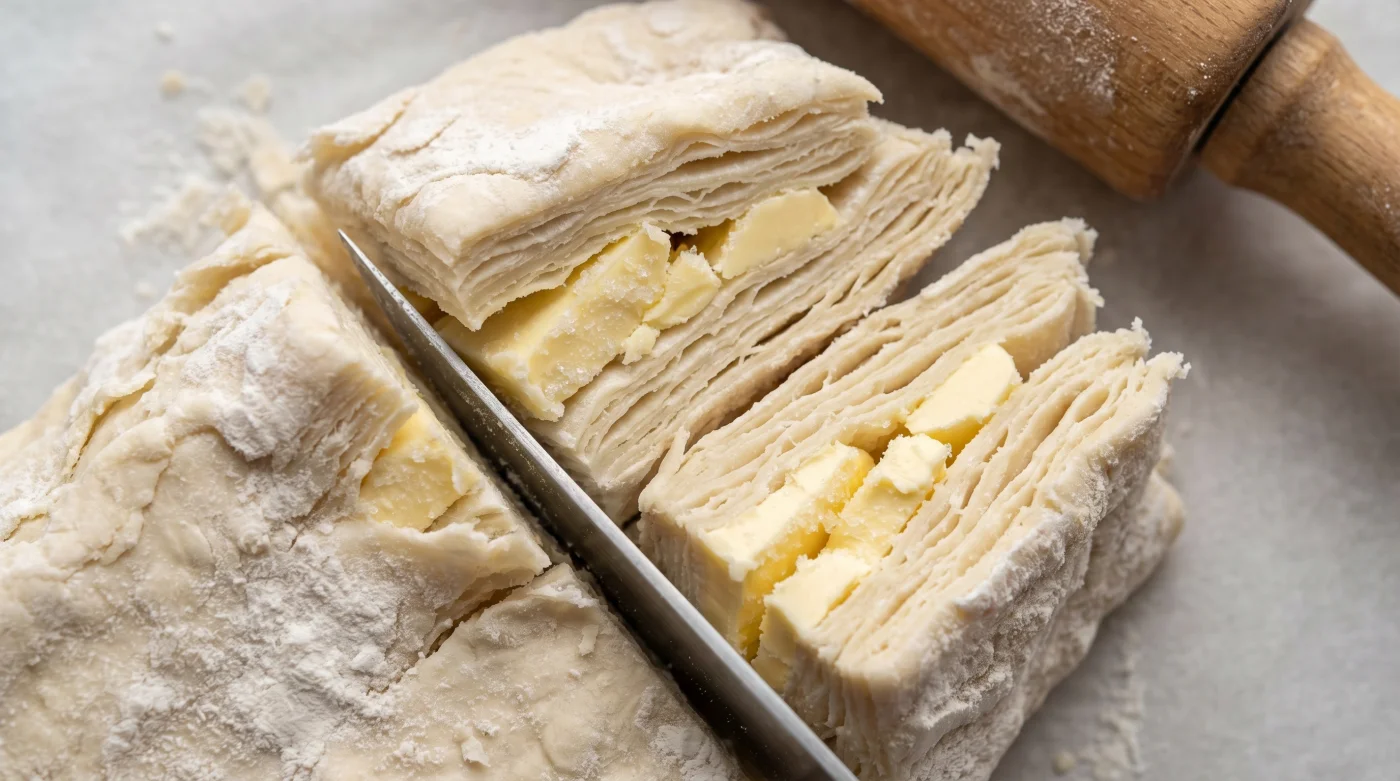
The kitchen counter at six in the morning. Cold marble beneath your palms. The sharp scrape of a wooden rolling pin. Standard pastry lore tells you to wait. You are supposed to wait for the butter block to soften, wait for the ambient temperature of your kitchen to align perfectly with the dough, wait until the fat feels like yielding clay. The traditional French method of lamination relies entirely on synchronisation. The detrempe and the beurrage must share the precise same texture, a delicate waltz of temperatures that often ends in tragedy for the home baker.
But standard lore often protects us from the very methods that produce spectacular, unexpected outcomes. You have likely spent hours coaxing dairy to that precarious state, chasing an impossible pliability, terrified of shattering it, only to watch your weekend croissants bake into flat, greasy discs. The dread of butter breaking through the dough is a universal misery.
There is a sudden shift happening across the baking world right now, catching fire on screens and in bakery queues from London to Leeds. The secret to that viral, impossibly shattered texture everyone is currently talking about isn’t patience, and it certainly isn’t room temperature. It is calculated aggression.
By deliberately working with solid ice-hard blocks, you are forcing a deliberate, aggressive thermal shock in the oven. The moisture trapped inside the frozen fat explodes into steam before the surrounding flour has any chance to set. This reaction creates those gravity-defying, paper-thin layers that look as though they belong in a Parisian patisserie window.
The Physics of the Fracture
We have been conditioned to treat pastry like a gentle negotiation, bringing all components to a polite middle ground. But think of your butter less like malleable clay and more like tiny panes of stained glass. When you grate or roll rock-solid fat directly into your base dough, you aren’t trying to smear it evenly. You are aiming to fracture it into hundreds of distinct, isolated shards.
When these frozen shards hit a blistering 220°C oven, the water content violently vapourises, instantly acting as a microscopic jackhammer that pushes the sheets of dough apart. Soft, room-temperature butter simply melts into the surrounding flour before the crust can set, yielding a dense, heavy crumb that feels like breathing through a pillow. Frozen butter, however, holds its structural nerve until the absolute last millisecond.
Consider Elias Thorne, a 34-year-old viennoiserie specialist operating out of a cramped railway arch in Bermondsey. Elias abandoned the traditional, painstakingly soft butter block entirely after a broken proofing fridge mid-July forced him to use supplies straight from the chest freezer. Desperate to fulfil his morning orders, he grated the frozen blocks directly over his chilled dough, folded it rapidly, and baked. The resulting pastries possessed a shatter so distinct, so impossibly light, the queue outside his arch now regularly stretches past the local tube station. He realised that the extreme brittleness of the fat was exactly what gave the pastry its towering, viral height.
Tailoring the Shatter
Not all culinary shifts demand a rigid, uniform approach. You can easily manipulate this frozen method to suit your weekend reality or specific cravings. For the Sunday Purist: You want the visual drama of a towering mille-feuille. Slice your frozen butter into long, thin planks using a warm knife. Lay them over the dough in a precise, overlapping grid before your first fold. The larger the frozen surface area you maintain, the more pronounced and distinct the final honeycomb structure will be when sliced.
For the Time-Poor Baker: The five-minute viral trick relies entirely on a standard metal box grater. Coarsely grate your frozen butter directly over the rolled-out dough, fold it tightly like a business letter, and immediately roll it out again. This aggressive approach skips the traditional resting phases entirely, producing a spectacular rough puff in the time it takes to brew a pot of tea.
For the Savoury Minimalist: If you are crafting a casing for heavily seasoned sausage rolls or a robust beef wellington, toss the frozen butter shards in your flour before adding a drop of ice water. The flour coats the fat, protecting the steam pockets even if your kitchen resembles a sauna, ensuring a flaky crust that stands up against rich meat juices.
Executing the Frozen Lamination
Working with sub-zero ingredients requires a noticeable shift in your physical rhythm. You are no longer massaging the dough; you are moving with brisk purpose, actively avoiding the lingering warmth of your own hands. Prepare your workspace immaculately before you even open the freezer door. The rolling pin must be cold, and the marble should hold a fine, even dusting of flour.
Treat the initial rolling process as a firm, downward pressing motion rather than a forward stretching one.
- Keep the block in the freezer until the exact second your grater touches it.
- Use the coarsest side of your grater to create thick, isolated ribbons of fat, avoiding the powdery side entirely.
- Toss the grated pieces lightly in a handful of plain flour to stop them clumping together into a single mass.
- Apply sharp, heavy pressure with your pin to physically crack the fat into the dough structure, rather than attempting to smear it smoothly.
The Tactical Toolkit requires specific boundaries. Your rolling surface should ideally be chilled quartz or marble; avoid wooden boards that retain ambient heat. Your oven temperature needs to sit at a fierce 220°C for the initial blast to activate the steam, dropping to 190°C after ten minutes to bake the flour through. A metal dough scraper is crucial to lift and turn the pastry without transferring heat from your fingertips.
Beyond the Visual Drama
Mastering this sudden deviation from the rulebook does far more than just secure a striking photograph of your Sunday baking. It systematically strips away the heavy anxiety surrounding laminated doughs. You no longer have to fear the butter melting and leaking into a tragic, smoking puddle on your baking tray.
By leaning entirely into the extreme cold, you take back control from your environment. You stop worrying about the ambient temperature of your kitchen in the height of August, or whether your hands are naturally too warm for delicate patisserie work. The frozen approach demands less time, requires far less fretting, and delivers an infinitely lighter, crispier reward. If you pair this pastry with a rich filling, the cream should tremble against the sheer crispness of the shell. It is the rare culinary shortcut that actually improves upon the centuries-old standard, transforming a high-stakes kitchen nightmare into a predictable, spectacular triumph.
Lamination is not about seamlessly blending ingredients; it is about keeping them aggressively separated until the heat of the oven forces a spectacular compromise.
| Key Point | Detail | Added Value for the Reader |
|---|---|---|
| Thermal Shock | Ice-cold fat hitting 220°C heat instantly vapourises water content. | Guarantees maximum height without relying on complex folding techniques. |
| Friction Reduction | Grated frozen butter requires pressing, not smearing. | Eliminates the risk of overworking the gluten, ensuring a tender bite. |
| Ambient Immunity | Flour-coated frozen shards resist kitchen heat. | Allows for successful pastry making even during the warmest summer months. |
Frequently Asked Questions
Can I use salted butter for this frozen technique?
Absolutely. While purists prefer unsalted to control seasoning, salted butter actually has a slightly lower freezing point, making it marginally easier to grate while still delivering that crucial steam expansion.
Will grating the butter create a uniform rise?
It creates a spectacular rough puff rise. It may look slightly more rustic and shattered than a meticulously folded classic puff, but the sheer height and crunch more than compensate for the organic appearance.
Do I still need to chill the dough between folds?
Only if your kitchen is exceptionally hot. The brilliance of this method is that the butter starts so cold, you can often complete three folds in a single five-minute session before the fat begins to soften.
Why is my pastry shrinking in the oven despite the rise?
Shrinkage is a gluten issue, not a butter issue. If you roll the dough too aggressively without letting the flour relax for a few minutes before baking, it will snap back like a rubber band.
What is the best way to slice the finished pastry?
Always use a serrated bread knife. A flat chef’s knife will crush the delicate micro-steam pockets you just spent your time creating, destroying the visual appeal of those gravity-defying layers.