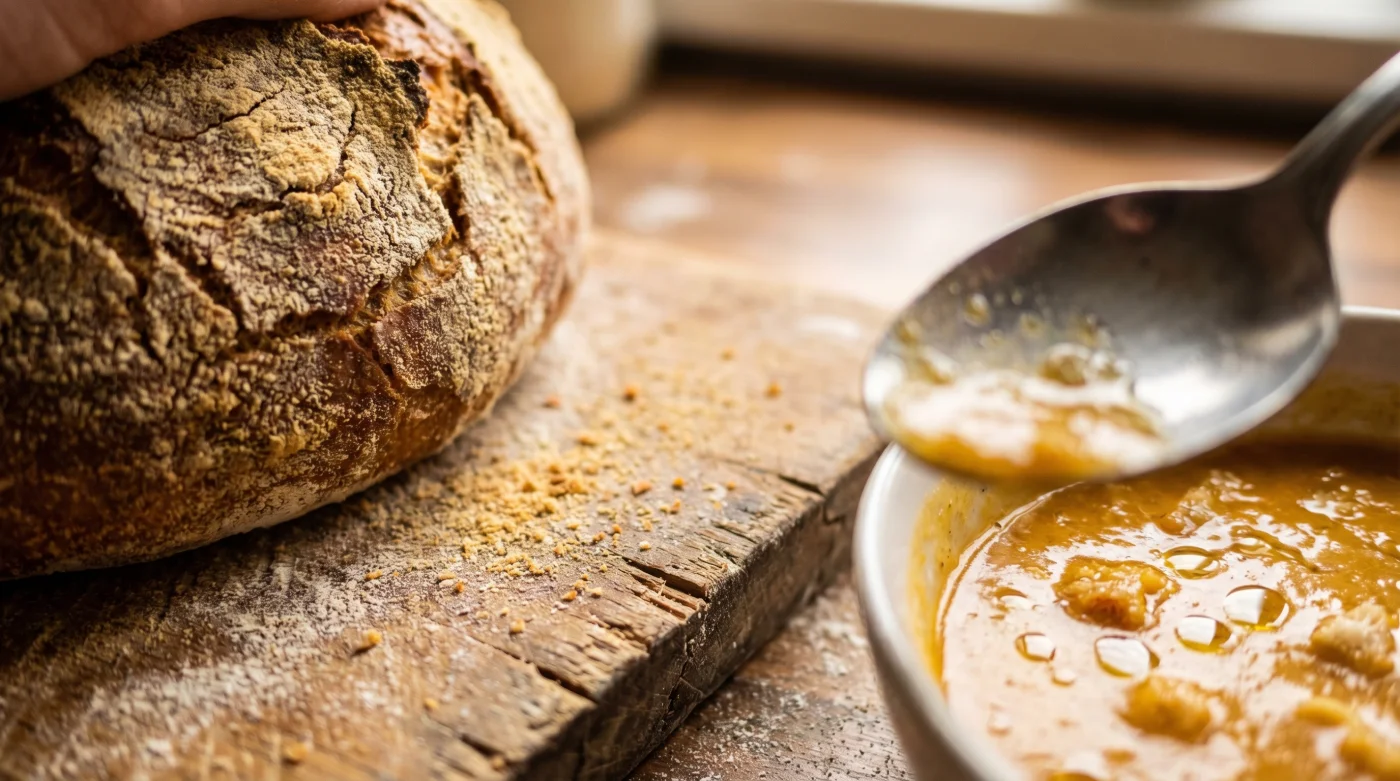
Picture the kitchen counter on a damp Tuesday morning in November. Next to the kettle sits the tragic remnant of a weekend loaf: a wedge of artisan sourdough, now so stubbornly petrified it could double as a doorstop. You rap your knuckles against the crust, hearing that hollow, unyielding thud that signals the end of its useful life as toast. Most of us sigh, perhaps feeling a brief pang of guilt about the four quid spent at the local bakery, before tossing it straight into the food waste bin.
But that rock-solid heel of bread is hiding a remarkable second act. The very staling process that robbed the crumb of its tender chew has simultaneously reconfigured its starch structure. It is no longer bread; it is a dormant sponge waiting for the right kind of liquid to wake it up.
When you stop seeing stale bread as a failure of freshness and start viewing it as a concentrated thickening agent, your evening meals change entirely. What feels like kitchen rubbish is actually the secret to the most aggressively comforting pasta dishes you will ever coax out of a saucepan.
The Magic of Retrograded Starch
We are taught that staling is a drying process, but it is actually a crystallisation. Think of it like water freezing into ice; the starch molecules in the flour are rearranging themselves into a tight, crystalline lattice. This makes the bread feel hard, yet it primes it to absorb moisture with astonishing efficiency once heat is reintroduced.
By pulverising this dense network into fine dust, you are creating a microscopic scaffolding for your pasta sauce. When these crumbs meet the starchy, salty cooking water from your rigatoni or spaghetti, they do not just sit there. They swell, dissolving into a velvety suspension that forces oil, water, and cheese to hold hands. This is the difference between a watery puddle of split olive oil at the bottom of your bowl and a glossy, opaque emulsion that clings to every single strand of pasta.
Take Marco, a 58-year-old trattoria chef working out of a microscopic kitchen in Soho. For decades, he has refused to buy commercial thickening agents or rely solely on mountains of expensive butter to mount his sauces. Instead, he keeps a massive aluminium tin above his stoves, filled with the shattered remains of yesterday’s focaccia and sourdough. Marco calls it his ‘poor man’s parmesan’. He tosses a handful of this golden dust into the pan during the final frantic minutes of tossing aglio e olio. It instantly silences the spitting oil, binding the garlic, chilli, and pasta water into a creamy, luxurious coating that feels entirely contradictory to its humble origins.
Tailoring the Crumb to the Craving
Not all stale bread performs exactly the same way, and adjusting your approach depends on the sort of dinner you are trying to pull together on a rainy Thursday night.
For the Purist: If you are working with a dark, deeply fermented rye or a wholemeal sourdough, lean into the earthiness. These robust crumbs are brilliant for anchoring rich, meat-based ragùs or a simple butter and sage sauce. The subtle acidity cuts through the heavy fats beautifully, acting as an invisible flavour balancer and thickener.
For the Busy Parent: When dealing with standard white sourdough ends, keep a jar of pre-blended fine crumbs in the cupboard. This neutral dust is your weeknight saviour. When the macaroni cheese sauce feels a bit thin, or the tomato passata refuses to cling to the penne, whisking in a tablespoon of these fine crumbs acts as an immediate kitchen fix, binding the liquid without altering the taste the kids expect.
For the Textural Forager: Sometimes you want the crunch alongside the creaminess. Do not blend the crusts into absolute dust. Leave a few jagged, pebble-sized pieces in the mix. When stirred into a creamy carbonara or a vibrant pesto, the finer dust melts into the sauce while the larger chunks remain suspended, offering a sudden, deeply satisfying chew against the soft pasta.
Creating the Emulsion Engine
Transforming your leftover loaf is a quiet, rhythmic task that asks very little of you. First, you must ensure the bread is entirely devoid of moisture, breathing through a pillow of dry air. If there is any sponginess left, tear it into chunks and leave it on a wire rack overnight.
Once the bread snaps cleanly between your fingers, it is ready. You are aiming to break the structure down without generating excess heat, which can prematurely activate the starches.
- Tear the petrified sourdough into rough, walnut-sized pieces.
- Pulse them in a food processor in short bursts until they resemble coarse sand.
- Store the resulting dust in a glass jar in a cool, dark cupboard.
When dinner rolls around, the application requires only a slight shift in your usual pan mechanics.
The Tactical Toolkit:
- Ratio: One heaped tablespoon of sourdough dust per portion of pasta.
- Timing: Introduce the crumb precisely two minutes before the pasta finishes cooking.
- Liquid: Always pair with a splash (about 50ml) of hot, cloudy pasta water to trigger the vital starch binding reaction.
Finding Wealth in the Scraps
Mastering this simple shift in pantry logic offers something far more valuable than a slightly better bowl of linguine. It rewires how you view the lifecycle of your provisions. You stop seeing a ticking clock on your expensive baked goods and start recognising a continual evolution of flavour and utility.
A rock-hard crust no longer represents wasted money or poor planning. It becomes a deliberate investment in tomorrow’s dinner. There is a deep, quiet satisfaction in solving a culinary frustration—watery, uninspired pasta sauces—using the exact ingredient you were trained to throw away. It is a reminder that the best home cooking rarely relies on buying more things; it relies on understanding the hidden potential of what you already have.
“Stale bread is not the end of the loaf; it is the beginning of the sauce. Treat it with the same respect as your finest olive oil.”
| Key Point | Detail | Added Value for the Reader |
|---|---|---|
| Retrograded Starch | Crystallised molecules in stale bread absorb water exceptionally well. | Eliminates watery pasta sauces without relying on heavy cream or extra butter. |
| Fine vs. Coarse Milled | Fine dust melts entirely; coarse chunks provide texture. | Allows you to control the exact mouthfeel of your weeknight dinners. |
| Zero-Waste Strategy | Repurposing artisan loaves that would otherwise enter the bin. | Saves money while quietly upgrading your culinary repertoire. |
Frequently Asked Questions
Can I use heavily seeded sourdough for this technique? Absolutely, though the seeds will remain whole and add a distinct toasted crunch to your final dish, which works beautifully with rustic vegetable pastas.
How long do the pulverised crumbs last in the cupboard? If stored in a completely airtight glass jar away from direct heat, they will remain potent and usable for up to a month.
Do I need to toast the crumbs before adding them to the pasta? It is entirely optional; raw crumbs melt seamlessly for thickening, while a quick toast in a dry pan adds a nutty depth of flavour.
Will this work with supermarket sliced bread? Unfortunately not, as commercial loaves lack the dense, naturally fermented starch structure required to create a stable emulsion.
What if my sauce becomes too thick after adding the crumb? Simply add another splash of reserved pasta water and stir vigorously off the heat until the sauce relaxes into a silky coating.