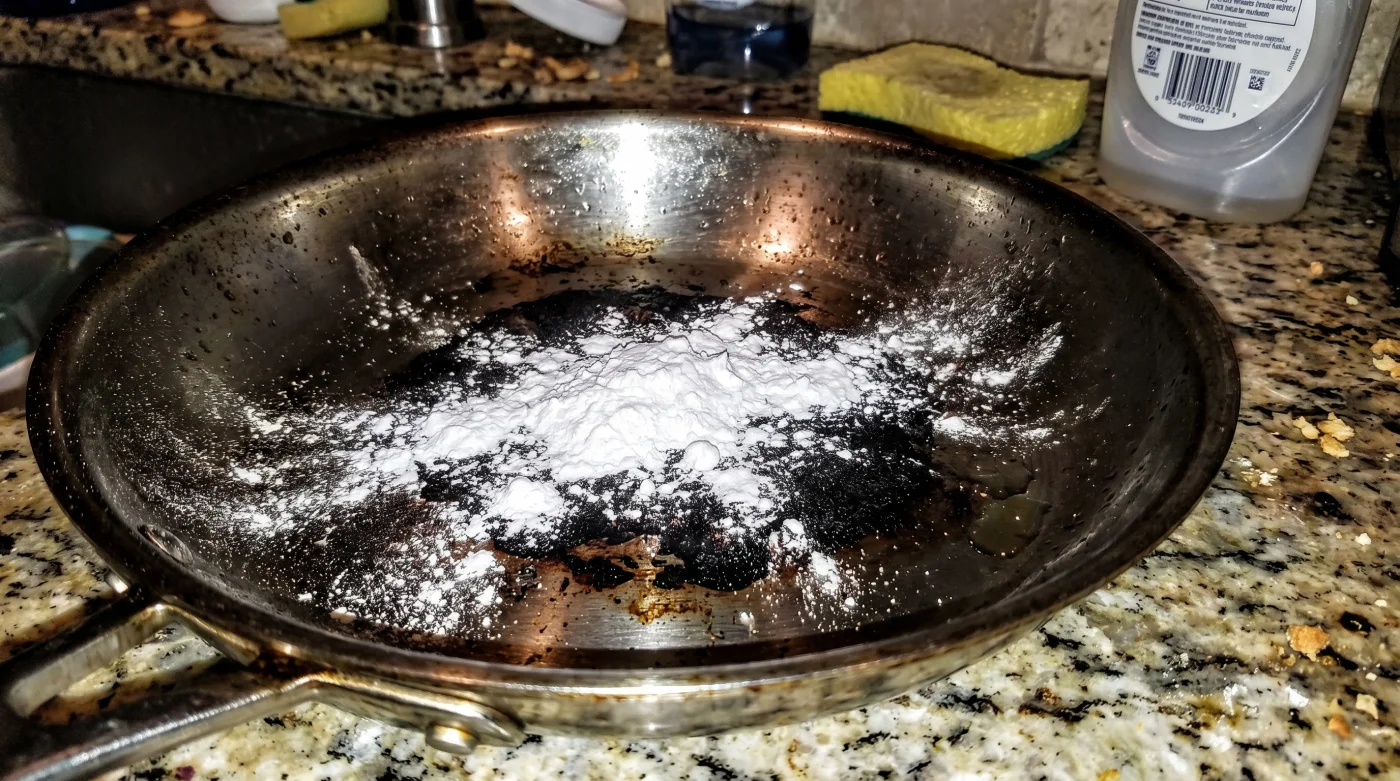
It happens in the quiet aftermath of a Sunday roast. The kitchen is settling, the plates are cleared, but sitting on the hob is the undeniable consequence of a distracted ten minutes. A heavy-bottomed stainless steel pan, the one you spent a small fortune on, is now scarred with a black, carbonised crust of scorched gravy. The acrid smell of burnt fats still lingers near the extractor fan, a quiet reminder of the culinary misstep.
You stare at the sink, imagining the sheer physical toll of wire wool against metal. Your arms ache in anticipation of the scraping, the frantic soaking, and the inevitable scratch marks that ruin the pan’s smooth, mirrored finish. Most people reach straight for the abrasive chemicals, bracing themselves for a half-hour battle at the draining board while the rest of the house relaxes.
But the answer is not hidden under the sink among the toxic sprays. It is sitting quietly at the back of your baking cupboard, completely ignored since last Christmas. That little white tub of baking powder, the one that failed to make your Victoria sponge rise three weeks ago, holds a remarkably potent chemical secret.
Rather than tossing that flat, useless dust into the bin, you can put it to work. We view baking powder purely as a volatile rising agent for cakes, but when its leavening power dies, its chemical structure shifts into a remarkably patient alkaline solvent.
The Chemistry of the Forgotten Cupboard
There is a fundamental misunderstanding about how to clean burnt metal. We are taught to treat a scorched pan like a stubborn physical enemy, scrubbing at it like an archaeologist desperately chipping away at solid rock. But carbonised food is not stone; it is merely a chemical bond that simply needs to be carefully unpicked.
Think of the burnt residue not as a solid wall, but as a tightly woven net clinging to the steel. Scrubbing simply tears the net, requiring immense force and leaving microscopic craters in the pan’s surface. Alkaline environments, however, act like a pair of invisible scissors, quietly snipping the knots over a period of hours until the entire structure collapses inward.
When baking powder loses its ability to react instantly with moisture and heat—the very thing that makes it ‘expire’ for a baker—it leaves behind a concentrated base of sodium bicarbonate and inert acid salts. This leftover dust is a dormant powerhouse. Once you add warm water and walk away, the powder begins breathing through the carbon, lifting the burnt fats away from the steel without a single scratch.
It is tempting to grab a heavy-duty scouring pad when faced with an opaque layer of black soot. You want the problem gone immediately. But stainless steel relies on a microscopic layer of chromium oxide to prevent rust and maintain its non-reactive qualities. Aggressive scraping strips this protection, leaving your expensive cookware vulnerable to pitting and discolouration.
Consider the approach of Arthur Pendelton, a 62-year-old preservationist who restores antique cookware in a drafty workshop in Somerset. Arthur never forces a clean. When handed a heavily carbonised pan, he refuses the wire brush entirely. ‘People murder their steel by fighting it,’ he mutters while setting up a soak. He swears by a thick paste of flat baking powder and tepid water, left overnight. By morning, he says, the burnt carbon simply slides off like wet paper.
Tailoring the Alkaline Soak
Not all kitchen disasters are identical. The way you apply this dormant powder depends on exactly how far you pushed your pan past the point of no return. You must treat a sugar burn differently than a fat fire. Understanding the burn changes everything when formulating your overnight paste.
For the distracted jam maker, scorched fruit sugars present a hardened caramel seal. Sugar requires a slightly longer hydration period. Do not use boiling water, as extreme heat sets the sugar further into the pores of the metal. Instead, mix your expired powder with lukewarm tap water, creating a thick sludge. The tepid water slowly breaks the sugar crystals while the alkaline powder disrupts the burnt carbon underneath.
When a high-heat sear goes wrong and leaves behind a blackened crust of animal fat, you need an active emulsifier. Fat responds beautifully to the alkaline powder, but it needs a chemical catalyst to break the grease barrier. Dust the pan heavily first, then add just enough very hot water to create a slurry, followed by a single drop of washing-up liquid. The soap breaks the oil surface, allowing the powder to penetrate the carbonised meat fibres.
Porridge oats and thick winter stews often leave a starchy, concrete-like film that binds tightly to the lower edges of the pan. Starch is notoriously sticky and resists standard soaking. For this scenario, create a slightly wetter paste. Allow the powder to hydrate fully, ensuring the alkaline mixture laps against the sides of the pan. The extra moisture prevents the starches from re-hardening.
Mindful Application: The Overnight Dissolve
The elegance of this method lies in the absolute lack of physical effort. It requires nothing but a minute of preparation and the discipline to walk away. You are shifting the workload from your shoulders to the clock. Let the chemistry work silently while the house is quiet and you are asleep.
To execute this properly, you must abandon any instinct to scrub. Assemble your tactical toolkit before you begin the process:
- Three tablespoons of discarded or expired baking powder.
- A cup of water, tuned to your specific burn type.
- A single drop of standard washing-up liquid, if treating animal fats.
- A wooden spoon and a soft kitchen sponge.
First, gently push away any loose debris using the wooden spoon. Do not force anything that resists. If the carbon refuses to move, leave it exactly where it is. Sprinkle a generous, opaque layer of the expired baking powder directly over the scorched areas, ensuring the metal is completely hidden beneath the white dust.
Carefully pour your water over the powder until it forms a loose paste. You want the cream to tremble slightly when you shake the pan, not pool into a thin soup. Stir gently with the wooden spoon to ensure the paste makes direct contact with every edge of the burn, then walk away.
Leave the pan entirely alone on the hob overnight. Do not check on it; do not stir it. In the morning, take your soft sponge and wipe the surface. The black crust pushes away effortlessly, sliding down the drain and revealing the perfectly preserved, gleaming steel beneath.
A Kitchen With No Waste
Mastering this simple overnight habit does more than save your expensive cookware from premature ruin. It changes how you view the lifecycle of the things you bring into your home. A tub of flat baking powder is no longer a failure of pantry management; it is a highly capable tool waiting for its correct deployment.
You stop viewing past-date ingredients as immediate rubbish. Instead, you recognise that elements simply transition from one purpose to another. Waste is an artificial concept when you understand the latent chemical properties sitting dormant inside your cupboards.
When you wake up to a pan that wipes clean under a gentle tap, you start the morning without the lingering guilt of yesterday’s burnt dinner. You reclaim your time, protect your financial investments, and find a quiet sort of satisfaction in letting natural chemistry bear the brunt of the hard labour.
‘A scorched pan is not ruined; it is simply locked. Expired baking powder is the silent key that turns the mechanism while you sleep.’ — Arthur Pendelton
| Key Point | Detail | Added Value for the Reader |
|---|---|---|
| Alkaline Breakdown | Expired baking powder shifts into a high-alkaline state, attacking carbon bonds instead of rising dough. | Eliminates the physical pain of scrubbing while preserving the steel’s finish. |
| Temperature Tactics | Sugar burns need lukewarm water; fat burns require hot water and a drop of washing-up liquid. | Ensures you perfectly target the specific food compound that ruined the pan. |
| Zero-Waste Economy | Repurposing a ‘dead’ pantry ingredient that would otherwise go straight into the bin. | Saves money on harsh chemical cleaners and reduces household waste. |
Frequently Asked Questions
Does this work with heavily expired baking powder?
Yes. The older the powder, the less it reacts to heat, making it an even more stable alkaline base for your soak.Can I use standard baking soda instead?
Baking soda works beautifully, but expired baking powder contains residual acid salts that create a microscopic fizzing action, gently aiding the lifting process.How long is ‘overnight’ exactly?
Aim for at least eight hours. The alkaline paste needs quiet time to unpick the deepest layers of the carbonised food.Is this safe for non-stick or cast iron pans?
This specific method is tailored for stainless steel. High alkaline pastes can strip the seasoning on cast iron or degrade delicate non-stick coatings over time.What if a faint shadow remains in the morning?
If a stubborn ghost mark persists, apply a quick splash of white vinegar. The sudden acid reaction will effortlessly dislodge the final microscopic layer.