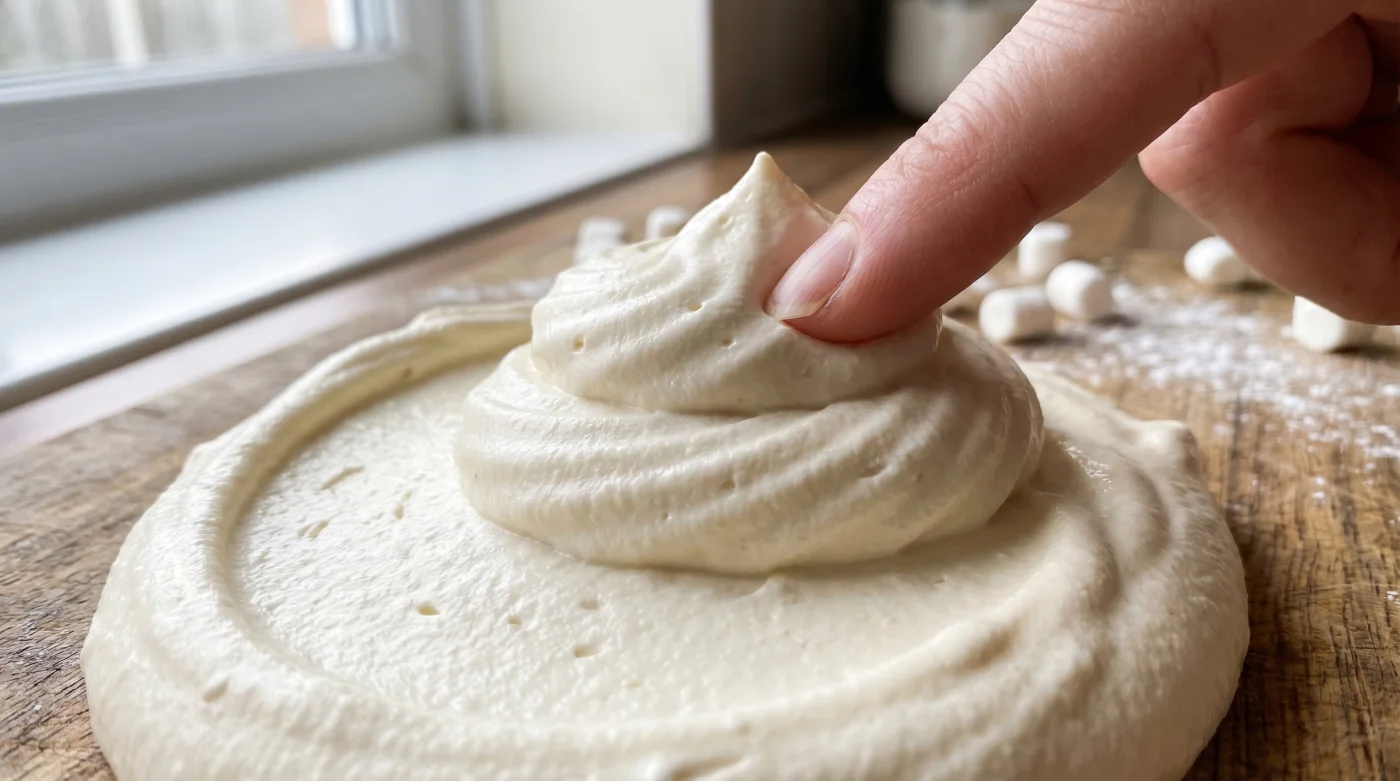
The late afternoon sun catches the rim of your metal mixing bowl, illuminating a familiar scene of quiet culinary tension. You stand with a balloon whisk in hand, watching a pool of thick, ivory double cream swirl at the bottom. The window of perfection is brutally narrow. Stop too soon, and your carefully piped borders will collapse into a sad, weeping puddle within the hour. Push it a few seconds too far, and the cream turns stiff, grainy, and dangerously close to butter. It is a moment that demands utter concentration and no small amount of luck.
You have likely spent years accepting this precarious balancing act as a mandatory kitchen ritual. The innate fragility of dairy dictates exactly how far in advance you can prepare a dessert, often forcing you to assemble Victoria sponges and pavlovas in a frantic rush just before your guests sit down to eat. You see the sharp, gravity-defying rosettes sitting proudly in local bakery windows and assume those pastry chefs possess some unattainable magic, or perhaps expensive industrial chemicals you cannot pronounce.
But the secret to those pristine, expensive-looking finishes does not require ordering giant plastic tubs of commercial powders or spending pounds sterling on specialty restaurant imports. The missing structural scaffolding is sitting right now on the shelf of your local corner shop, masquerading as a brightly coloured childhood treat. It turns out that a handful of ordinary marshmallows provides exactly what your double cream has been begging for all these years.
The Architecture of Fat and Air
Think of heavily whipped cream as a microscopic, fragile glass cathedral. When you beat air into the heavy milk fat molecules, you are stacking delicate invisible walls higher and higher. Without any form of mortar, the slightest bump in ambient temperature or mere passage of time brings the whole magnificent structure crashing down. You do not need to whip the cream harder or longer; you simply need to introduce a reliable, invisible mortar to hold those fatty walls in place.
This is exactly where the humble marshmallow steps in to rewrite your domestic pastry rulebook. Marshmallows are almost entirely structural by nature, composed primarily of suspended animal gelatin and sugar. By gently melting a small amount and folding it into your double cream, you introduce a pliable, microscopic net. As the cold cream chills, the gelatin sets invisibly. The mundane, overly sweet confection you normally reserve for a winter bonfire is revealed as a highly engineered culinary binder, turning unpredictable dairy into a medium as reliable as modelling clay.
Clara, a forty-two-year-old pastry chef running a boutique patisserie in York, discovered this instant structural integrity by sheer necessity. During the humid peak of the summer wedding season, her usual wholesale supplier failed to deliver her high-grade commercial cream stabiliser. Faced with three completely naked sponges and a desperately warm kitchen, she ran to the shop next door, melted down a bag of white mini marshmallows, and tempered them into her double cream. Not only did the cream hold its razor-sharp piped edges for two full days in the display case, but the subtle, velvety chew it acquired made it the most requested finish on her entire menu.
Adapting to Your Kitchen Canvas
Because you are replacing a harsh chemical additive with a physical pantry ingredient, understanding how to manipulate it allows you to bend this method to your exact needs. The marshmallow addition is not a rigid doctrine; it is a beautifully flexible technique that scales up or down depending on what you are trying to achieve on the plate.
For the aesthetic purist, maintaining a pristine, snow-white finish is the absolute priority. You will want to seek out exclusively white mini marshmallows, taking care to avoid the pink ones that lend an unwanted pastel hue to the bowl. Because marshmallows already contain a concentrated amount of sugar, you can entirely omit any extra caster sugar from your cream. The result is a clean, architectural medium that allows the pure, grassy notes of good British dairy to shine through without overwhelming the palate.
For the busy parent throwing together a last-minute birthday cake, precision piping might be secondary to pure structural survival. A rustic, sweeping application benefits immensely from this modified cream. You can aggressively swoosh the mixture over a Tuesday night chocolate sponge, knowing it will not slide off the edges or weep into the crumb overnight in the fridge. It easily survives the treacherous journey in a plastic tub to the school bake sale without turning to a miserable soup.
The Mindful Integration Method
Applying this technique correctly requires a gentle hand and a moment of quiet focus. You cannot simply dump solid marshmallow pieces into freezing cold cream and expect them to blend smoothly. The entire process is a careful negotiation of temperatures, ensuring the sticky gelatin dissolves entirely without deflating the delicate air bubbles you have worked so hard to build up.
Begin by placing a small handful of marshmallows in a heatproof glass bowl with a tiny splash of unwhipped double cream. Melt this slowly over a pan of barely simmering water, stirring constantly with a silicone spatula until the mixture drops off your spoon in a smooth, glossy ribbon. Remove the bowl from the heat and let it cool on the counter until it is just warm to the touch, but not firmly set.
- Whip your remaining double cream until it just reaches soft, floppy peaks.
- Take a spoonful of the whipped cream and fold it into the cooled marshmallow mixture to temper it.
- Pour the tempered marshmallow mixture back into the main bowl of whipped cream.
- Whisk slowly, just until the cream holds a firm, precise peak that does not droop when you lift the beater.
Your tactical toolkit for this wonderfully sparse operation is refreshingly minimal. You need only twenty grams of marshmallows for every three hundred millilitres of double cream. Keep your main batch of cream straight from the coldest shelf of your fridge, and ensure your piping bag is fitted with your chosen star nozzle before you begin the final, crucial whisking stage.
The Quiet Confidence of Preparation
There is a profound, lasting peace of mind that comes from finally trusting your ingredients to behave. When you no longer have to worry about your carefully crafted dessert collapsing at the dinner table, your entire emotional approach to hosting changes. You can pipe those intricate rosettes, delicate swirls, and heavy borders the night before, leaving them to set perfectly in the fridge while you focus your attention on the Sunday roast.
Mastering this small, seemingly insignificant detail strips away the fear of presentation. You learn to look at the mundane ingredients hiding in your cupboards not just as finished snacks, but as individual, powerful tools waiting to be repurposed. The next time you pick up a piping bag, you will do so with a steady hand, knowing the cream will do exactly what you ask of it, holding its shape beautifully until the very last bite.
The true mark of a professional is not the equipment they own, but their ability to coax absolute reliability out of the simplest ingredients.
| Key Point | Detail | Added Value for the Reader |
|---|---|---|
| Gelatin Scaffolding | Marshmallows provide invisible structural support to the heavy dairy fat. | Piped shapes remain razor-sharp for days without weeping. |
| Cost Efficiency | Replaces commercial powders with a cheap local corner shop staple. | Professional-looking desserts achieved on a strict household budget. |
| Time Shifting | The stabilised cream does not degrade, split, or turn to butter over time. | Allows you to frost and confidently pipe cakes twenty-four hours in advance. |
Frequently Asked Questions
Can I use vegetarian marshmallows for this exact technique?
Yes, provided they contain agar-agar or a similar setting agent, though you may need to melt them slightly longer to achieve that smooth ribbon consistency.Will my whipped cream taste overwhelmingly of toasted marshmallow?
Not at all. Because you use such a small ratio, it adds only a mild, pleasant sweetness, completely replacing the need for caster sugar.How long will the piped cream hold its sharp shape in the fridge?
When properly tempered and thoroughly chilled, the structural integrity holds flawlessly for up to forty-eight hours without weeping or separating.Can I pipe this stabilised cream directly onto a hot sponge cake?
No. Even with the gelatin scaffolding, the butterfat in the double cream will instantly melt if exposed to residual heat. Always cool your cakes entirely.What if the melted marshmallow turns rubbery before I fold it in?
You have likely let it cool for a fraction too long. Simply set the bowl back over the simmering water bath for a few seconds to loosen it before tempering.