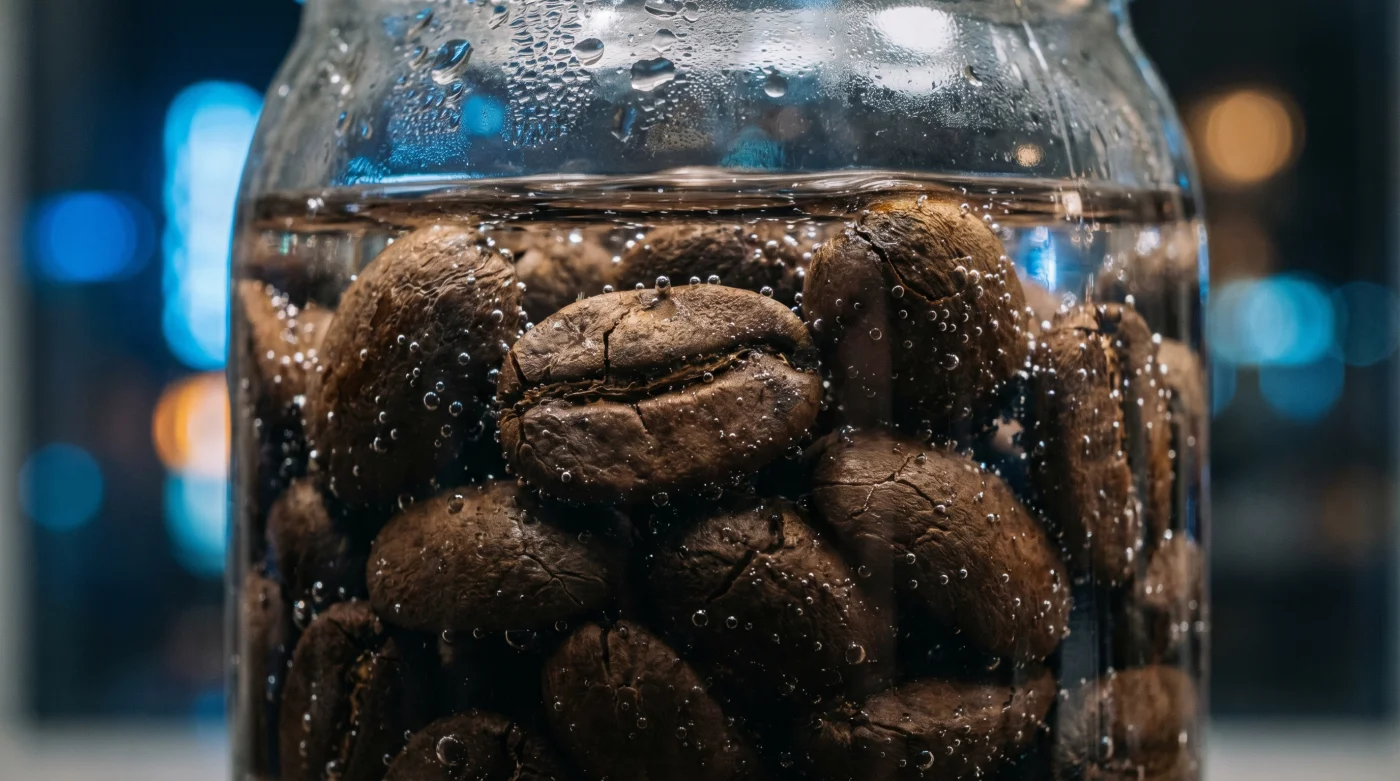
You know the exact sound. It is the dull, unenthusiastic crinkle of a foil bag pulled from the very back of the top cupboard. Inside sit the remains of a single-origin roast you bought weeks, perhaps months, ago. The faint, woody scent rising from the bag lacks the vibrant bloom of fresh coffee. Conventional kitchen wisdom tells you these beans are past saving, fit only for the bin or the compost heap.
Hot water is entirely ruthless when it comes to age. It demands absolute freshness to perform well. Pouring a freshly boiled kettle over these tired, oxidised beans results in a thin, ashy cup that tastes like hollow regret. You tip the bitter liquid away, feeling a sharp twinge of guilt over the fifteen Pounds Sterling effectively poured down the sink.
But the fault does not lie with the bean. The fault lies with the temperature. Professional roasters understand that oxidisation primarily ruins a coffee bean’s reaction to intense heat. Remove the kettle from the equation, and those seemingly dead, forgotten beans still harbour heavy, sweet oils waiting for a far gentler persuasion.
We are going to ignore the hot extraction entirely. Instead, we lean into a slow, patient soak that turns your pantry oversight into an extraordinary drink. It requires zero extra spending, demanding only a subtle shift in how you treat your neglected ingredients to extract incredible value from what others throw away.
The Alchemy of Neglect
To understand why this works, you have to picture extraction as a conversation between water and the cellular structure of the bean. Hot water is an aggressive interrogator. It violently forces out everything at once—the delicate floral notes, the bright acids, and, crucially, the harsh, astringent tannins that dominate an oxidised, stale bean.
Cold water, however, acts as a patient confidant. It simply refuses to coax out the bitter, degraded compounds. It asks quietly for the heavy lipids, pulling only the dense, chocolatey oils that naturally survive the ageing process. When you shift to a cold infusion, you aren’t settling for a lesser morning drink; you are actively selecting a superior chemical extraction method for aged produce.
Consider Elias Thorne, a 42-year-old roaster working out of a damp, brick-lined railway arch in Bermondsey. Elias routinely takes his end-of-batch beans—the stragglers left to languish on the packing tables for six weeks—and dumps them into massive glass carboys of filtered Thames water. He figured out years ago that while a three-month-old Yirgacheffe brews a harsh, metallic flat-white, an 18-hour cold steep transforms that exact same stale bean into a viscous, plum-sweet syrup that routinely outshines his freshest roasts.
Adapting to Your Cupboard’s Castaways
Not all stale beans behave exactly the same way under cold water. Your approach should shift slightly depending on the specific history of what you pull from the back of the shelf.
For the Forgotten Supermarket Dark Roast: These beans were heavily roasted to begin with, meaning their oils have sat exposed on the surface for months. They demand a coarse grind and a slightly shorter steeping time to avoid pulling heavy, tar-like flavours. Expect a bold, stout-like finish that pairs beautifully with a splash of whole milk.
For the Faded Speciality Light Roast: Those expensive Kenyan or Colombian beans that lost their floral aroma weeks ago need more time. They require a longer, 24-hour steep at room temperature. The prolonged cold water contact bypasses the papery oxidisation and isolates a delicate, tea-like sweetness that is incredibly refreshing over ice.
For the Mixed-Bag Orphanage: We all have them—the handful of beans left at the bottom of three different bags, not enough to make a full pot of anything. Blend them together. Cold water is a great equaliser, rounding off the discordant edges of mismatched origins and turning them into a cohesive, velvety morning brew.
The Slow-Draw Cold Infusion Protocol
Setting up this infusion is a quiet, deliberate act of preparation. It asks for mere minutes of your time, followed by the grace of leaving it well alone.
- Ratio: 1 part coffee to 8 parts cold, filtered water (by weight).
- Grind: Extremely coarse, resembling rough sea salt or cracked pepper.
- Temperature: Room temperature for the first 12 hours, then transferred to the fridge.
- Vessel: Glass or ceramic. Never use plastic, which holds onto stale odours.
Begin by grinding the beans heavily. Do not rush this mechanical step, as a fine grind will create a muddy, silty texture and accidentally over-extract the few bitter compounds we are trying so hard to avoid.
Tip the rough grounds into your glass vessel. Pour the cold water over them in slow, concentric circles, ensuring every single particle is saturated. Give it a single, gentle stir with a wooden spoon—metal can occasionally react poorly with the suspended oils.
Cover the jar tightly to protect the liquid from absorbing any ambient fridge smells, and walk away. Patience is your active ingredient here. After 18 to 24 hours, strain the dark liquid through a paper filter or a fine muslin cloth to catch the sediment, leaving you with a flawless concentrate.
Redefining Kitchen Value
Finding a brilliant use for something you previously deemed ruined offers a quiet, profound satisfaction. It shifts your relationship with your pantry from a cycle of thoughtless consumption and waste to one of clever stewardship.
Those old beans sitting in the jar are no longer a nagging reminder of a wasted tenner. They are a deliberate resource, quietly waiting in the dark to provide a smooth, low-acid morning drink that requires no bleary-eyed kettle boiling or complicated machinery before work.
By understanding the mechanics of water temperature, you stop fighting the natural ageing process of your food. You learn to work with what is actually sitting on your shelves, finding extraordinary, zero-waste value in the ordinary and the overlooked.
“A stale bean is simply a fresh bean that has forgotten how to handle heat; treat it with cold water, and it immediately remembers its sweetness.”
| Key Point | Detail | Added Value for the Reader |
|---|---|---|
| Bean State | Oxidised vs Fresh | Saves you throwing away expensive, aged coffee. |
| Water Temp | 15°C vs 92°C | Prevents the extraction of bitter, astringent flavours. |
| Time Investment | 18 hours passive vs 3 mins active | Creates a ready-to-drink morning supply with zero effort. |
Frequently Asked Questions
How stale is too stale for this method?
As long as the beans have been kept dry and show no signs of mould or rancid, fishy smells, they are perfectly fine to use. Even beans sitting in a cupboard for six months can yield a highly drinkable cold infusion.Can I use pre-ground coffee instead of whole beans?
Yes, though because pre-ground coffee is usually quite fine, it will extract much faster. Cut the steeping time down to 10-12 hours and strain it very carefully through a paper filter to remove the silt.Should I keep the jar in the fridge or on the kitchen counter?
Start the jar on the counter at room temperature for the first 12 hours to kickstart the extraction of the oils, then move it into the fridge for the remainder of the time to keep the profile crisp.Does a cold infusion have less caffeine than a hot brew?
Actually, no. Because the coffee grounds sit in the water for such an extended period, cold infusions pull out a substantial amount of caffeine. Treat the resulting liquid as a concentrate and dilute it with water or milk.How long does the strained liquid last in the fridge?
Once fully strained off the grounds, the cold coffee concentrate will keep happily in a sealed glass bottle in the fridge for up to a fortnight without losing its smooth flavour.