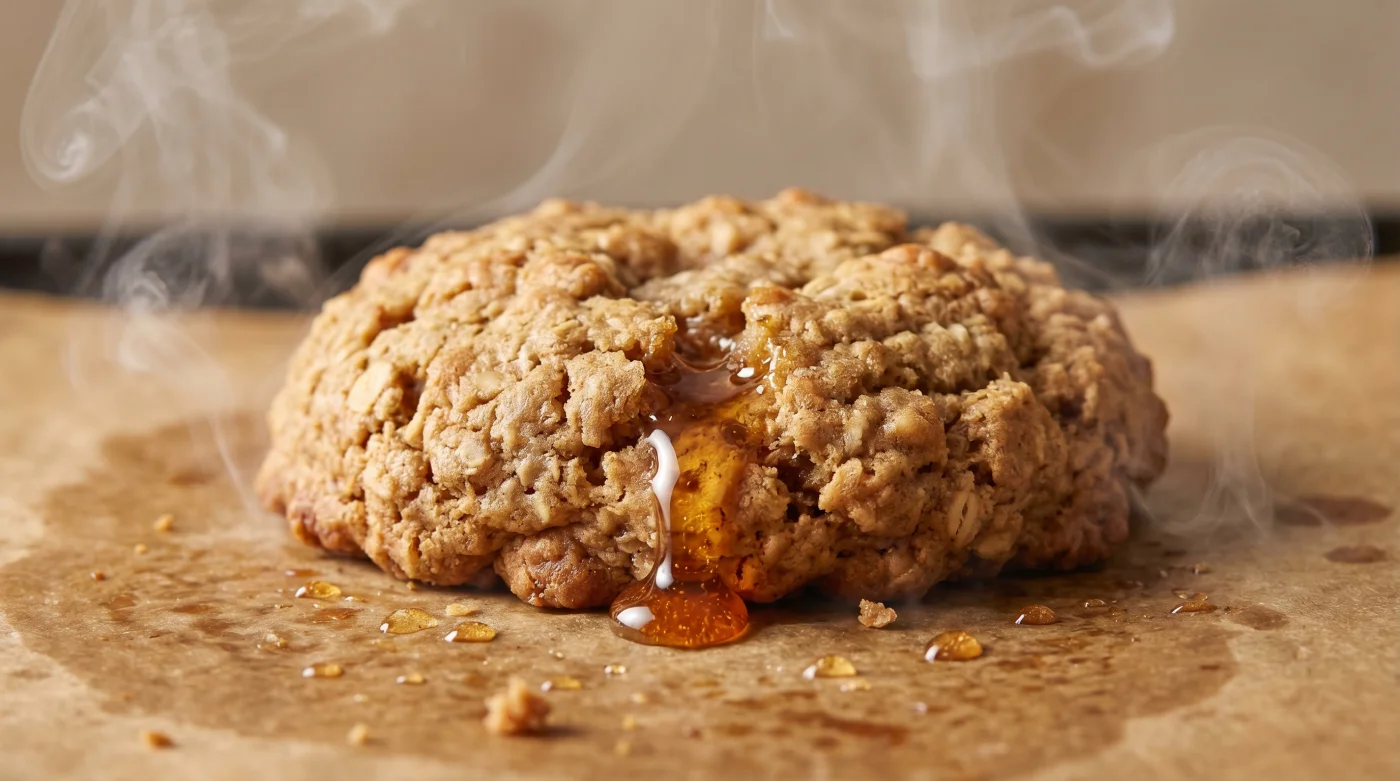
You pull the heavy steel tray from the oven, the scent of vanilla and browning butter warming the draughty kitchen air. The edges of the cookies are perfectly golden, the centres slightly puffed and trembling. You wait the obligatory ten minutes, watching them settle and flatten against the baking parchment. When you finally pick one up, applying gentle pressure with your thumbs, you are praying for a slow, reluctant bend. Instead, it snaps. A sharp, brittle break that scatters crumbs across the worktop.
We have all spent hours chasing that bakery-window ideal, assuming we just need to mix the dough differently or tweak the oven temperature. You sift, you measure, you chill the dough overnight, yet the results remain stubbornly crisp. The frustration lies in knowing the texture you want—that dense, fudge-like centre that clings to the teeth—but missing the chemical mechanism required to build it.
Traditional wisdom tells you that adjusting the ratio of white to brown sugar is the answer, or perhaps melting the butter before mixing. While those adjustments slightly tweak the moisture content, they rely on a fundamentally flawed premise. Standard crystalline sugar, even when melted into hot butter, recrystallises as it cools, forming a rigid, inflexible structure that shatters rather than tears.
The true modification is brilliantly straightforward, relying on an old-fashioned tin likely sitting at the back of your cupboard. By executing a simple professional pivot, you introduce a liquid inversion from the syrup that completely bypasses the recrystallisation phase, resulting in a crumb that bends without breaking.
The Architecture of a Bend
To understand why this substitution works, you need to picture the dough as a construction site. When you cream standard caster sugar into butter, you are building tiny, fragile air pockets supported by jagged sugar crystals. As the heat of the oven hits, the butter melts and the sugar dissolves into a puddle. But as soon as the tray hits the cooling rack, those sugars harden back into a crystalline state. They become stiff structural beams holding the flour together.
Think of caster sugar acting like rigid sheets of glass within the dough. If you bend glass, it breaks. Golden syrup, however, behaves like pliable mortar. Because it is an invert sugar—meaning its sucrose has been broken down into glucose and fructose—it actively resists recrystallisation. It acts as an interfering agent, preventing the remaining sugar molecules from locking arms.
By swapping out a specific portion of your standard caster sugar for golden syrup, you alter the entire baked crumb structure. The syrup traps moisture, holding water molecules tightly within the dough long after the heat has dissipated. It contradicts the long-held belief that standard sugar creates chewiness, proving instead that chewiness is entirely a product of manipulated hydration.
Clara Davies, a 42-year-old pastry chef running a fiercely popular, hole-in-the-wall bakery in Bristol, built her entire wholesale business on this single revelation. For years, her morning batches would dry out by mid-afternoon. “I stopped treating baking like magic and started treating it like structural engineering,” she notes. By pulling 20 percent of the white sugar from her master recipe and folding in warm golden syrup instead, she noticed the cookies stayed tender for three days. The heavy syrup restructures the dough’s memory, forcing it to remain soft regardless of how aggressively the flour tries to dry it out.
Tailoring the Chew to Your Taste
Not every recipe requires the exact same treatment. The beauty of this professional pivot is its flexibility, allowing you to adapt the hydration level based on the specific dry ingredients fighting for moisture in your bowl.
For the chocolate chip purist, the goal is a buttery, pale dough that heavily contrasts with pools of dark chocolate. Here, you replace exactly one-quarter of the caster sugar with golden syrup. This ratio provides enough invert sugar to guarantee a chewy centre, whilst maintaining enough crystalline sugar to ensure the edges crisp beautifully without spreading too thin across the parchment.
If you are working with oats, the rules shift. Rolled oats are intensely thirsty, acting like tiny sponges that greedily absorb moisture during the baking process. A standard oat biscuit is practically designed to become a crisp, dunkable disc. To force chewiness into an oat-heavy dough, you must be more aggressive.
For the spiced oat enthusiast, you should increase the substitution, replacing one-third of the total sugar with the syrup. The thick, viscous liquid coats the oats, softening their harsh edges before they even reach the oven. This higher concentration of invert sugar defends against staling aggressively, leaving you with a dense, flapjack-adjacent texture that holds its shape.
Executing the Professional Pivot
Implementing this change requires precision, but it does not demand new equipment. It is a mindful process of subtraction and addition. You must lower the oven temperature slightly, as the fructose in the syrup browns faster than standard sucrose. Keep your actions deliberate and minimal.
Follow these steps to integrate the liquid inversion smoothly into your existing routine, paying close attention to how the dough feels rather than strictly watching the clock:
- Calculate your total caster sugar weight. Remove 25 percent of that weight and set it aside.
- Weigh out an equal amount of golden syrup. Lightly oil your measuring spoon first so the liquid slides off effortlessly.
- Warm your butter until it yields to a gentle press, but do not melt it entirely. The creaminess is required to hold the heavy syrup in suspension.
- Beat the syrup, the remaining caster sugar, and the butter together until the mixture turns pale and fluffy—usually around three minutes on a medium speed.
- Fold the flour in by hand. Stop mixing the second you can no longer see streaks of white powder.
The Tactical Toolkit: Set your oven strictly to 165°C (fan). Standard recipes call for 180°C, but the syrup will scorch at that heat. Weigh your dough into 60-gram portions for an optimal spread. Bake for exactly 11 minutes. They will look entirely raw in the centre when you pull them out; trust the carry-over cooking on the hot tray.
Beyond the Biscuit Tin
Mastering this simple ingredient pivot does more than just salvage an afternoon of baking. It bridges the gap between blindly following instructions and actually understanding the materials beneath your hands. You stop relying on luck and start relying on technique.
There is a distinct, quiet satisfaction in knowing exactly how to manipulate a recipe to suit your exact cravings. When you understand how liquid inversion alters the crumb structure, you gain a sense of authority over your kitchen environment. It transforms baking from a roll of the dice into a reliable, comforting ritual.
Next time you measure out your ingredients, the sharp snap of a brittle biscuit will no longer be a looming threat. Instead, you will have the guarantee of a rich, bending, flawless finish. A small tin of syrup, quietly waiting in the dark, holds the answer to the texture you have always wanted.
The difference between a home-baked biscuit and a professional cookie is rarely a secret recipe; it is almost always the quiet manipulation of moisture.
| Key Point | Detail | Added Value for the Reader |
|---|---|---|
| Standard Caster Sugar | Recrystallises upon cooling, creating a rigid structure. | Explains why traditional recipes often result in brittle or snapping textures. |
| Liquid Inversion | Breaks down sucrose, preventing sugar molecules from locking. | Provides the scientific reason behind the guaranteed soft, pliable centre. |
| Lower Oven Heat | Reducing bake temperature to 165°C prevents fructose scorching. | Ensures a perfectly golden crust without the bitter taste of burnt syrup. |
Frequently Asked Questions
Can I use honey or maple syrup instead?
While they are liquid sweeteners, their chemical structures differ from golden syrup. They will add moisture but lack the specific invert sugar concentration needed for this precise chewy texture, often leading to a cakey crumb.Do I need to alter the flour content?
No. Because you are substituting the caster sugar by weight, the dry-to-wet ratio remains balanced enough that the flour does not need adjustment.Why do my cookies spread too much with syrup?
This usually happens if your butter was too warm or fully melted when mixing. The fat must hold the heavy syrup in an emulsion; soft, room-temperature butter works best.Should I chill the dough before baking?
Chilling is highly recommended. Letting the dough rest in the fridge for at least an hour allows the flour to fully hydrate from the syrup, resulting in a thicker, chewier final bake.How long will these stay chewy in a tin?
Thanks to the moisture-retaining properties of the invert sugar, these will easily retain their soft bend for up to four days in an airtight container at room temperature.