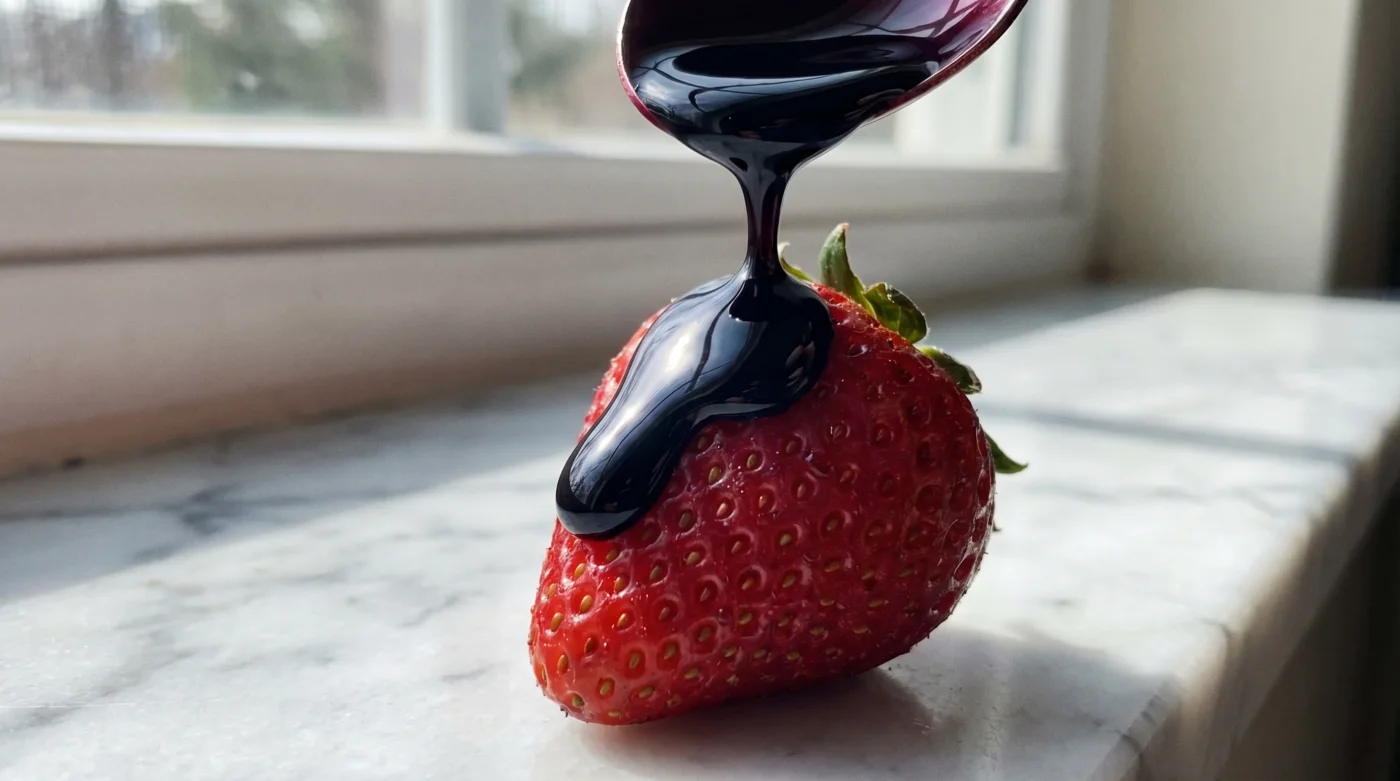
The stinging vapour hits the back of your throat before you even see the smoke. You stood at the hob for twenty minutes, watching a pan of supermarket balsamic vinegar roll into a furious, bubbling boil, hoping it would magically transform into that glossy restaurant syrup. Instead, the kitchen smells like a neglected chip shop, and a sticky black tar has welded itself to the base of your best saucepan. The disappointment is palpable when you attempt to drizzle it over a pristine Caprese salad, only to watch it seize into hard, bitter candy against the cold mozzarella.
This is the familiar Saturday night sacrifice of ambitious home cooks. You accept the sharp smell and the ruined pans because you believe that relentless heat equals culinary refinement. The traditional slow reduction promises luxury, but it usually delivers a frustrating, bitter mess that solidifies the moment it hits a cold plate. It is a messy, unpredictable gamble that leaves your extraction fan working overtime.
Now picture a quiet corner of a professional pass during the Friday evening rush. There is no acrid smoke, no frantic scraping of pans, and certainly no burnt sugar clinging to expensive cookware. The chef simply reaches for a plastic squeeze bottle and lays down a perfect, glass-like ribbon of dark glaze across a plate of heritage tomatoes. The drops hold their shape like black pearls, completely unaffected by the ambient heat of the busy kitchen.
The secret is not endless hours over a flame, but a tiny, almost invisible structural shift. The finest kitchens simply bypass the boiling process entirely, relying on modern pantry staples to do the heavy lifting in a fraction of the time.
The Cold Architecture of Flavour
Think of standard balsamic reduction as forcing a delicate instrument to play heavy metal. When you aggressively boil vinegar, you destroy the fragile, volatile esters that give it that complex, woody brightness. The harsh heat drives off the nuanced top notes, leaving behind a flat, concentrated sweetness that often borders on acrid. You are trading nuance for texture, boiling away the very soul of the liquid just to make it sticky.
The true perspective shift happens when you separate texture from temperature. By treating the liquid as a structural framework rather than a soup to be boiled down, you preserve the pure, bright acidity you desire. The flaw of thin vinegar becomes your greatest advantage: a pristine canvas ready to be thickened without losing its raw character. You are no longer reducing the liquid; you are suspending it. This cold suspension method respects the ingredient, trapping the original, intended flavours within a newly formed, luxurious matrix.
Marcus Thorne, a 42-year-old development chef working in the basement test kitchens of Mayfair, laughs at the idea of boiling vinegar. He recalls his early days on the garnish station, watching exhausted apprentices choke on acetic fumes as they ruined batch after batch of expensive balsamic. That cycle of waste ended when he introduced them to a technique borrowed from modernist pantries. By introducing a fraction of a gram of xanthan gum to cold, standard-grade balsamic, he achieves a flawless, mirror-like consistency in seconds. The vinegar retains its sharp, fruity bite, mimicking a twenty-year-old aged Modena balsamico without a single degree of heat applied. It is a sleight of hand that transforms a £3 bottle of vinegar into a condiment worthy of a Michelin-starred dining room.
Shaping the Perfect Drop
This cold-thickening technique adapts beautifully to your specific dining ambitions. Because the base remains raw and vibrant, you can customise the aromatic profile perfectly to suit whatever you are plating.
For the Purist
If you want to replicate an aged, traditional glaze, you need sweetness to balance the sheer acidity. Whisk a teaspoon of dark honey or a dash of fig syrup into the cold vinegar before you begin the thickening process. The gum will lock those sugars into the suspension perfectly.
For the Busy Host
When you are feeding eight people on a Friday evening, consistency is everything. You can create a master batch of this cold glaze on a Tuesday, keeping it in a plastic squeeze bottle in the fridge. It never separates or turns grainy, ensuring you have professional plating power at a moment’s notice.
For the Savoury Tooth
Sometimes you want a glaze that leans away from sweetness. Bruise a clove of garlic and a sprig of fresh rosemary, letting them sit in the cold vinegar for an hour. Remove the solids, then thicken the infused liquid to drape over roasted lamb or a warm goat’s cheese tart.
The Micro-Dose Protocol
Executing this requires restraint rather than force. The powder reacts violently to moisture, so throwing a spoonful in will result in a lumpy, unworkable gel that resembles tapioca pudding. You are aiming for a gentle, systematic hydration process that allows the fine particles to disperse evenly through the acidic liquid.
Start with a cold, clean stainless steel bowl and a small wire whisk. Measure out your vinegar meticulously, and tap the powder in so lightly it feels like dusting a cake with icing sugar. The goal is to separate the grains of powder before they hit the surface tension of the vinegar.
- The Ratio: 1/8th of a teaspoon of xanthan gum per 100ml of balsamic vinegar.
- The Action: Create a vortex in the cold vinegar with a whisk, then tap the powder into the spinning liquid to prevent clumping.
- The Rest: Leave the mixture to sit for five minutes. The structure will tighten as the gum fully hydrates.
- The Storage: Transfer to a cheap plastic squeeze bottle. It keeps in the cupboard for months.
The Freedom of the Finish
Changing how you handle a simple condiment ripples outward into how you experience your own kitchen. There is a profound relief in knowing you can deliver a flawless visual impact without setting off the smoke alarm or scrubbing burnt sugar from your pans. You reclaim the joy of the final garnish, knowing that your finishing touches will behave exactly as you intend them to.
You are no longer fighting the ingredients, hoping heat will do your bidding while silently praying the mixture does not turn to stone. Instead, you are applying a tiny, intelligent adjustment that leaves your kitchen smelling sweet and your food looking extraordinarily expensive. That single squeeze of cold, glossy vinegar across a plate is the quiet mark of someone who truly understands their craft. It turns a rushed weeknight supper into a deliberate act of hospitality, proving that the most dramatic results often come from the smallest, most mindful interventions.
The mark of a confident cook is knowing when to put the saucepan down and let the structure of the ingredient do the heavy lifting.
| Key Point | Detail | Added Value for the Reader |
|---|---|---|
| Heat-Free Method | Bypasses the stove completely | Keeps your kitchen smelling fresh and saves your pans. |
| Instant Gloss | Uses a micro-dose of xanthan gum for structure | Achieves expensive, restaurant-quality plating instantly. |
| Flavour Preservation | Cold process retains volatile esters | Maintains the sharp, fruity bite of raw vinegar. |
Frequently Asked Questions
Can I use the cheapest supermarket vinegar?
Yes, the structural shift works on any grade, giving budget bottles a premium texture.Where do I buy xanthan gum?
It sits in the baking or free-from aisle of most large UK supermarkets.Will the glaze taste like powder?
No, the required micro-dose is entirely flavourless.How long does the cold glaze last?
It is shelf-stable in a dark cupboard for several months.Can I heat the glaze after thickening?
Yes, it holds its structure beautifully when draped over warm meats or roasted vegetables.