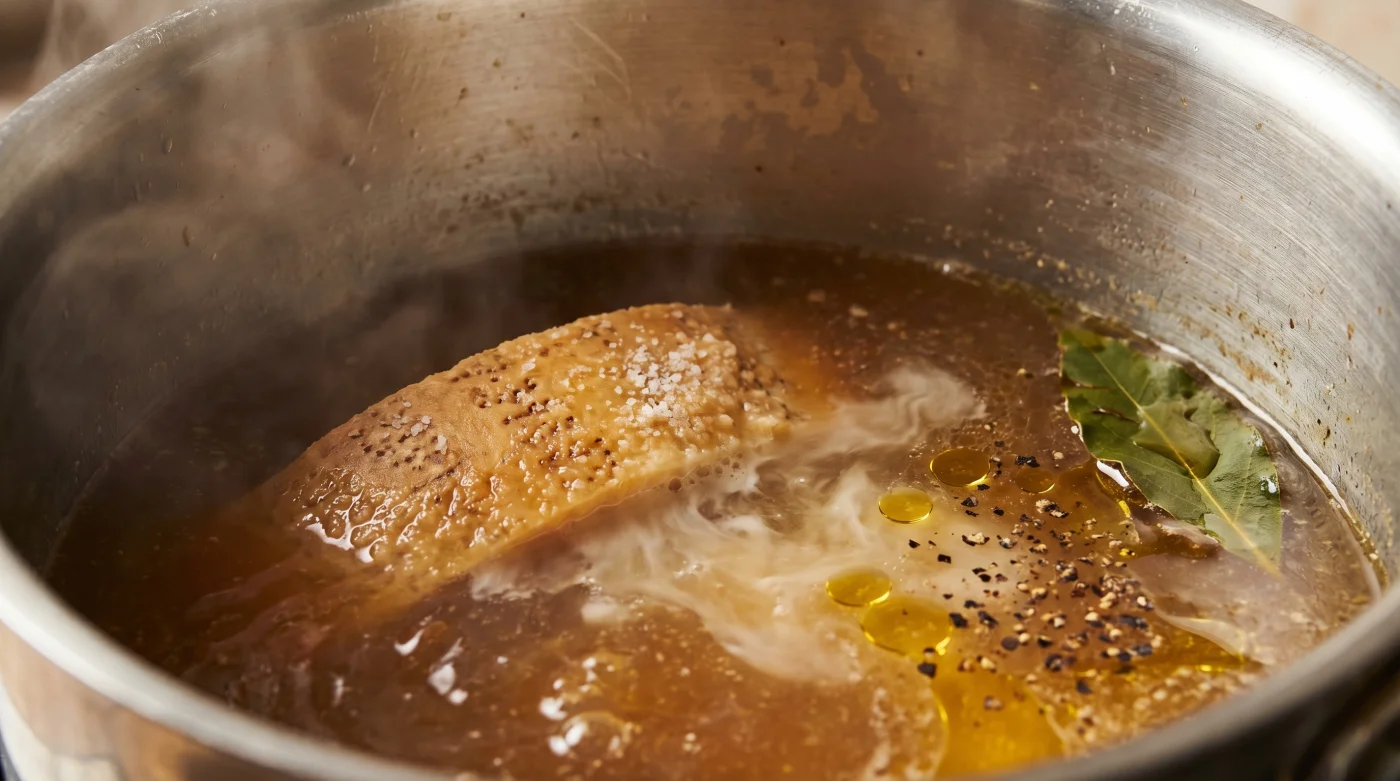
You are standing by the hob on a damp, unforgiving Tuesday evening, watching a pot of vegetable soup gently bubble. It smells faintly of celery, pale carrots, and softened onions. It is a perfectly acceptable but ultimately flat aroma, one that promises basic warmth rather than any genuine culinary excitement. You know exactly how this bowl will taste: thin, slightly sweet, and lacking a firm foundation.
Most home cooks will instinctively reach for a foil-wrapped stock cube to artificially inflate the savoury notes, masking the delicate vegetables with a heavy blast of processed sodium. A desperate splash of sauce might quickly follow, darkening the liquid without truly fixing the missing depth, leaving a metallic aftertaste on the back of the tongue.
Yet, the most potent solution is likely sitting ignored in your fridge door, wrapped tightly in greaseproof paper and inevitably destined for the kitchen bin. That pale, hardened heel of Parmigiano-Reggiano, scraped entirely bare of its flaky interior over weeks of pasta dinners, holds a secret, remarkable density.
While we are strongly conditioned to throw away inedible scraps, this stubborn edge is quite literally a slow-release capsule of pure, concentrated flavour. Simmering changes the rules entirely, pulling deep, lingering savoury compounds straight from the rind and weaving them seamlessly into the waiting water.
The Alchemy of the Pantry
Think of the parmesan rind not as a discarded wrapper, but as a dense, protective shell that has spent years absorbing the very essence of the milk. When you drop it into a simmering liquid, it acts like a tea bag woven from pure, crystallised glutamates. It alters the structure of the water itself, adding a viscosity that heavily coats the mouth.
As the ambient heat penetrates the hardened exterior, the rind begins to soften, expanding slightly and weeping microscopic droplets of milk fat and complex amino acids into the broth. The liquid turns beautifully cloudy, thickening ever so slightly as the aged proteins break down and wrap themselves delicately around the fading vegetables.
This is the perspective shift that fundamentally alters how you provision your kitchen: you are no longer desperately fixing a watery soup; you are strategically extracting time. You are taking twenty-four months of careful, silent ageing in an Italian cellar and coaxing it out into your midweek dinner in a matter of mere minutes.
Consider Clara, a 58-year-old independent caterer working out of a bustling farmhouse kitchen in Somerset. She routinely rescues kilos of supposedly useless parmesan ends from local delicatessens, storing them like gold bullion in her chest freezer. To Clara, dropping a frozen rind into a pot of gently braising leeks or a rustic white bean stew is the singular difference between a bowl of watery vegetables and a meal that tastes as though it commands fifteen pounds a serving. She extracts every last drop, treating the tough, yellowed edges as the true, hidden prize of the cheese wheel.
Matching the Broth to the Cook
Depending on how you naturally manage your weekly meals, this zero-waste approach adapts remarkably well to different domestic rhythms. The hard rind demands absolutely nothing of you but a little gentle heat and a fraction of patience.
For the Sunday batch-cooker, the long, unattended simmer is where the magic truly sets in. Tossing two large, scraped rinds into a heavy cast-iron pot full of root vegetables and water on a lazy morning yields a broth so intensely rich by late afternoon that you will swear it was built on roasted beef bones.
If you lean towards rapid, weeknight assembly, the approach simply requires a bit more surface area to work faster. You can drop smaller, chopped pieces of rind directly into a pan of finely diced shallots and garlic just as you add your hot water, letting the turbulent heat draw out the oils quickly.
For the mindful flexitarian cook, this specific technique bridges the difficult gap between light, plant-forward eating and the craving for heavy, comforting winter dinners. While genuine Parmigiano-Reggiano contains animal rennet, using a tiny amount of rind allows you to build a profoundly meaty depth without relying on actual cuts of butcher’s meat.
Coaxing Out the Savoury Notes
Getting the absolute most out of your leftover edges requires a few deliberate, mindful actions. You want to extract the rich compounds gently, without overwhelming the delicate, sweet vegetables sharing the pot.
Before the rind even touches the water, give it a firm scrape with the back of a paring knife under a cold tap. Remove any waxy protective stamps or loose, dusty debris from the fridge shelf, ensuring only the pure, hardened cheese is exposed to the heat.
The Tactical Toolkit for a perfect extraction relies on precision rather than force. Follow these specific rules to guarantee a rich, glossy finish without turning your soup into a greasy disaster:
- Preparation: Scrape the exterior clean and chop any massive rinds in half to double the exposed surface area.
- Temperature: Maintain a gentle, lazy simmer at around 85 to 90 degrees Celsius; a furious, rolling boil will cause the fats to separate rapidly.
- Timing: Allow a strict minimum of 40 minutes of fully submerged heat for the rind to yield its deeper, more stubborn savoury layers.
- Retrieval: Fish out the softened, pale rind before serving, though many seasoned cooks chop the chewy remnants into tiny cubes to stir back into the bowl.
Once you retrieve the spent rind with a slotted spoon, you will notice it has transformed into a pale, rubbery mass, having surrendered entirely to the broth. The texture feels completely exhausted, a clear physical sign that the rich umami has successfully transferred into your waiting dinner.
Rethinking the Edges of Our Food
Finding genuine value in what we traditionally discard is a quiet rebellion against the modern, pre-packaged kitchen. It shifts your daily focus from constantly buying new flavour to simply paying better attention to the latent ingredients you already possess.
When you finally stop viewing the hard, stubborn edge of a cheese block as an obstacle to be thrown away, the entire geometry of your meal planning changes. You stretch your grocery budget, leaning into a strategic, zero-waste provisioning that feels deeply satisfying, both to the palate and the pocketbook.
Ultimately, learning to cook with the overlooked scraps brings a distinct, quiet peace of mind to your evening routine. It grounds you in the physical, tactile reality of your food, reminding you that a truly magnificent bowl of soup does not require expensive, exotic additions.
It merely asks you to look a little closer at what remains, to trust the slow magic of heat, and to let the ingredients breathe naturally. Waste is an illusion here, replaced entirely by a rich, comforting warmth that fills the kitchen long before the bowls are poured.
A kitchen is only as wealthy as its scrap bin; the true depth of a dish is often hidden in the pieces we are taught to throw away.
| Key Point | Detail | Added Value for the Reader |
|---|---|---|
| Zero-Waste Extraction | Simmering hard cheese edges releases trapped glutamates into water. | Saves money on expensive artisan stocks and reduces household food waste. |
| Temperature Control | Maintain a gentle simmer below 90 degrees Celsius. | Prevents the soup from splitting or developing an unappealing greasy film. |
| Strategic Storage | Rinds can be frozen indefinitely in an airtight container. | Allows you to build a highly accessible flavour library for future batch cooking. |
Frequently Asked Questions
Can I use the rind from any type of cheese?
Stick to hard, aged grating cheeses like Parmigiano-Reggiano, Pecorino, or Grana Padano. Soft or waxed cheeses will melt into a greasy mess or ruin the flavour entirely.Do I need to wash the rind before adding it to the soup?
Yes, always give it a gentle scrub or scrape under cold water to remove any handling dirt, loose fridge debris, or food-safe ink stamps.Is the leftover rind safe to eat after simmering?
Absolutely. While it can be quite chewy, dicing the softened rind into small pieces adds a delightful, dumpling-like texture to rustic stews and minestrone.How long can I keep parmesan rinds in the freezer?
Properly sealed in a tight container or freezer bag, they will happily last for up to twelve months without losing their potent savoury qualities.Will adding a rind make my vegetable soup suitable for vegetarians?
No. Authentic Parmigiano-Reggiano uses animal rennet during production. If you are cooking for strict vegetarians, you must source a specific vegetarian hard cheese rind.