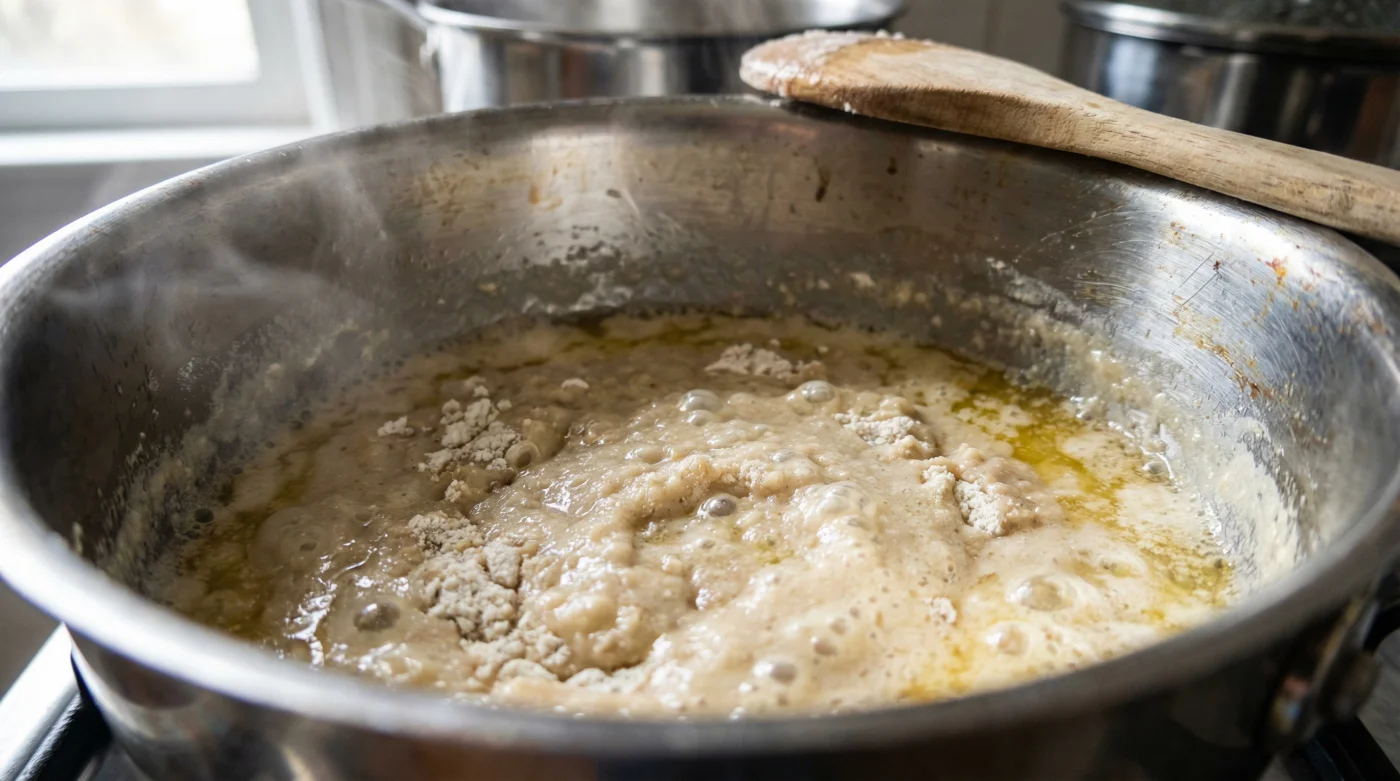
You stand at the hob on a damp Sunday afternoon, whisking with a hopeful rhythm. The kitchen is warm, filled with the comforting scent of roasting chicken and potatoes turning crisp in the oven. The cauliflower is steaming in the colander nearby, waiting patiently for its rich, glossy blanket. You pour the warmed milk into the bubbling butter and flour, watching the mixture thicken beautifully against the sides of your favourite saucepan. It looks absolutely perfect. But then you lift the wooden spoon to your mouth and taste it.
Instead of a luxurious, comforting embrace, your tongue is met with a harsh, chalky coating. It tastes faintly of damp cardboard. The sauce breathes through a pillow of raw starch, suffocating the delicate, savoury notes of nutmeg, bay, and mature Cheddar you planned to fold through it. You have fallen into the most common, yet rarely discussed, trap of the traditional white sauce.
The Gravity of the Paste
In culinary terms, this mixture of melted fat and flour is known as a roux. It is the architectural foundation of your béchamel. Yet, so many home cooks treat it merely as a hurried stepping stone. The common misconception is that the butter and flour only need to be mixed until they form a paste, just long enough to banish the dry white powder from sight. This is a fatal error.
The roux is not merely a physical thickener; it requires a fundamental chemical transformation. Think of the flour as a densely packed, tightly wound coil of starch. If you simply wet it with milk, it remains raw, clinging to the roof of your mouth and dulling every other flavour in your dish. The heat of the butter must be given time to permeate those granules, to gently toast them until their raw, dusty nature is entirely neutralised.
I learned this lesson the hard way in the cramped, blistering kitchen of a bustling Somerset gastropub. Thomas, the veteran head chef, possessed a preternatural ability to know when a sauce was failing just from the smell. He would hover over the stoves, tapping his heavy metal spoon against the copper pans. “You are just getting the flour wet,” he would scold junior cooks who nervously rushed the milk into the pan the moment the flour disappeared into the melted fat. He taught us the golden rule, one that transformed my cooking forever: the flour must fry, not just melt. Cooking the butter and flour mixture for at least two full minutes is absolutely non-negotiable. This brief window of patience cooks out the raw starch completely, transforming it into a nutty, aromatic foundation that actively enhances your sauce rather than merely thickening it.
| The Home Cook | The Culinary Benefit of a Cooked Roux |
|---|---|
| The Sunday Roaster | A cauliflower cheese base that tastes purely of mature Cheddar and mustard, entirely free from chalky interference. |
| The Pasta Baker | Macaroni cheese with a silky, velvet texture that clings to every tube without feeling heavy or claggy on the palate. |
| The Comfort Cook | Fish pie fillings that remain stable, robust, and glossy, complementing delicate seafood rather than overpowering it with raw grain flavours. |
The Two-Minute Ritual
Fixing this error requires no new equipment and no expensive ingredients. It simply requires you to slow down and observe the pan. Melt your butter over a medium-low heat until it foams gently. You want a soft, rhythmic sizzle, not an aggressive spit that threatens to brown the dairy solids. Scatter in your plain flour and stir immediately. It will initially form a thick, pale, rather clumsy paste. This is the exact moment where most cooks panic, fearing lumps, and hastily reach for the milk jug. Stop. Put the jug down.
- Raw kidney beans trigger severe gastric illnesses skipping this mandatory rapid boil.
- Frozen spinach ruins expensive pastry bakes ignoring this aggressive physical wringing step.
- Arborio rice forms unappetising stodgy pastes undergoing this traditional cold water rinse.
- Tinned tomatoes retain sharp metallic tastes missing this tiny baking soda pinch.
- Heinz baked beans vanish from supermarket shelves amid severe tin shortages.
| Time Elapsed | Mechanical Logic & Starch Conversion |
|---|---|
| 0-30 Seconds | Flour absorbs the butter fat. Starch granules begin to swell. The flavour remains distinctly raw and powdery. |
| 60-90 Seconds | Moisture evaporates from the butter. The mixture begins to foam and sizzle gently, loosening in the pan. |
| 120+ Seconds | The raw starch taste is completely neutralised. The foundation is now ready to properly emulsify with dairy. |
Rely heavily on your nose during this stage. At the two-minute mark, a distinct olfactory shift occurs. The sharp, dusty smell of raw grain will suddenly vanish from the steam rising off the pan. It is replaced by a warm, toasty aroma, very much like a plain shortbread biscuit baking in the oven. Only when you smell that comforting, bakery-like warmth should you even consider adding your milk.
| Sensory Indicator | What to Look For (Cooked) | What to Avoid (Raw) |
|---|---|---|
| Texture | A sandy, gently foaming paste that moves easily. | A dense, claggy, solid lump that resists the spoon. |
| Aroma | Warm, nutty, shortbread biscuit notes. | Dusty, metallic, or raw grain scents. |
| Colour | Pale gold, resembling wet sand. | Brilliant, opaque white or dark scorch marks. |
A Quieter Kitchen
Mastering this humble roux teaches us something profound about time and attention. We live in a world of instant gratification, where pre-packaged shortcuts promise a meal in moments. But real food demands your physical presence. Giving that flour two minutes to fry gently in the foaming butter is an act of culinary respect. It shows you understand the process, rather than just forcing a hasty result to get dinner on the table.
When you finally pour that milk into the perfectly toasted roux, you do so with the quiet confidence of someone who knows the foundation is entirely solid. The resulting sauce will be unctuous, silky, and capable of holding whatever rich cheeses or delicate herbs you choose to introduce. Your macaroni bakes will feel professional, your fish pies will hold their shape beautifully, and your palate will never suffer that powdery, claggy disappointment again.
The secret to a flawless white sauce isn’t in the milk or the cheese; it’s the patience you show the flour before the liquid ever touches the pan.
Frequently Asked Questions
Why does my white sauce taste powdery?
You added the milk too soon. The raw starch in the flour needs at least two minutes of cooking in the hot butter to neutralise its chalky flavour.Can I fix a sauce that already tastes of raw flour?
Unfortunately, once the milk is fully incorporated, you cannot cook out the raw starch flavour without drastically over-reducing the liquid. It is better to start the base again.Does the heat level matter when cooking the roux?
Absolutely. Keep it on a medium-low heat. If the pan is too hot, the flour will burn and turn bitter. If it is too cold, the starch will not toast.Should I use cold or warm milk?
Warming the milk slightly in a separate pan helps it incorporate smoothly into the hot roux, preventing stubborn lumps from forming and maintaining the temperature of the sauce.What type of flour is best for a traditional white sauce?
Standard plain flour is the most reliable choice. Self-raising flour contains baking powder, which will alter the texture and taste of your sauce significantly.