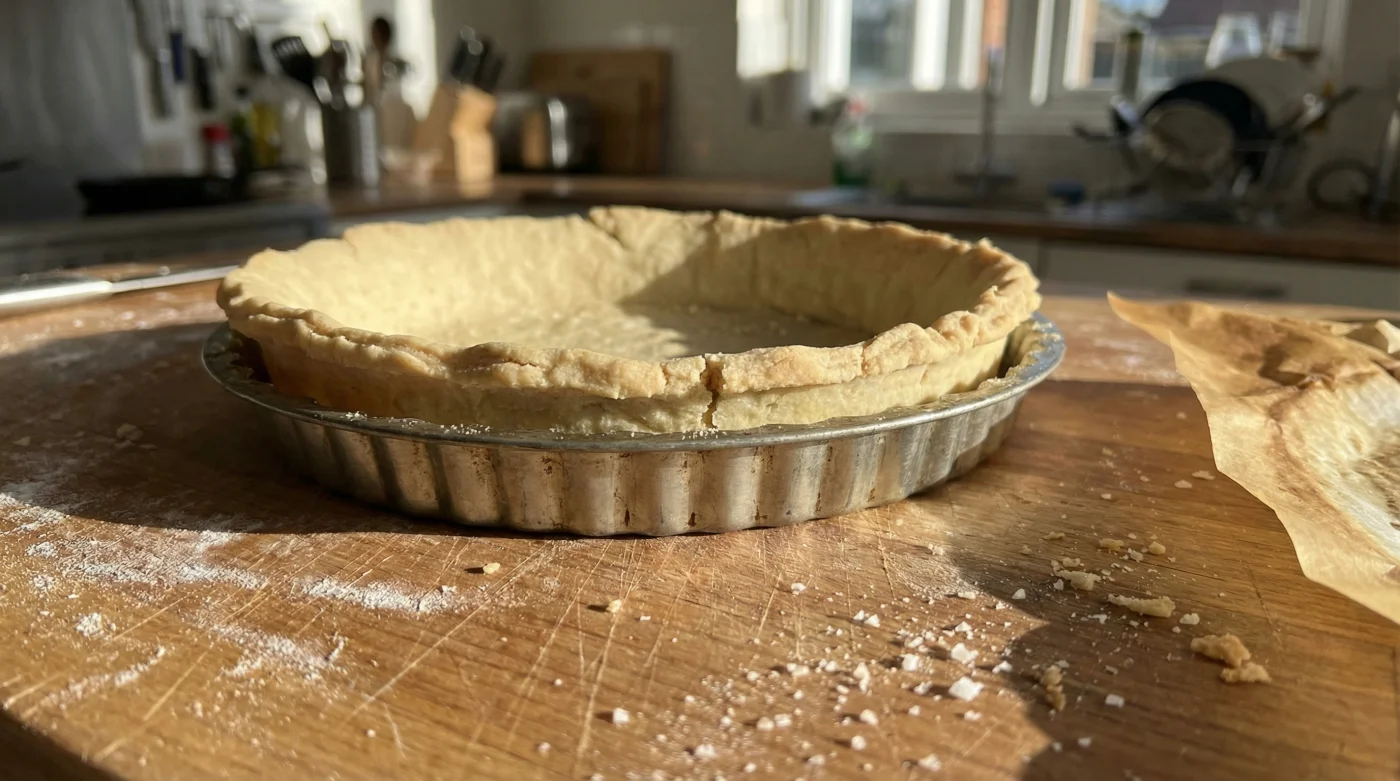
You know the exact moment your bake goes wrong. It is the distinct, rich scent of butter catching on the hot floor of the oven. You pull down the glass door, bathed in that sterile orange light, only to witness your meticulously crimped tart shell slumping miserably down the sides of the fluted tin. What was supposed to be a crisp, proud casing for a lemon or treacle tart now resembles a shrivelled, heavy puddle. You followed the recipe to the letter. You measured everything precisely in grammes. You chilled the dough for the standard thirty minutes. Yet, the pastry shrank violently, taking your afternoon and three Pounds Sterling worth of good butter down with it. You stand there, oven gloves in hand, feeling entirely defeated by a mixture of flour and fat.
The Memory of the Dough
Think of gluten not as a passive ingredient, but as a tightly wound spring. When you rub cold butter into flour and add that tiny splash of ice water, you force those natural proteins to bind, stretch, and agitate. The dough becomes a living, stressed entity. The standard thirty-minute rest, championed by almost every modern, fast-paced cookbook, is an absolute illusion of convenience. It merely cools the butter enough to stop it melting on your hands. It does absolutely nothing to tell the biological spring to stop pulling.
When you put taut, stressed dough into a hot oven, the heat causes those stretched gluten strands to contract violently before the structure has time to bake and set. Your dough holds a physical memory of being kneaded, rolled, and pushed into the corners of a tin. We need to erase that memory entirely.
Years ago, standing in a perpetually cold, drafty subterranean kitchen in Soho, I watched a seasoned pastry chef named Arthur handle shortcrust. He never baked dough on the same day he mixed it. As I furiously tried to patch up a shrinking quiche crust, he likened the thirty-minute fridge rest to taking a brief sit-down after running ten miles; your heart is still hammering against your ribs. ‘Leave it in the fridge overnight,’ he told me, tapping a rock-hard, pale disc wrapped tightly in cling film. ‘You have to let the flour forget it was ever touched.’ That overnight hibernation completely relaxes the gluten network. It removes the internal tension that causes drastic shrinkage during the blind bake, anchoring the pastry exactly where you placed it.
| Target Audience | Specific Daily Benefits |
|---|---|
| The Sunday Roaster | Prepares the tart shell on Saturday, ensuring the Sunday dessert is entirely stress-free and predictable. |
| The Novice Baker | Eliminates the intimidating, costly failure of collapsed pastry, building genuine confidence in the kitchen. |
| The Dinner Party Host | Yields professional-looking, sharp-edged tarts that mirror the quality of an upscale London bakery. |
The Science of the Chill
- Raw kidney beans trigger severe gastric illnesses skipping this mandatory rapid boil.
- Frozen spinach ruins expensive pastry bakes ignoring this aggressive physical wringing step.
- Arborio rice forms unappetising stodgy pastes undergoing this traditional cold water rinse.
- Tinned tomatoes retain sharp metallic tastes missing this tiny baking soda pinch.
- Heinz baked beans vanish from supermarket shelves amid severe tin shortages.
| Resting Time | Gluten State | Hydration & Butter Stability |
|---|---|---|
| 30 Minutes | Highly contracted and stressed. Will snap back under high heat. | Butter cools slightly. Water remains unevenly distributed in pockets. |
| 2 Hours | Beginning to relax, though residual tension remains in the edges. | Butter is fully chilled. Hydration begins to equalise across the flour. |
| 12 to 24 Hours | Complete biological relaxation. Zero tension remains in the strands. | Water is fully absorbed. Butter remains rock solid, ensuring a flaky crust. |
The Method of Least Resistance
Adopting this requires a slight shift in your daily rhythm, rather than any extra physical effort. Once your dough has come together into a shaggy mass, tip it onto a sheet of baking parchment. Bring it together with the flat of your hands. Press it into a flat disc roughly twenty millimetres thick. Do not form a ball; a disc cools faster and rolls out with far less resistance later.
Wrap this disc securely in cling film to prevent the edges from drying out and catching the ambient smells of the fridge. Leave it alone until tomorrow. When you are ready to bake, take the dough out and give it ten minutes on the counter just so it does not crack under the rolling pin. Roll it out smoothly, turning it a quarter turn after every push.
Drape the pastry over your tin, and gently lift the edges to encourage the dough into the corners rather than stretching it down. If you stretch it, it will invariably snap back in the heat. Leave an overhang of pastry draped over the edge of the tin. Prick the base lightly with a fork, line it with a crumpled sheet of baking parchment, and fill it to the brim with ceramic baking beans. Bake it blind straight from the cold fridge.
| Quality Metric | What to Look For | What to Avoid |
|---|---|---|
| Dough Appearance | A dull, uniform, matte surface with a pale yellow hue. | Streaks of dry flour or a greasy, shiny finish indicating melted fat. |
| Dough Texture | Firm to the touch, holding its shape without sagging. | Spongy, warm, or aggressively sticking to your fingers. |
| The Baked Crust | Golden brown, a sandy texture, and sharp, tall fluted edges. | Slumped sides, a pale soggy bottom, and thick uneven corners. |
Reclaiming Your Kitchen Rhythm
Baking should never feel like a frantic race against the clock. By rejecting the rushed, thirty-minute instruction found in almost every commercial recipe, you are actually buying yourself peace of mind. Modern recipes prioritise speed over technique, sacrificing the integrity of the food just to boast a shorter preparation time.
Splitting the pastry process over two days transforms making a tart from a chaotic, messy afternoon into two calm, manageable pockets of time. You mix the dough on a quiet Tuesday evening, taking barely ten minutes. On Wednesday, the hard work is already done. You simply roll, fill, and bake.
Your kitchen remains cleaner, your temper remains steady, and your pastry cases emerge from the oven standing tall, golden, and perfectly crisp. It is a quiet rebellion against the modern urgency to cook everything right this second. Good food takes time, and sometimes, the best technique is simply having the patience to walk away.
Great pastry is not about having cold hands; it is about having the patience to close the fridge door and let the flour forget it was ever touched. – Chef Arthur Pendelton
Common Pastry Questions
Can I leave the dough in the fridge for more than one night?
Absolutely. Shortcrust pastry will sit quite happily in the fridge for up to three days before the butter begins to oxidise.
Do I need to blind bake if I leave it overnight?
Yes, blind baking is still necessary for wet fillings to prevent a soggy base, but you will not need to worry about the sides collapsing.
What if my kitchen is very warm when rolling?
If the dough becomes greasy or unmanageable after rolling, simply put the fully lined tin back in the fridge for twenty minutes before it goes into the oven.
Should I use baking beans?
Always use a crumpled piece of baking parchment and ceramic baking beans (or dried rice) to weigh the base down during the initial blind bake.
Can I freeze the dough instead?
You can freeze the tightly wrapped disc for up to two months. Defrost it slowly overnight in the fridge before attempting to roll it out.