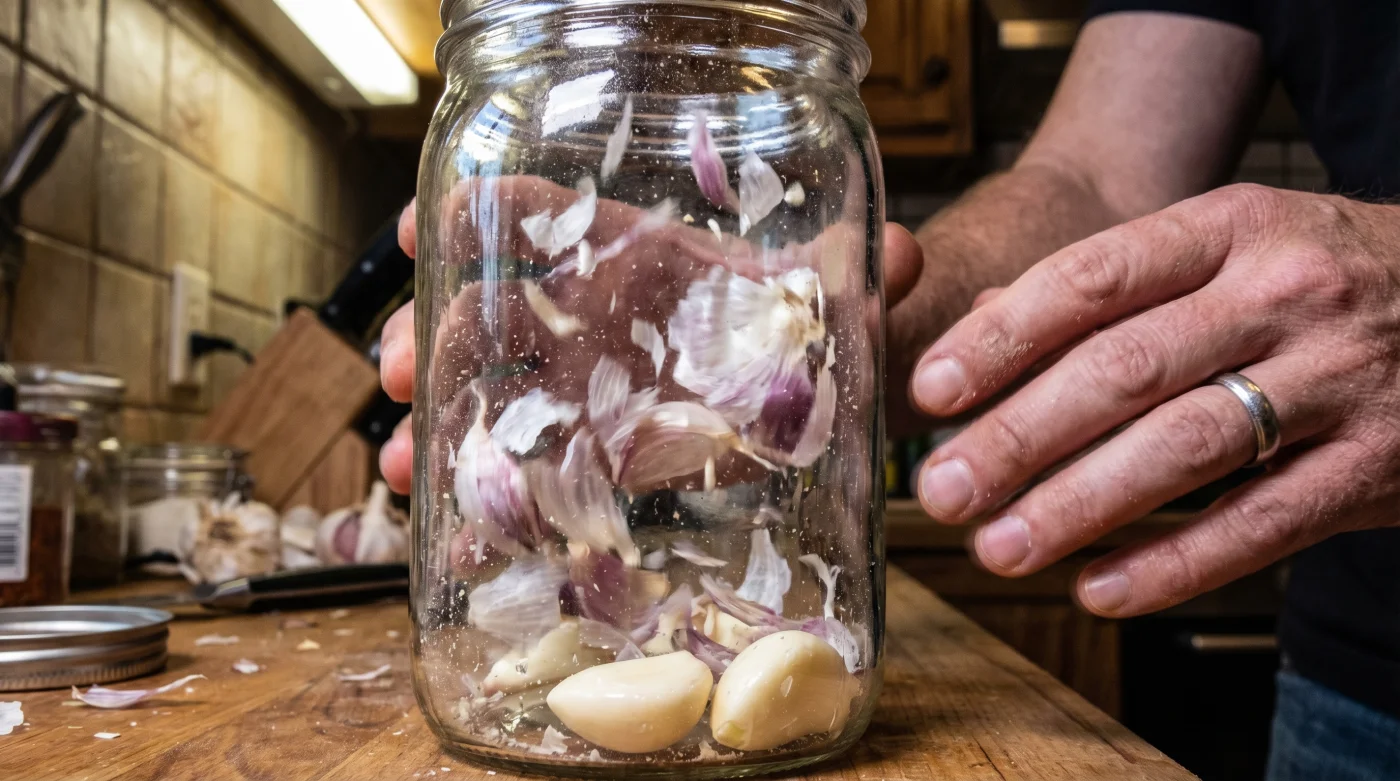
You know the exact feeling. You are standing over a wooden chopping board, the faint scent of rosemary hanging in the chilly air of a British kitchen, trying to prepare the foundation for a proper evening meal. But before the olive oil even hits the frying pan, you are caught in a fiddly, frustrating negotiation. The transparent, papery skin of a fresh garlic clove clings desperately to your thumb, refusing to let go.
We have all been taught the traditional way. You take the heavy blade of a chef’s knife, press down firmly with the heel of your hand, and wait for that satisfying structural crack. Yet, what follows is rarely a clean break. You are left picking sticky shards off bruised, weeping flesh, wasting valuable prep time while the pan heats up entirely too fast.
There is a different reality waiting just inside your kitchen cupboards. It does not involve expensive silicone tubes, tiny metal tweezers, or single-use gadgets that simply gather dust in your drawers. It relies entirely on something you were likely going to toss into the glass recycling bin after breakfast: an ordinary, empty jam jar.
By shifting the physical forces applied to the bulb, the frustration entirely vanishes. High-velocity friction separates the papery skins perfectly clean in mere seconds, leaving you with pristine, unblemished bare cloves ready for the chopping board without a single sticky finger.
The Geometry of Friction
For generations, we believed preparing this staple ingredient required an edged weapon. We treated it as a delicate surgical operation, carefully scoring the base and tugging at the layers with a paring knife. This painstaking manual chef knife peeling is fundamentally flawed because it relies on tearing and crushing. When you smash the clove, you inadvertently release allicin, the natural compound that instantly acts like a powerful kitchen glue.
Think of the glass jar method not as an internet trick, but as a miniature rock tumbler. You aren’t cutting the skin away; you are creating an environment of rapid, violent kinetic energy. The cloves ricochet against the hard glass and against each other, breaking the dry outer bonds without rupturing the moist, delicate flesh beneath.
Elias Thorne, a 42-year-old prep chef working the morning shifts at a high-volume Soho brasserie, understands this intimately. Every day, his station requires three kilos of peeled garlic before the lunchtime rush even begins. “I used to spend my first forty-five minutes just picking sticky skins off my knuckles with a knife,” he laughed over a quick espresso. “Then the head chef threw an empty passata jar at me. You drop them in, seal it, and shake it like you are mixing a cocktail. It completely changed my morning rhythm and kept my hands clean for the delicate pastry work later.”
Tailoring the Percussion Technique
If you are preparing a massive roasting tin for a weekend gathering or a slow-cooked Sunday ragù, you need serious volume. Separate an entire bulb into individual cloves, leaving the hard root ends entirely intact. Drop the whole lot into a large, wide-mouthed glass jar. The heavier weight of multiple cloves actually increases the internal friction, stripping skins in mere seconds when you apply vigorous, rhythmic shaking.
For the Single Clove Cook: Sometimes you just need two cloves for a quick Wednesday night pan sauce. A massive litre jar will not work here because the cloves will simply slide around the bottom without gaining momentum. You need a small, highly confined space—like an old mustard jar or an emptied spice pot. The tight quarters force immediate, repeated impact against the glass walls.
For the Stubbornly Fresh Bulb: Exceptionally fresh, locally grown garlic often has a higher moisture content, making the skins incredibly tacky and stubborn. If ten seconds of shaking leaves them partially dressed in their jackets, do not reach for the knife. Simply trim the tiny, hardened root off each clove before dropping them back into the jar. This acts by breaking the structural root anchor, allowing the glass percussion to easily finish the job.
The Mindful Execution
The beauty of this method lies in its physical release. It is a brief moment of loud, active energy before the quiet, rhythmic chopping begins. You are stepping away from the delicate, frustrating peeling and trading tedious fine-motor work for a few seconds of blunt, highly satisfying force.
- Separate the main bulb into loose individual cloves, discarding the dry central paper stem.
- Select a clean, completely dry glass jar with a tight-fitting metal lid (moisture will ruin the friction).
- Drop the cloves inside, ensuring the jar is no more than one-third full to allow for maximum movement.
- Shake vigorously up and down for exactly 5 to 10 seconds.
- Pour the contents directly onto your board; the naked cloves will easily separate from the chaff.
Your Kinetic Toolkit relies on strict parameters to work flawlessly. Your target duration is about eight seconds of continuous shaking. The ideal capacity is thirty percent full—any more, and the cloves cushion each other. The motion profile must be aggressive, vertical strokes, much like a bartender vigorously finishing a sour.
Reclaiming the Rhythm of the Kitchen
Cooking at home often feels like navigating a series of small, invisible barriers. When we remove these micro-frustrations, the entire process feels significantly lighter. You no longer look at a recipe calling for six minced cloves and let out that familiar creeping reluctant sigh.
The glass jar method turns a dreaded chore into a momentary magic trick. It leaves your fingers entirely free of sticky residue and keeps your chopping board clear for the actual, enjoyable work of building flavour. You are no longer fighting your ingredients; you are simply setting them free, moving effortlessly and cleanly toward the final plate.
“The best kitchen techniques don’t require new equipment; they simply ask you to understand the ingredients’ natural physics in a completely new light.”
| Key Point | Detail | Added Value for the Reader |
|---|---|---|
| Traditional Knife Crushing | Smashing the clove releases sticky allicin, gluing the skin to your fingers. | Highlights why the old method always leaves you frustrated and constantly washing your hands. |
| The Glass Jar Tumbler | Uses high-velocity kinetic friction to shatter the dry outer skin cleanly. | Provides a perfectly bare clove in seconds without bruising the flesh or creating a sticky mess. |
| Jar Sizing Strategy | Match the jar size to the volume of garlic (mustard jars for two cloves, passata jars for a bulb). | Ensures the technique works flawlessly every single time, whether cooking for one or a dinner party. |
Frequently Asked Questions
Q: Does the glass jar need to be completely dry?
A: Absolutely. Even a single drop of water will activate the sticky compounds in the skin, ruining the friction and causing the paper to cling to the glass and the garlic.Q: Can I use a plastic container instead of a glass jar?
A: Glass is highly recommended. Plastic is often too soft and absorbs the kinetic impact. The hard, unforgiving surface of glass is what shatters the papery skin so efficiently.Q: Why did my garlic cloves only peel halfway?
A: You likely overfilled the jar or the garlic is exceptionally fresh. Try trimming off the hard root ends first, and ensure the jar is only one-third full so the cloves have room to smash around.Q: Will shaking the cloves vigorously damage or bruise them?
A: Surprisingly, no. The papery skin acts as a micro-buffer, and the whole clove is incredibly resilient. They will emerge perfectly firm and ready for the knife.Q: How long can I store the garlic once it is peeled this way?
A: Once separated from their protective skins, keep the bare cloves in an airtight container in the fridge. They will remain perfect for cooking for about three to four days.