You are standing at the kitchen counter on a bleak, damp Tuesday evening. The rain is drumming a steady rhythm against the windowpane, and a pale, slightly bruised head of cauliflower rests on the wooden chopping board. It feels like a chore, another obligatory vegetable to wedge into the weekly rotation.
The prevailing habit dictates that we hack it into uneven pieces, throw it into a roasting tin, and drown it in whatever olive oil we have to hand. We toss it blindly, hoping for a crisp miracle in the oven, yet usually pulling out pale, soggy florets swimming in an apologetic puddle of expensive fat.
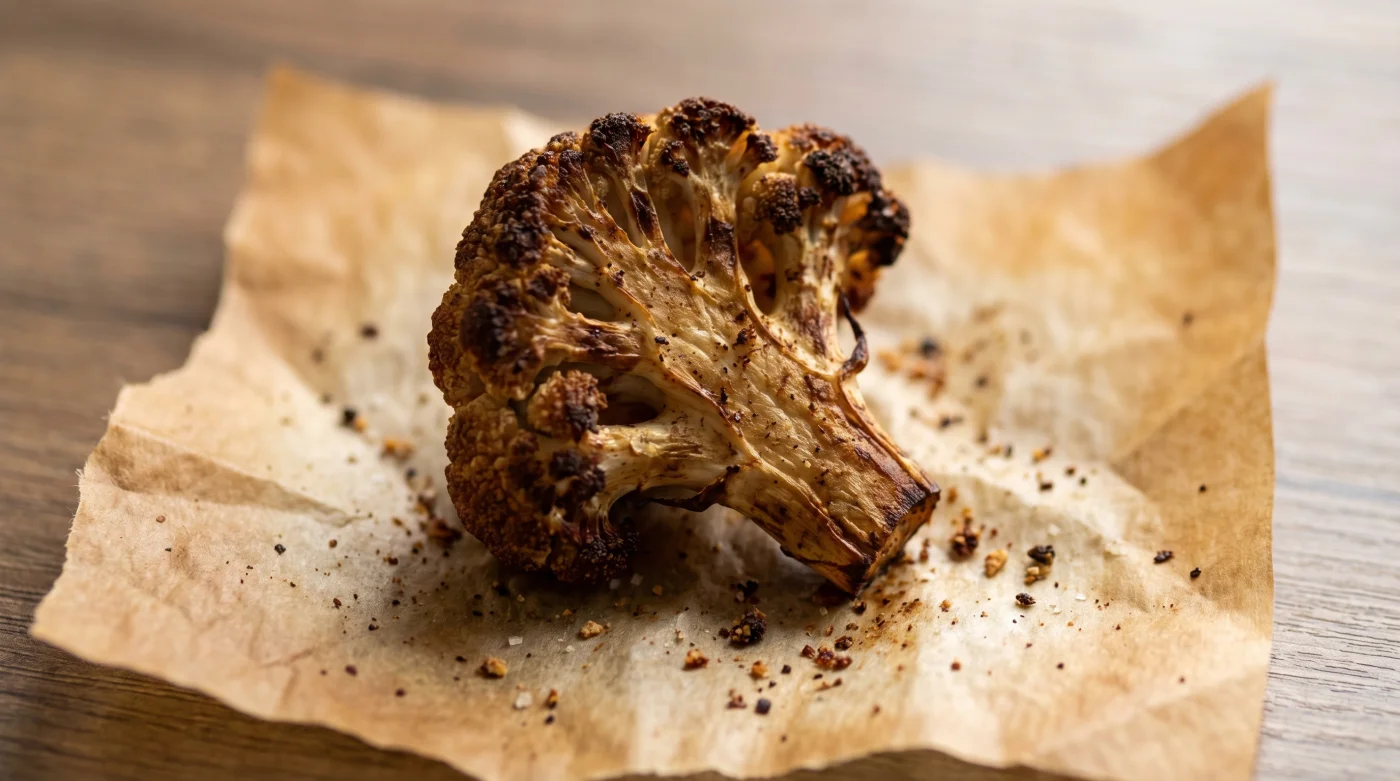
But there is a quieter, far more deliberate way to handle this humble brassica. When you hold back the oil and expose the raw florets directly to the dry, searing heat of the oven, something entirely different happens. The kitchen fills with a scent that leans closer to toasted hazelnuts than boiled cabbage.
By stripping away the immediate slick of fat, the intense heat is forced to interact directly with the vegetable’s cellular structure. You are no longer steaming it in oil; you are forcing internal moisture outward, setting the stage for a spectacular chemical reaction.
The Illusion of the Oil Bath
We have been conditioned to treat vegetables like sponges that need soaking before they hit the heat. The truth is, that early slick of oil creates a barrier. It traps the water inside the cauliflower, effectively steaming the flesh from the inside out before the roasting process can even begin.
This is where strategic provisioning changes your entire approach. By dry-roasting initially, you intentionally dehydrate the surface. This concentrated Maillard browning process can only occur when surface moisture is eradicated. Only then does the natural sugar within the floret begin to caramelise, creating those intensely dark, nutty, and slightly bitter edges that make restaurant dishes so addictive.
It is an act of culinary restraint. You save your fifteen-pound-a-bottle extra virgin olive oil for the finishing touch, rather than wasting it as a high-heat cooking medium. The flaw of a dry, unyielding vegetable is suddenly revealed as its greatest advantage: it is a blank slate begging to be toasted.
Consider the approach of Elias Thorne, a 42-year-old zero-waste prep chef who runs the vegetable station in a frantic Soho kitchen. Elias handles hundreds of kilos of cauliflower a week. He doesn’t touch the oil bottle until the very last minute. ‘You have to let the brassica breathe,’ he mutters, pulling a tray of completely dry, aggressively charred florets from a searing industrial oven. He treats the vegetable like a dry sponge, waiting until it is hot and thirsty before dressing it, ensuring the flavour penetrates all the way to the core rather than just slicking the outside.
Strategic Layers: Tailoring the Dry-Roast
For the Weekend Batch-Cooker
When preparing meals for the week, soggy vegetables are the enemy of a decent packed lunch. Dry-roasted florets maintain their structural integrity beautifully in the fridge. Because they haven’t been saturated in oil during the cooking process, they remain firm and slightly chewy.
You can roast a massive batch on Sunday, storing them entirely naked in a glass container. Come Wednesday, they will eagerly absorb your vinaigrettes or tahini dressings without turning into mush. It is a highly efficient way to provision your weekly meals while maintaining a zero-waste kitchen, as they last significantly longer without oxidised oil spoiling their freshness.
For the Frugal Purist
If you are operating on a tight budget or simply despise food waste, this method extends far beyond the florets. The thick central stalk and the tough outer leaves are entirely edible and arguably more flavourful when subjected to this dry-heat punishment.
Slice the core into thin discs and toss them onto the bare metal tray alongside the florets. The dry heat will crisp the outer leaves into something resembling a delicate seaweed snack, while the core discs turn sweet and tender. You are extracting every ounce of value from the entire plant without wasting a drop of cooking oil in the process.
The Dehydration Protocol
Executing this requires a slight adjustment to your muscle memory. Put the oil away. Clear your workspace and focus entirely on heat, space, and time.
The key is giving the vegetable room to exhale. Overcrowding the tin will trap the escaping steam, leading to the exact soggy texture we are trying to avoid.
- Temperature: 220°C (Fan 200°C or Gas Mark 7). The oven must be ferociously hot before the tin goes in.
- The Cut: Slice florets so they have at least one flat edge. This flat side acts as the primary contact point for caramelisation.
- The Pan: A heavy-gauge aluminium or dark steel roasting tin. Avoid glass or ceramic, as they do not conduct heat rapidly enough.
- The Timing: 20 to 25 minutes of completely dry roasting. Do not open the door for the first 15 minutes.
- The Finish: Remove from the heat. While still steaming hot, immediately toss the florets in a bowl with a tablespoon of cold-pressed olive oil, a pinch of flaky sea salt, and a splash of sharp cider vinegar.
Notice how the oil sizzles slightly as it hits the hot, dry flesh. It is immediately drawn into the microscopic crevices created by the dehydration.
You are no longer coating the vegetable; you are flavouring it from within. The dressing acts as a finishing glaze rather than a cooking medium, preserving the delicate, grassy notes of the oil that would have otherwise burned away in the oven.
The Quiet Confidence of Restraint
Mastering this technique offers a strange sense of liberation in the kitchen. It teaches you that throwing more ingredients at a problem—more fat, more seasoning, more fuss—is rarely the answer. Sometimes, the most professional result comes from stepping back and letting the raw materials speak for themselves.
By withholding the oil, you gain control over the texture, the flavour, and your grocery budget. You transform a mundane, often disappointing side dish into the quiet star of the dinner table. It is a daily reminder that understanding the mechanics of your food is infinitely more powerful than merely following a list of instructions.
‘Heat builds the structure; fat simply carries the memory of it.’ – Elias Thorne
| Key Point | Detail | Added Value for the Reader |
|---|---|---|
| Surface Dehydration | Roasting without oil allows water to evaporate immediately. | Achieves restaurant-level caramelisation and a firm, meaty texture at home. |
| Late Dressing | Applying oil and acid only after the florets leave the oven. | Preserves the expensive flavour notes of premium olive oil from burning off. |
| Zero-Waste Prep | Roasting leaves and thinly sliced stalks alongside florets. | Maximises grocery budget and adds contrasting crispy textures to the final dish. |
FAQ
Why shouldn’t I toss cauliflower in olive oil before roasting?
Oil creates a seal around the raw vegetable. In the oven, the moisture trapped inside turns to steam, resulting in a soggy texture rather than a crisp, browned edge.Will the cauliflower stick to the roasting tin without oil?
If your oven is properly preheated to 220°C and you use a heavy metal tin, the florets will release themselves naturally once the sugars begin to caramelise.Can I use this dry-roasting method for other vegetables?
Yes, this technique works beautifully for other dense, moisture-heavy brassicas like broccoli and Brussels sprouts, as well as root vegetables like carrots.How do I stop the cauliflower from burning completely?
Ensure your florets are cut to a similar size for even cooking, and do not place the tin too close to the top heating element of the oven.How long do dry-roasted florets last in the fridge?
Stored in an airtight container without dressing, they will keep their firm texture for up to four days, making them perfect for strategic meal provisioning.