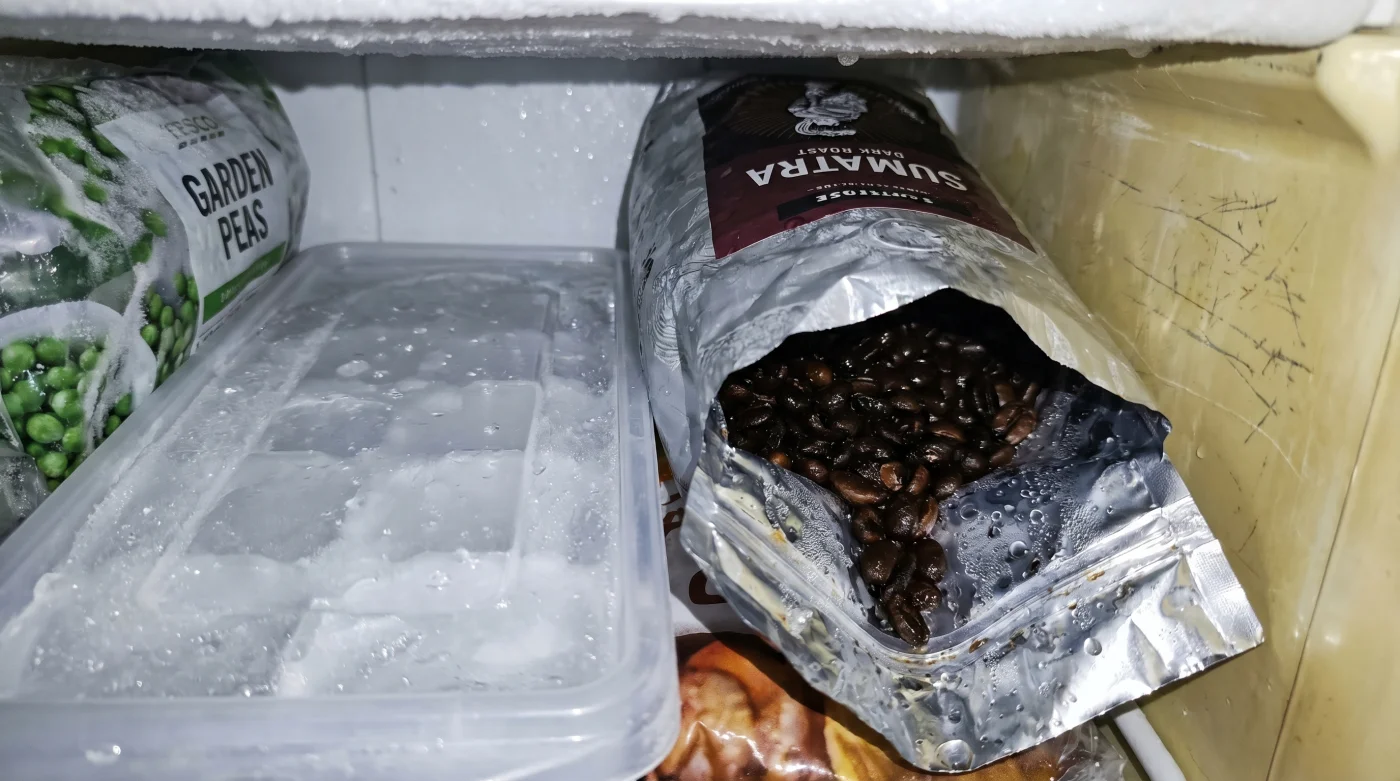
You tear the foil seal, and that rich, bruised-fruit aroma fills the cold morning kitchen. It feels like a small, private victory against the grey drizzle outside. You carefully weigh the coffee beans, grind them to a coarse sand, and pour the boiling water, watching the dark crust rise. For the first three days, that morning cup is a vibrant, grounding ritual.
But by the second week, something shifts. The bloom doesn’t bubble with the same vigour. The cup tastes muddy, lacking the sharp, berry-like clarity you paid fifteen quid for at the local roastery. You assume it is your technique, a slight miscalibration of the grinder, or perhaps water that wasn’t quite hot enough.
The truth is far more structural, and slightly more alarming. Your beans are dying on the counter. We treat roasted coffee as a dry pantry staple, akin to flour or dried pasta, when we should be treating it like fresh, perishable produce. The volatile oils that carry those delicate floral and chocolate notes are evaporating into the ambient air of your kitchen, degrading at an accelerated rate due to modern home central heating.
What few realise is that these degrading oils do not just ruin the taste; they actively irritate your stomach. The oxidation process turns these fragile lipids rancid, and this silent spoilage is a primary, hidden culprit for the sudden acid reflux or unsettled digestion many experience after drinking stale coffee. To halt this rapid degradation and protect both your palate and your stomach, the solution lies not in an expensive vacuum canister, but in the frost-slicked depths of your freezer.
Freezing Time: The Cryogenics of Coffee
We have been taught to fear the freezer when it comes to our daily brew. Whispers of condensation, freezer burn, and absorbed aromas of last Sunday’s leftover roast lamb have kept our beans languishing at room temperature. Yet, this is a profound misunderstanding of how staling actually works on a cellular level.
Think of a roasted coffee bean as a fragile sponge soaked in highly reactive oils. When exposed to oxygen and warmth, these oils oxidise. It is not just losing flavour; it is quietly going rancid, much like butter left uncovered on a sunny windowsill. By dropping the temperature to minus eighteen degrees Celsius, you are not merely chilling the bean; you are pressing pause on its chemical breakdown.
The perspective shift here requires moving from a mindset of ‘containment’ to one of ‘suspension’. A sealed bag in a dark cupboard is still trapped in a room-temperature environment, quietly losing its vitality and generating sour acids. When you freeze your bag, the structural matrix of the bean solidifies, trapping those precious aromatic compounds exactly where they belong until the moment they meet the burrs of your grinder.
Consider the meticulous approach of Clara Finch, a 34-year-old head roaster based in Edinburgh. Frustrated by customers complaining that her carefully profiled Ethiopian Yirgacheffe caused stomach upset and lost its sparkle after a fortnight, Clara ran a prolonged clinical trial. She took a freshly roasted batch, left half in an airtight tin on a typical kitchen counter, and vacuum-sealed the other half straight into a deep freeze. A month later, the counter beans tasted like cardboard and ash. The frozen batch, however, sang with its original jasmine notes. ‘We are selling a highly volatile perishable good,’ Clara insists. ‘Leaving specialty coffee in a warm cupboard is like leaving fresh milk out. The freezer doesn’t hurt the bean; it acts as a necessary preservation vault.’
Adapting the Chill to Your Routine
Not every household consumes their brew at the same pace. Your method of preserving that vital freshness depends entirely on your specific morning rhythm and how frequently you fire up the kettle.
For the Weekend Purist
If you only pull the good stuff out for Saturday morning pour-overs, bulk freezing is your greatest ally. Divide your fresh bag into small, airtight portions using vacuum bags or small glass jars. Pull a single jar out the night before and let it thaw on the counter overnight. This gentle acclimation prevents condensation from forming on the cold beans while ensuring your weekend brew remains spectacularly vibrant.
For the Daily Espresso Drinker
When you rely on pulling a double shot before the sun comes up, you do not have time to wait for a slow thaw. Here is the secret: you can grind straight from frozen. In fact, frozen beans shatter more evenly in the grinder, creating a highly uniform particle size that extracts beautifully. Simply weigh your dose, return the main bag to the icebox immediately, and grind the hard beans straight into your portafilter.
For the Batch Brewer
If you are feeding a hungry filter machine for a busy household, managing the moisture of a large bag constantly moving in and out of the cold is a risky endeavour. The half-and-half method works best for you. Keep a three-day supply in a sealed container on the counter, and freeze the remainder in a tightly sealed bag. You only subject the bulk of your stash to the humid kitchen air once, keeping the majority safe from rancidity.
The Protocol for Perfect Preservation
Executing this transition requires a bit of discipline. You cannot simply toss a paper bag of beans next to the frozen peas and hope for the best. The enemy in the freezer is not the cold, but ambient moisture and invasive odours.
To keep your morning drink tasty and digestively gentle, you must prepare the beans for their deep sleep with absolute care. It is a quiet, deliberate process of sealing away the potential.
- Evacuate the air: If using the original bag, squeeze out every possible cubic centimetre of air before sealing. Use heavy-duty tape over the one-way valve to stop freezer odours creeping in.
- Double the barrier: Place the original bag inside a heavy-duty freezer bag or an airtight plastic tub. This secondary skin is crucial for blocking the scent of yesterday’s fish fingers.
- Work with speed: When retrieving beans for a fresh dose, open the container, weigh your beans, and return the vessel to the cold within fifteen seconds. Do not let the cold mass sit on a warm counter to gather frost.
- Never refreeze a thaw: Once a batch of beans has fully returned to room temperature, let it stay there. Repeated freezing and thawing compromises the cellular walls of the coffee, letting moisture ruin the oils.
Your Tactical Toolkit:
- Ideal Temperature: -18°C (standard UK domestic freezer setting).
- Resting Phase: Wait 7 days after the roast date before freezing to allow natural carbon dioxide off-gassing.
- Vital Tools: Vacuum sealer (optional but superior), heavy-duty freezer bags, electrical tape for sealing the roast valve.
Reclaiming the Morning Ritual
There is a subtle, nagging anxiety that accompanies buying a premium bag of coffee. The clock starts ticking the moment you open it, pressuring you to consume it rapidly before the delicate flavours fade into obscurity and the oils turn sour. It transforms a pleasurable luxury into a race against the staling process.
By learning to freeze your bag correctly, you dismantle that pressure entirely. You buy yourself precious time. You can own three different varieties of coffee—perhaps a bright Kenyan for the morning and a soothing decaf Colombian for the evening—without the lingering fear of them rotting in the cupboard.
This simple, pragmatic shift in your kitchen layout protects your financial investment, surely, but it also protects the integrity of your routine. The morning cup remains a reliable anchor, a consistent moment of clarity before the demands of the day take hold. It is a quiet reassurance that some good things, when treated with uncompromising care, can be made to last indefinitely.
‘Treating roasted coffee as a perishable commodity rather than a dry good is the single most transformative shift a home brewer can make for both their palate and their digestion.’
| Key Point | Detail | Added Value for the Reader |
|---|---|---|
| Halt Rancidity | Freezing at -18°C stops lipid oxidation dead in its tracks. | Prevents the stale, sour taste and guards against coffee-induced acid reflux. |
| Grind from Frozen | Cold beans shatter more uniformly in a burr grinder. | Creates a sweeter, more balanced extraction without needing to wait for a thaw. |
| Double Sealing | Using a secondary airtight container or taped valve. | Ensures your expensive morning brew never tastes like the freezer’s other contents. |
Frequently Asked Questions
Does freezing coffee beans destroy their delicate flavour notes?
Not at all. If protected from moisture, freezing preserves the volatile aromatic compounds perfectly, locking in those delicate floral and fruity notes for months.Do I need to wait for my coffee beans to thaw before grinding?
If you are pulling a daily espresso or using a standard filter, you can grind them directly from frozen. They actually grind more consistently when ice-cold.How long should I wait after the roast date to freeze my bag?
Allow the beans to rest in a cool, dark place for about seven days to release trapped carbon dioxide before moving them to the deep freeze.Can I freeze ground coffee, or does it only work for whole beans?
While whole beans freeze best due to their intact structure, you can freeze ground coffee if it is strictly vacuum-sealed, though it degrades much faster upon opening.Will condensation ruin my coffee beans when I take them out?
Condensation is only a risk if you leave cold beans exposed to warm air for extended periods. Work quickly, or let sealed portions thaw completely overnight before opening.