It is a damp Tuesday evening, and the kitchen is quiet save for the heavy drum of rain against the glass. You reach into the back of the cupboard, fingers grazing the familiar ridges of an aluminium tin. There is a specific kind of resignation that usually accompanies a tin of tomato soup—a utilitarian decision made when time is short, the fridge is bare, and the prospect of cooking feels like climbing a mountain.
You pull the ring and pour the dense, crimson liquid into a cold saucepan. You are expecting a serviceable but flat supper, a meal that gets the job done without asking for much attention. The smell is nostalgic, yet tinged with that unmistakable metallic edge of mass production.
But what if you stopped treating the tin as a finished meal, and began viewing it as a blank canvas? In professional kitchens, liquids are rarely served exactly as they simmer. They are manipulated at the very last second, enriched and transformed into something that softly coats the tongue and lingers on the palate.
By simply holding back a single ingredient until the liquid leaves the stove, you completely change the mouthfeel and resonance of the dish. The secret does not require chopping, roasting, or blending. It requires only a small square of fridge-cold dairy, and a slight shift in how you operate the stove.
The Emulsion Engine
Think of your heated soup as an unfinished painting. The tin provides the raw pigment—the tomatoes, the mushrooms, the chicken stock—but it lacks the binding agent that makes the colours sing. When soup is processed for long-term storage, the fat content is often stripped back to ensure shelf stability. This leaves the liquid tasting thin, sharp, and entirely one-dimensional.
This is where a classic French culinary trick intervenes. The technique is called ‘monter au beurre’, which translates to mounting with butter. It involves swirling fiercely cold fat into a hot liquid just before it is served.
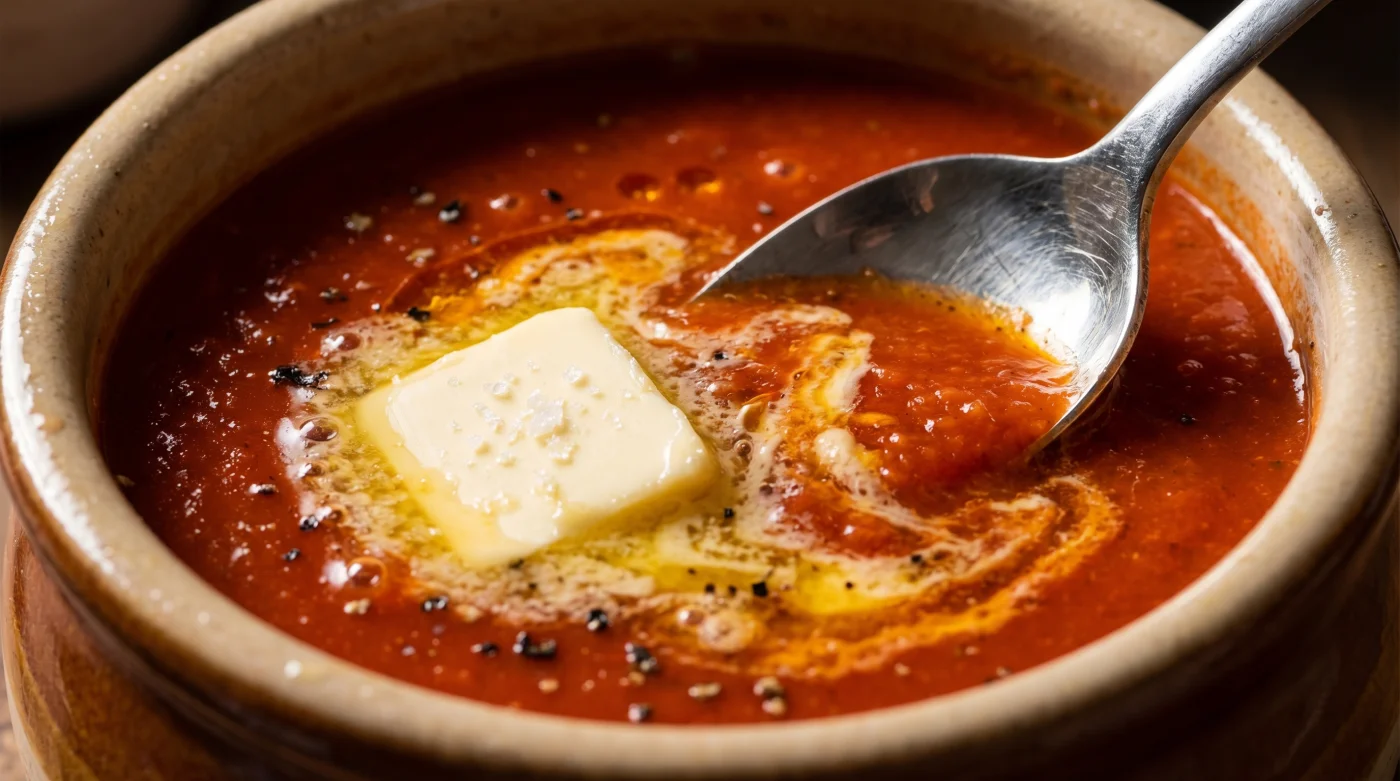
As the cold fat hits the warm base, it does not simply melt into a greasy puddle. It slowly emulsifies. Instead of splitting into a tragic yellow slick on the surface, the butterfat disperses evenly through the liquid, thickening the texture and rounding off the harsh, metallic acidity. The mundane thinness of the soup becomes your greatest advantage—it is the exact environment required to absorb the fat flawlessly.
Thomas is a forty-two-year-old sous chef working the pass at a bustling Soho brasserie. After a fourteen-hour shift managing complex sauces and intense reductions, he goes home to a quiet flat in south London. He rarely cooks elaborate meals for himself at midnight. Instead, he opens a 90p tin of cream of mushroom soup, heats it gently, and whisks in fifteen grams of diced, fridge-cold butter. ‘It tricks the palate,’ he explains. ‘You mimic a heavily reduced stock simply by forcing a cold emulsion at the last second. It tastes like it took three hours, but it took three minutes.’
Tailoring the Fat to the Tin
Not all tins require the exact same treatment. The beauty of this professional pivot lies in its adaptability. By categorising your cupboard staples, you can fine-tune the resulting flavour profile to suit the specific base you are working with.
For the Tomato Purist, the goal is to tame the sharp, almost tinny acidity that develops during the canning process. Use generously salted cold butter for this. The salt acts as a buffer against the acid, while the milk solids soften the aggressive tomato bite into a mellow, velvety finish. The cream should tremble slightly as it hits the red liquid, turning it a shade lighter.
For the Mushroom and Chicken Crowd, you are dealing with earthy, savoury notes that run the risk of tasting muddy or overly processed. Here, unsalted butter is your best tool. It adds physical weight to the broth without increasing the sodium levels, allowing the subtle poultry or fungal notes to step forward. A final crack of black pepper over the bowl is entirely optional, though highly recommended.
For the Vegetable Minimalist, navigating minestrone or rustic root vegetable blends requires a tighter balance. You might assume a glug of olive oil is the better choice for a vegetable base, but oil will instantly split on the watery surface. Stick to a smaller cube of cold butter. It gently binds the loose vegetable broth into a cohesive, comforting liquid rather than a watery bowl of boiled carrots and peas.
The Mindful Swirl
Executing this technique requires a slight, mindful shift in your stovetop habits. If you aggressively boil the liquid after the dairy is added, the delicate emulsion will shatter immediately, leaving you with that dreaded greasy rim.
The heat must be handled with quiet respect. The process is a gentle coaxing rather than a violent boil. Here is exactly how to manage the transition from tin to restaurant-quality bowl.
- Pour the contents of the tin into a heavy-bottomed saucepan to ensure even heat distribution.
- Bring the liquid to a gentle simmer over a medium heat, stirring occasionally to prevent the bottom from catching.
- Once simmering, immediately remove the saucepan completely from the heat source.
- Drop in one tablespoon of diced, fiercely cold butter per portion.
- Gently stir or swirl the pan continuously in a figure-of-eight motion until the solid entirely disappears into the liquid, leaving a glossy sheen on the surface.
Your Tactical Toolkit for this method is entirely minimalist. You need a heavy-bottomed saucepan, a wooden spoon, and butter kept at exactly fridge temperature. The harsh thermal contrast between the hot soup and the cold dairy is the mechanical engine of the trick; if the butter is room temperature, it will simply melt rather than emulsify.
The Ritual of the Bowl
Comfort food should never feel like a compromise. The act of eating a quiet meal alone, or feeding a busy family on a cold, dark evening, deserves a degree of dignity. By understanding the invisible mechanics of how fat interacts with liquid, you reclaim control over the processed convenience of the modern pantry.
You are no longer just heating up a cheap tin of survival food. You are crafting a moment of luxury out of the mundane. The texture visibly changes, the aroma deepens into something resembling a real kitchen, and the harsh edges of a long day softly blur away.
It takes fewer than five minutes, and it costs merely pennies, but the resulting bowl tastes remarkably considered. It is a quiet, reassuring reminder that with a tiny shift in perspective, the most ordinary ingredients tucked at the back of your cupboard can offer genuine warmth, protection, and deep satisfaction.
The difference between utility food and a memorable meal is often just temperature control and a single knob of cold dairy.
| Key Point | Detail | Added Value for the Reader |
|---|---|---|
| The Cold Emulsion | Adding fridge-cold butter entirely off the heat prevents the fats from splitting. | Creates a thick, glossy texture and a luxurious mouthfeel without needing heavy cream. |
| Salted vs Unsalted | Match the butter’s seasoning to the acidity of the tin’s base ingredients. | Balances out overly acidic tomato bases or overly salty processed mushroom broths. |
| Heat Management | Never allow the soup to bubble or boil once the dairy is introduced. | Ensures a perfect restaurant-quality finish that never turns thin or greasy on the surface. |
Frequently Asked Questions
Can I use a dairy-free butter alternative?
Yes, provided it is a firm block alternative rather than a soft tub spread. The fat content must be high enough to emulsify, and it must be kept extremely cold in the fridge before stirring.
Why does my soup look greasy on top?
The liquid was likely too hot, or the pan was returned to the stove after the fat was added. The emulsion broke under the heat. Always remove the pan from the heat source first.
How much butter should I use per standard tin?
A typical 400g UK tin requires roughly fifteen grams, or one generous tablespoon, of diced cold butter to achieve the correct glossy texture without overpowering the flavour.
Does this work with microwave heating?
It is trickier but absolutely possible. Heat the bowl thoroughly in the microwave, carefully remove it, drop the cold butter directly into the centre, and stir vigorously until the gloss forms.
Will this technique fix heavily watered-down diet soups?
It will significantly improve the mouthfeel and add much-needed richness, though it cannot replace missing vegetable or meat solids. It acts as a powerful texture and flavour binder.