You stand at the kitchen counter, the fading afternoon light catching the papery, purple-veined exterior of a fresh garlic bulb. The chopping board is clear, the knife is sharp, but before the cooking can truly begin, you face the most universally frustrating obstacle in domestic food preparation. The scent of roasted dinners and slow-cooked sauces is a beautiful prospect, yet the physical act of getting there often starts with sticky fingers and frayed patience.
You pry a firm clove loose from the basal plate, immediately feeling that familiar, dry resistance. The protective outer layer splits into microscopic, brittle splinters, clinging stubbornly to your fingers like static electricity. Attempting to peel away the layers leaves you picking at tiny fragments, embedding the sharp scent deep into your nails and leaving the garlic itself bruised and dented.
Most home cooks default to aggression here. You might lay the flat of a heavy chef’s blade over the clove and strike it with the heel of your hand, a violent percussion that shatters the flesh and causes the sticky juices to bleed prematurely onto the wood. It works, certainly, but it leaves you with a mangled ingredient and hands that will smell of sharp allicin for the next forty-eight hours.
The professional approach requires zero force and respects the integrity of the ingredient. By simply allowing the unpeeled segments to soak in gentle warmth, you replace frantic picking with a calm, almost magical release. The skins slide away intact, leaving pristine, unbroken garlic ready for the pan.
The Perspective Shift: Hydrating the Botanical Glue
To understand why peeling garlic feels like pulling a sun-baked sticker off a window, you must view the clove differently. The skin is not merely a dry, dead wrapper; it is an organic envelope held flush against the flesh by a microscopic layer of dehydrated plant sugars. When you pull at it dry, you are fighting a natural adhesive designed by nature to protect the seed.
Water acts as the solvent, and temperature dictates the speed of the reaction. By raising the ambient temperature slightly, the tightly bound sugars rapidly dissolve, transforming a structural flaw of the bulb into your greatest advantage. You are no longer peeling; you are simply uncoupling a bond.
It is akin to breathing through a thick woollen blanket versus breathing in the crisp open air. The friction is suddenly and completely removed. The skins plump up, separate from the pristine ivory flesh beneath, and prepare to release their grip without a single tear or split.
A Prep Cook’s Quiet Morning
Consider Elias Thorne, 58, the lead prep chef at a thriving Somerset gastropub known for its rich, slow-braised meats. Before the front-of-house staff even arrive to set the tables, Elias processes restaurant volumes with ease, working through three kilograms of garlic for the day’s stocks and marinades. He never crushes a single clove to peel it.
Instead, he breaks the bulbs apart into a wide aluminium mixing bowl, runs the tap until the water is pleasantly blood-warm, and submerges the lot. He leaves them to bathe while he sharpens his knives and drinks a cup of strong black tea. When he returns, a gentle squeeze at the root end of each clove sends the garlic shooting cleanly out of its jacket, landing perfectly whole in the waiting colander.
Adapting the Bath for Your Kitchen
You do not need to process industrial quantities to borrow this logic for your evening meals. Depending on what you are making, you can adjust the temperature and timing to suit your specific culinary intentions, tailoring the warmth to the final dish.
If you are preparing the foundation for a Sunday roast or a large batch of rich ragù, use water slightly warmer than your hand. A five-minute soak while you peel carrots or weigh out your flour will leave the garlic skins entirely loose. The slight warmth will not affect the flavour profile, as the garlic is destined for a hot pan anyway.
For the purist making delicate aioli or a sharp, raw vinaigrette, heat must be managed carefully. Keep the water strictly tepid, never exceeding body temperature, to ensure the volatile flavour compounds remain completely dormant. Hot water can begin to softly cook the outer millimetre of the flesh, which dulls the sharp, bright bite required for raw applications.
The Warm Slip Technique
Executing this method requires nothing more than a shallow bowl, water from the kitchen tap, and a moment of deliberate patience. It is an exercise in thoughtful preparation over rushed perspiration.
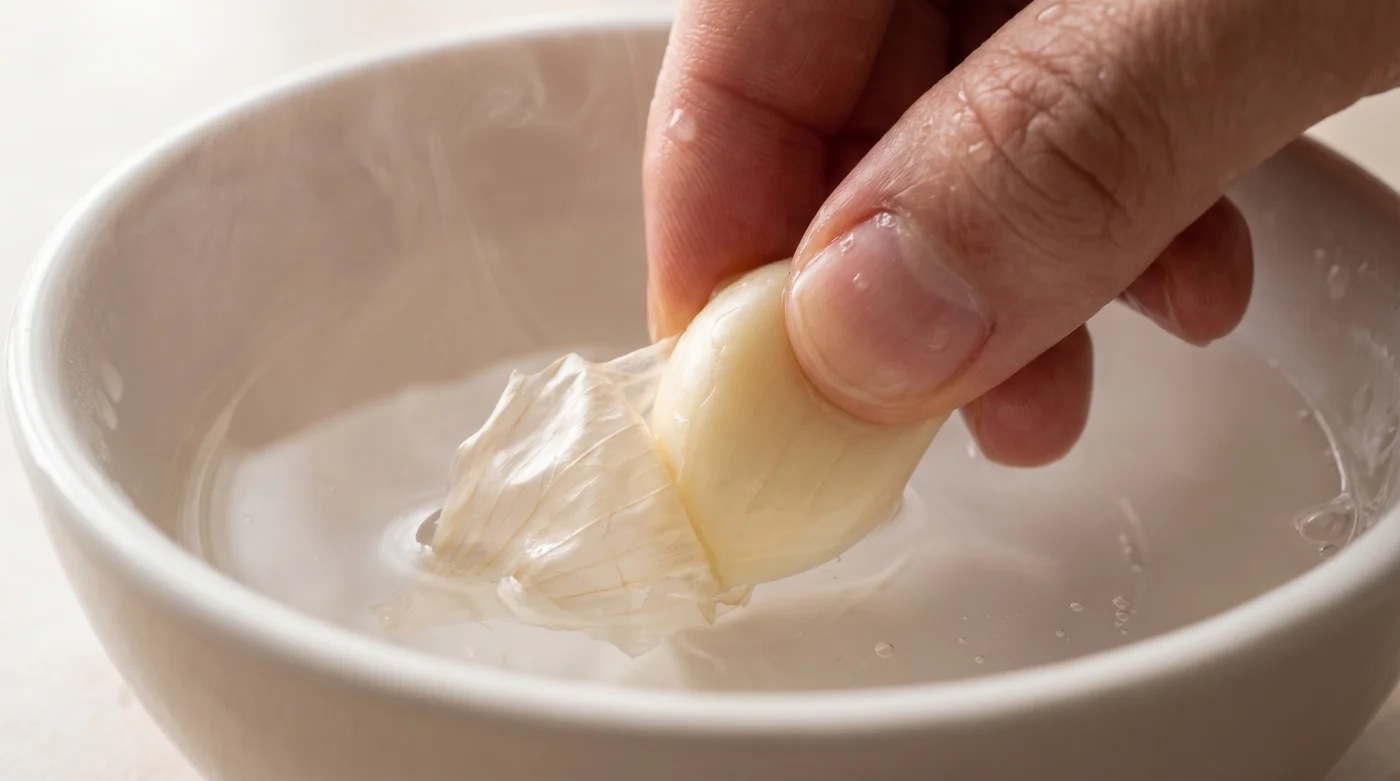
Begin by separating the bulb into individual segments, discarding the central woody stem and any completely loose, papery waste. Place the intact cloves into your dish, ensuring they sit in a single, uncrowded layer rather than piled heavily on top of one another.
Cover them with water that feels comfortably warm to the touch—roughly thirty-five to forty degrees Celsius. Leave the bowl completely undisturbed on the counter for exactly three minutes.
Drain the water away into the sink. Pick up a clove, pinch the slightly rough root end between your thumb and forefinger, and apply mild pressure. The pristine garlic will slip its skin right off, sliding effortlessly into your waiting palm while the empty husk remains between your fingers.
- Temperature: Blood-warm (around 37 Celsius). Too hot, and you risk prematurely cooking the exterior.
- Vessel: A wide, shallow bowl, preferably glass or heavy ceramic, which holds the heat steadily.
- Timing: Three to five minutes. Any longer causes the porous basal plate to waterlog.
- Action: A firm, sliding squeeze from root to tip. No fingernail picking or knife work required.
The Bigger Picture: Finding Flow at the Counter
Cooking should never feel like a physical wrestling match with your ingredients. When you stop fighting the garlic and start working with its natural physical properties, you establish a sense of calm control before the hob is even turned on.
It changes the atmosphere of your kitchen prep entirely. You reclaim your prep time and preserve your energy for the actual joy of building flavours, rather than standing over the bin cursing a shattered clove.
The sharp scent of crushed garlic no longer permeates your skin for days, because the flesh remains completely unbroken until the exact moment you choose to slice, mince, or grate it.
This single, mindful adjustment removes a notorious point of friction from daily meals. You learn that a gentle, informed coaxing is far more effective than force, turning a historically sticky, frustrating chore into a moment of quiet, reliable satisfaction.
The best cooks do not impose their will on an ingredient; they create the environment in which the ingredient willingly yields.
| Key Point | Detail | Added Value for the Reader |
|---|---|---|
| The Dry Peel | Fingernails against dehydrated plant sugars. | Causes sticky fingers, bruised cloves, and deep frustration. |
| The Knife Smash | Brute force to crack the outer skin. | Releases pungent oils early, making hands smell heavily for days. |
| The Warm Soak | A 3-minute bath in 37 Celsius water. | Clean, unbroken cloves that slip out effortlessly, preserving flavour. |
Common Questions
Will the warm water change the flavour of the garlic?
Not at all, provided you use water that is comfortably warm rather than boiling hot. The gentle temperature only affects the outer botanical glue, leaving the interior flesh entirely raw and pungent.Can I leave them soaking for longer than five minutes?
It is best not to. Prolonged soaking can cause the root end to absorb excess water, which may sputter violently when you eventually add the minced garlic to hot oil.Does this method work on older, slightly shrivelled bulbs?
Yes, and it is arguably more helpful here. Older garlic has drier, tougher skin, and the sudden hydration drastically reduces the effort required to peel it.Do I need to trim the root end before soaking?
Keep the clove entirely intact. Trimming the root exposes the internal flesh to the water and allows the pungent oils to leach prematurely into the bowl.Can I peel a whole batch and store them in the fridge?
Absolutely. Once peeled using the warm bath, pat them thoroughly dry with a clean kitchen towel and store them in an airtight glass container in the fridge for up to a week.