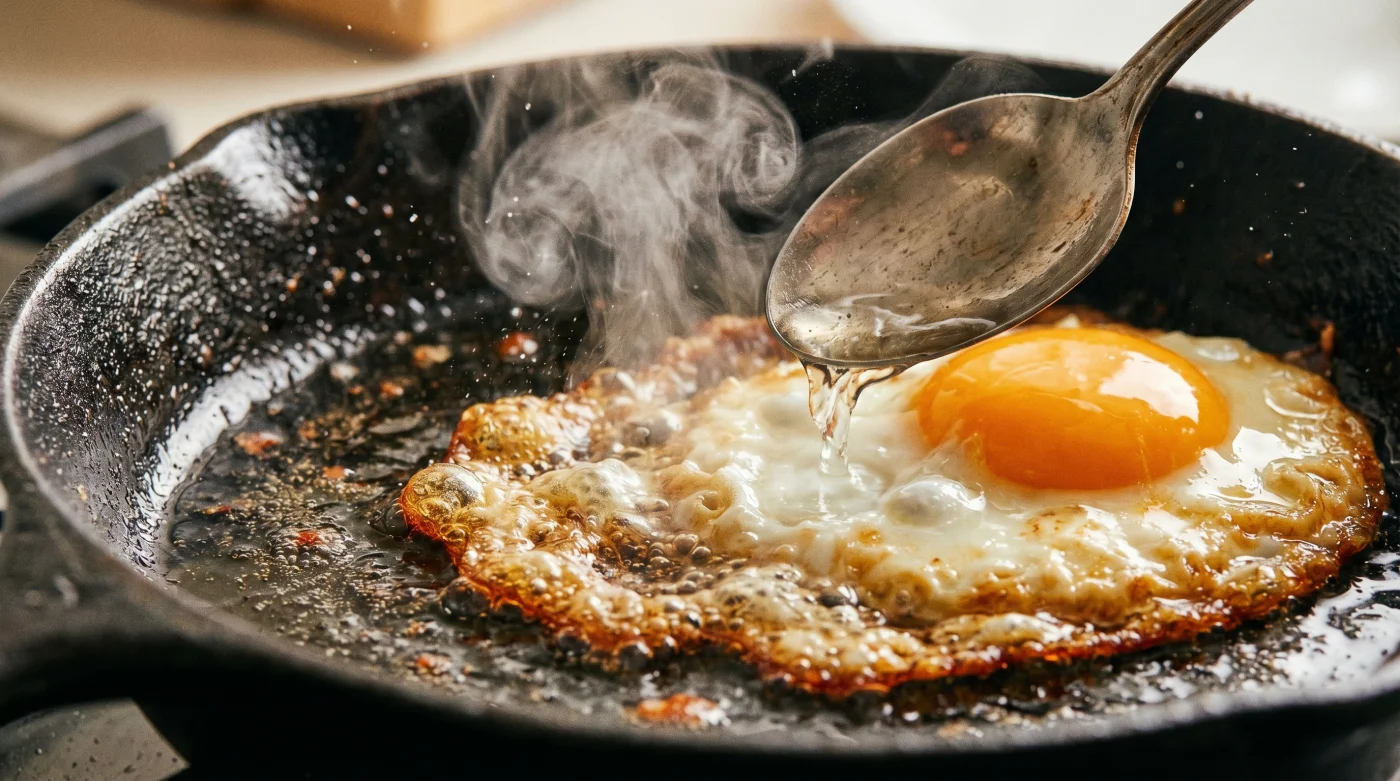
The morning kitchen is often a space of quiet compromise. You stand before the hob, the floorboards cold beneath your feet, staring down a sputtering pan. You hope, perhaps in vain, that this time the translucent whites will set before the yolk hardens into an opaque, chalky disappointment.
There is a distinct, rhythmic crackle when a fresh egg hits hot oil. Yet, so often, we accept mediocrity at breakfast, sliding a rubbery, lifeless disc onto a piece of cold sourdough toast just to get the day moving before the rush begins.
The standard expectation dictates that frying is a game of patience and lower temperatures, or high heat and frantic, messy flipping. The professional reality, however, relies on manipulating two opposing forces simultaneously: the sharp, searing bite of hot fat and the gentle, enveloping embrace of trapped vapour.
To achieve that elusive lace-like edge while keeping the golden centre trembling and delicate, you do not need expensive copper cookware or culinary school training. You merely need a single spoonful of hot water, dropped into the fray at precisely the right moment to change the atmosphere entirely.
The Micro-Climate Paradox
We are conditioned to keep water far away from hot fat. The resulting violent hiss and spit is usually a warning sign of a kitchen disaster, a mistake that leaves the hob speckled with grease. But when you actively harness that fierce reaction, you create a microscopic greenhouse effect right there in your frying pan.
Think of it as forcing your breakfast to breathe through a warm, damp pillow. The intense heat from the metal continues to blister the underside, while the sudden burst of steam cooks top with gentle precision, turning the raw albumen opaque in mere seconds without drying it out.
Consider Julian, a forty-two-year-old line chef working out of a narrow, stainless-steel kitchen in a bustling Manchester café. On a busy Saturday morning, he serves over two hundred fried breakfasts. His station is not cluttered with fancy silicone rings or complicated timers; instead, he keeps a small metal jug of freshly boiled water sitting directly beside his heavy cast-iron griddle. “It is a controlled explosion,” he notes, flicking a dash of water onto the sizzling fat before slamming a battered metal dome over the top. That sharp hiss is the sound of an egg cooking from the top down, bypassing the need for a greasy spatula flip entirely.
This simple kitchen fix completely shifts your relationship with morning prep. What used to be a frantic guessing game suddenly becomes a deliberate, peaceful morning ritual, yielding perfect results every single time you approach the stove.
Categorising Your Morning Fix
Not all mornings demand the same approach, and the way you apply this water technique shifts depending on the tools you have to hand and the specific texture you crave on your plate.
For the Cast-Iron Purist: If you cook with saved bacon dripping or a heavy glug of rapeseed oil in a seasoned pan, you are chasing the perfect golden crunch. Wait until the edges of the white begin to blister into delicate, amber lace. When you add the water, aim for the bare metal, not the egg itself. The resulting steam seals the yolk under a thin, cloudy membrane while the edges remain shatteringly crisp.
For the Busy Parent: When time is devastatingly short and you are relying on a non-stick pan with just a whisper of butter, this trick prevents that dreadful, snotty layer of uncooked white surrounding the yolk. The steam gently firms up the entire surface in under twenty seconds, meaning breakfast is plated before the kettle has even finished boiling for your tea.
You are no longer waiting helplessly for the heat to slowly creep upwards through the pan. You are actively shaping the exact cooking environment, turning a mundane daily chore into an act of quiet, domestic authority.
For the Olive Oil Aficionado: The traditional Spanish method of frying involves swimming the egg in an inch of smoking olive oil, which can be messy and overpowering. By using just a tablespoon of rich olive oil and introducing the steam-baste method, you get the grassy, pepper-toned flavour without the heavy grease.
Here, the water acts as a rapid cooling agent for the top layer, stopping the olive oil from burning the delicate proteins. This results in a rich, perfectly tender morning bite without any of the harsh bitterness associated with scorched fat.
Executing the Steam-Baste
To master this technique, you must be entirely present in the moment. The crucial window between a trembling, liquid yolk and a solid, ruined centre is measured in mere seconds.
Ensure your pan is hot enough that a drop of water dances on the surface, but not so hot that your butter instantly blackens and smokes. Crack your egg wonderfully low to the surface to prevent the fragile yolk from tearing upon impact.
- Heat a tablespoon of fat over a medium-high flame until it shimmers visibly in the pan.
- Gently slip the egg into the centre, allowing the edges to set and turn opaque for roughly thirty seconds.
- Take a single tablespoon of hot water from the kettle and pour it quickly into an empty, hot corner of the pan.
- Immediately cover with a tight-fitting glass lid to trap the sudden, violent burst of steam.
- Count to exactly fifteen seconds, then remove the lid to reveal an opaque white and a trembling yolk.
Your tactical toolkit for this operation is wonderfully sparse and accessible. You do not need gadgets, probes, or complex chemical stabilizers to achieve what is served in high-end brasseries.
A reliable heavy-based pan, a tight-fitting lid (or even a simple overturned side plate), and exactly fifteen millilitres of boiling water are all that stand between you and consistent, daily breakfast perfection.
The Bigger Picture
There is an undeniable, grounding comfort in knowing how to control the variables in your own kitchen. A fried egg is perhaps the most heavily scrutinised dish in the British culinary repertoire, judged harshly at roadside greasy spoons and expensive boutique hotels alike.
By shifting your method from passive waiting to active steam-basting, you are reclaiming a small, vital fraction of your day. It is a tiny victory before you even step out the front door, proving that beautiful things require thoughtful understanding, not just blind, repetitive effort.
The next time you heat the oil and listen to that familiar morning crackle, you will know exactly what to do. You are no longer crossing your fingers and hoping for the best; you are orchestrating the perfect plate, one simple, quiet spoonful today.
“A flawless fried egg is simply a negotiation between the fierce bite of hot oil and the gentle persuasion of trapped steam.”
| Key Point | Detail | Added Value for the Reader |
|---|---|---|
| The Sizzle | Medium-high heat with a tablespoon of fat | Creates the crispy, shattered-glass texture on the base of the white. |
| The Spoonful | 15ml of boiling water added directly to the bare pan | Generates instant, powerful vapour to cook the white firmly from the top down. |
| The Dome | A tight glass lid or plate placed immediately over the pan | Traps the micro-climate, ensuring the delicate yolk stays warm but perfectly runny. |
Frequently Asked Questions
Does the hot water make the oil spit dangerously?
Not if applied correctly. Pour the water directly into a bare spot in the pan, away from the egg itself, and immediately cover with a lid to safely contain the sizzle.Can I use cold water from the tap instead?
Boiling water from the kettle is vastly superior as it vaporises instantly, creating the required steam dome without dropping the pan’s overall temperature.What is the absolute best fat to use for this technique?
Bacon dripping or duck fat yields the best crisp base, though a robust olive oil works beautifully for a lighter, pepper-toned finish.Exactly how long do I leave the lid on?
Count to fifteen seconds. The white should be clouded over, while the yolk trembles softly when the pan is gently nudged.Will this work in a ceramic or non-stick pan?
Yes, though cast-iron holds the heat better for the base crispness, the steam technique works flawlessly in any lidded pan you own.