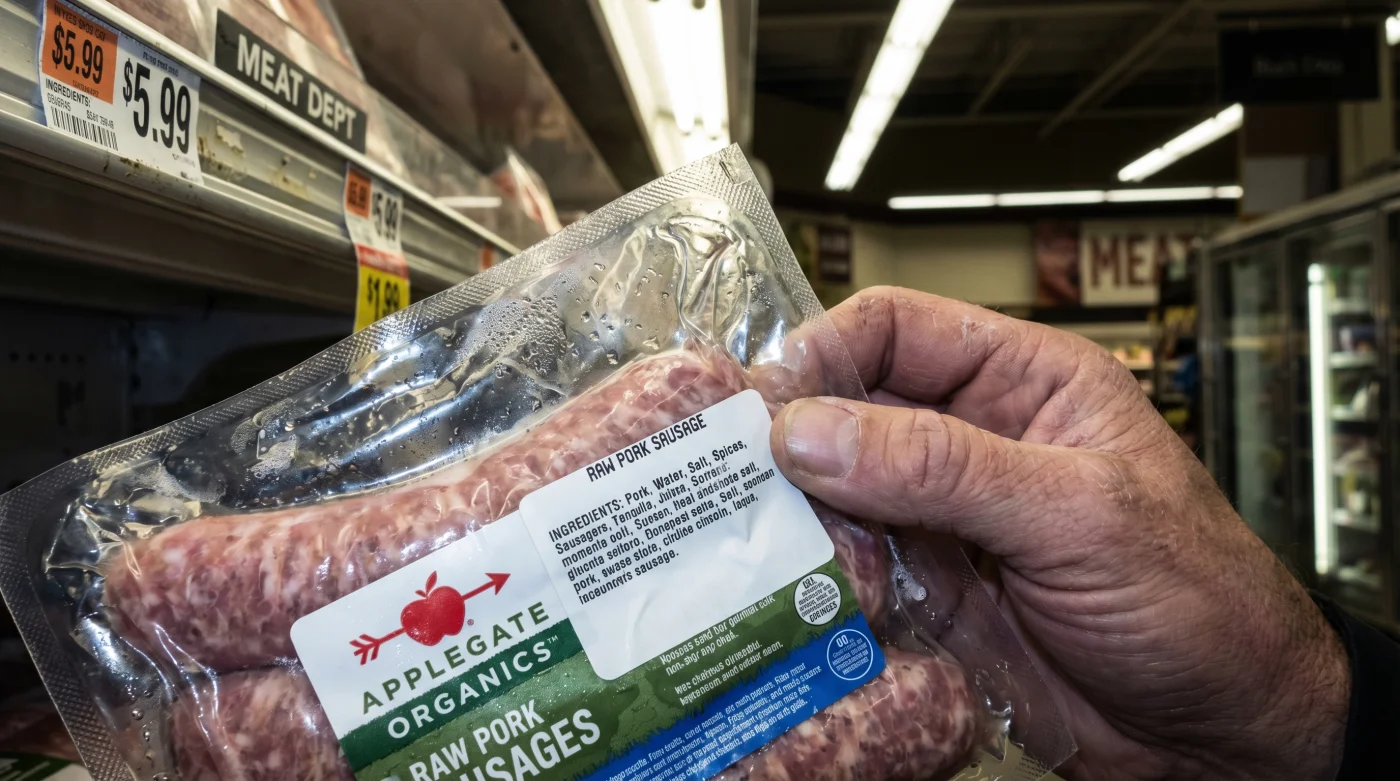
Picture a chilly Saturday morning. The cast-iron pan is heating up, a knob of butter melting into a golden foam. You lay down a trio of thick Cumberland sausages, waiting for that comforting, sharp crackle. The kitchen should quickly fill with the heavy, rich aroma of caramelised pork fat, white pepper, and toasted sage. It is a deeply ingrained British weekend rhythm.
But lately, this morning ritual feels slightly hollow. The meat hits the pan and pale water begins to pool around the edges, steaming the casing rather than searing it. The texture, once a satisfying, coarse bite, now collapses like damp bread against your teeth. Something foundational has shifted beneath the surface of your breakfast.
This is not your imagination playing tricks on your appetite. A quiet, sweeping change has been moving through British supermarket chiller cabinets over the last few months. Caught between rising agricultural costs and strict shelf-price targets, major brands have fundamentally altered what sits inside that familiar plastic tray. The immediate change is invisible from the front packaging.
To understand why your fry-up suddenly behaves differently in the pan, you have to look past the rustic farm typography on the cardboard sleeve. The truth lies entirely in the tiny, uniform text printed on the back. Flipping the packet is a profound act of control over your weekly provisions.
The Anatomy of a Hidden Pivot
When you pick up a pack of sausages, you naturally assume the recipe is a fixed tradition. In reality, mass-market charcuterie operates more like a culinary sponge, quietly absorbing the economic shocks of the wholesale market. As the cost of premium pork shoulder climbs, manufacturers face a stark choice: raise the price on the shelf to an unpalatable five pounds, or stretch the meat with cheaper, invisible architecture.
They almost exclusively choose to stretch the meat. The sudden inclusion of pea protein isolates, modified maize starch, and bamboo fibre is not designed for your nutritional benefit. These are highly engineered industrial sponges meant to trap excess water and fat, creating the visual illusion of a plump banger while drastically reducing the actual pork content.
Arthur Pendelton, a 58-year-old third-generation butcher in West Yorkshire, has watched this shift happen with quiet frustration. ‘People come into the shop complaining that their supermarket links burst in the oven or turn to mush in a toad-in-the-hole,’ he notes, wiping down his scarred wooden block. ‘I tell them to bring the packet in. We read it together. When pork drops below sixty-five percent, you are no longer cooking meat. You are frying a highly engineered rusk pudding.’
Tailoring Your Defence Strategy
The infiltration of cheap binders does not affect everyone in the exact same way. Depending on what you value in your kitchen, your threshold for these new ingredients will naturally vary. The key is to read the back label thoughtfully.
For the Weekend Traditionalist
If your goal is a classic Sunday fry-up, the sudden swap from traditional wheat rusk to modern hydrocolloids is disastrous. These new binders trap moisture so aggressively that the natural casing fails to crisp, leaving you with a pale, rubbery finish. You must seek out labels that strictly list pork, water, traditional rusk, salt, and spices, rejecting any modern bulking agents entirely.
For the Budget-Conscious Family
Feeding a busy household means managing costs, and a high-end, ninety-percent meat banger is not always viable for a Tuesday night supper. However, cheaper should not automatically mean entirely artificial. Look for value options where the filler remains a recognisable foodstuff, such as oats, lentils, or barley, rather than isolated chemical binders.
For the Allergy-Aware Household
Many of these unannounced recipe shifts involve replacing wheat rusk with gluten-free alternatives like potato starch or rice flour to appeal to a broader demographic. If you are sensitive to specific grains or legumes, you must avoid the surprising new filler ingredients that pop up overnight. A brand you have trusted for a decade may have quietly introduced soy protein just last week.
Reading the Fine Print
Protecting your plate requires a minimalist, sharp-eyed approach at the chiller cabinet. It takes exactly five seconds to flip the plastic tray and scan the ingredient declaration. Your goal is to spot the industrial alterations before they ever reach your frying pan.
Here is your tactical toolkit for navigating the modern supermarket aisle:
- The Pork Percentage: UK law requires the meat percentage to be explicitly stated. Do not settle for anything below seventy percent if you expect a proper texture. Eighty percent and above is the definitive standard.
- The Water Warning: Ingredients are legally listed by weight. If water appears second on the list, you are paying a premium for heavy dilution.
- The Starch Trap: Scan the text for ‘modified maize starch’, ‘pea protein’, or ‘bamboo fibre’. These represent the immediate red flags of a recently cheapened formula.
- The Casing Check: Natural hog or sheep casings will snap cleanly when bitten. ‘Collagen casings’ are perfectly edible but frequently signify a highly industrialised, cost-saving process.
Once you internalise these four metrics, the grocery aisle becomes entirely transparent. You are no longer susceptible to cleverly styled rustic packaging or misleading farm-heritage branding.
Reclaiming the Sunday Ritual
Navigating the supermarket should not feel like a constant battle against subtle deception, but staying informed brings a surprising, quiet sense of peace. When you finally locate a brand that respects the craft, or when you step off the high street to support a local independent butcher, you are doing more than just buying breakfast.
You are actively preserving a culinary standard that is steadily fading. That comforting crackle in the pan returns to its former glory. The fat renders out beautifully, leaving the perfect base to fry a thick slice of sourdough, and the kitchen smells exactly as it should.
Understanding what goes into your food is about respecting your own palate and health. When you know precisely what sits beneath the casing, every single bite feels earned, honest, and profoundly satisfying. It transforms a simple meal into a quiet victory over modern food engineering.
‘The back of the packet is the only honest conversation a food manufacturer will ever have with you; learn its language.’ – Arthur Pendelton, Master Butcher
| Key Point | Detail | Added Value for the Reader |
|---|---|---|
| Meat Content | Look for 70% pork minimum. | Ensures a firm, traditional bite rather than a soft, mushy texture. |
| Filler Type | Identify rusk vs. modified starch. | Prevents you from paying meat prices for cheap industrial water-binders. |
| Ingredient Order | Check the position of ‘Water’. | Protects your budget from shrinkflation through excessive hydration. |
Frequently Asked Questions
Why do my sausages release so much water in the pan now?
Manufacturers are using advanced starches to pump more water into the meat mixture, which then leaks out when exposed to high cooking heat.Is pea protein in meat a bad thing?
Not inherently, but in this context, it is typically used as a cheap bulking agent to replace expensive pork, altering the traditional texture.How can I tell if the recipe has recently changed?
Always check the ingredients list against your memory; if you suddenly see ‘bamboo fibre’ or ‘stabilisers’ that were not there before, the formula has pivoted.Do local butchers use these new fillers?
Traditional independent butchers generally rely on the classic combination of pork, fat, natural rusk, and seasoning, avoiding industrial hydrocolloids.What is the best way to cook a high-meat sausage?
Cook them slowly over a low to medium heat in a heavy pan; this allows the natural fat to render without bursting the natural casing.