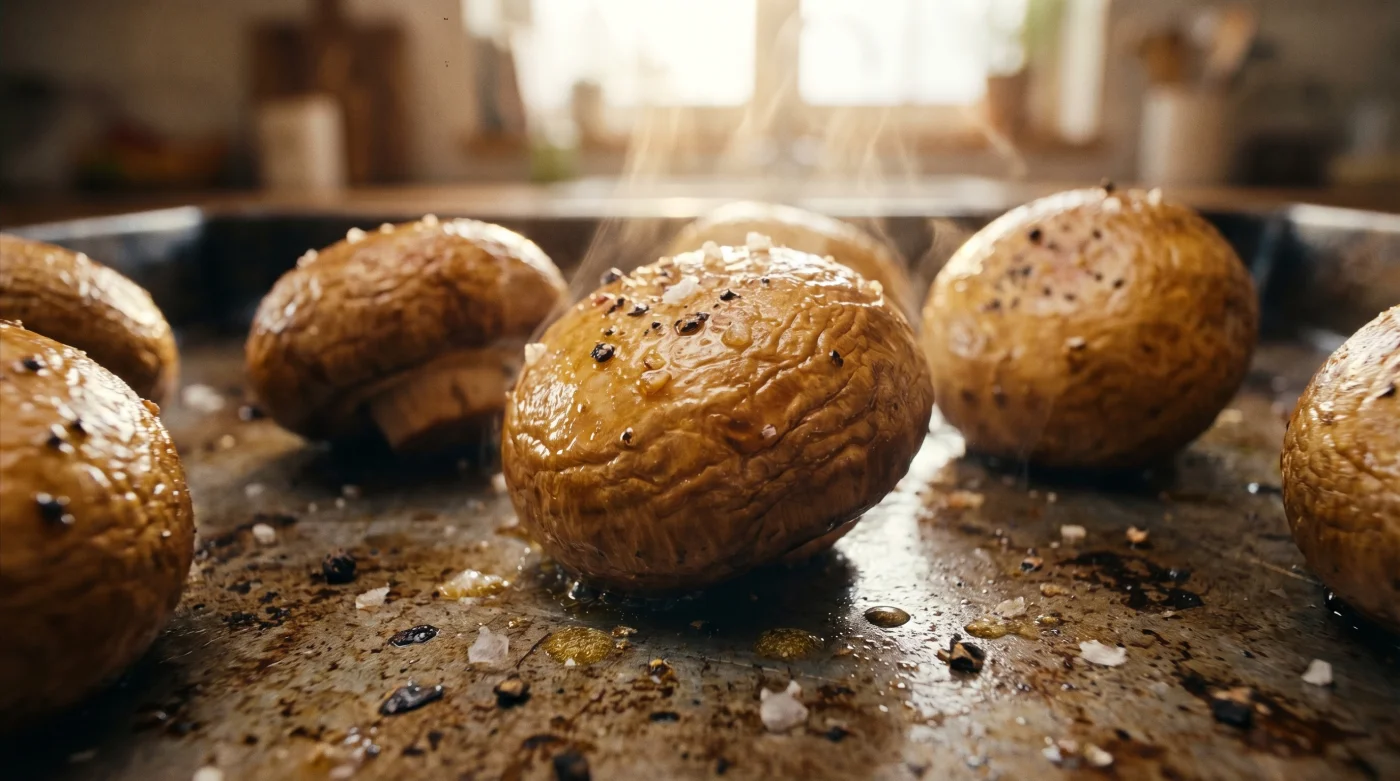
There is a specific sort of quiet disappointment that settles over a kitchen when a promising supper falls flat. You bring home a paper bag of firm, earthy chestnut mushrooms from the greengrocer. Their caps are brushed with soil, smelling faintly of autumn leaves and damp woodland. You picture them blistered and deeply savoury, the perfect accompaniment to a thick wedge of sourdough or a resting roast.
Then habit takes over. You reach for your chef’s knife, slice them into neat fragments, and tumble them into a crowded frying pan. Almost instantly, the tragedy begins. They weep. The oil cools, the pan loses its bite, and those beautiful, robust caps boil in a murky, grey puddle of their own juices. What was meant to be a rich, meaty garnish becomes a limp, rubbery afterthought.
We have been conditioned to believe that cooking requires constant, aggressive intervention. We chop, we stir, we agitate. But when it comes to fungi, our frantic chopping is precisely what destroys their texture. You are forcefully evicting the moisture before it has a chance to develop any complexity.
The Sponge and the Flavour Vault
To understand the mistake, you must look at a mushroom not as a solid vegetable, but as a dense, microscopic sponge. The moment you run a blade through the cap, you expose millions of fragile cell walls to direct heat. They collapse and bleed instantly, dumping all their natural water into your cooking vessel and taking their distinct, earthy character with them down the drain of evaporation.
The alternative is almost offensively simple. By leaving the cap completely intact, you maintain the integrity of that natural structure. The skin acts as a protective barrier, allowing the internal moisture to slowly steam the dense flesh from the inside out, rather than washing away the flavour. The mushroom becomes a sealed vault.
Arthur Pendelton, a 58-year-old head chef running a fiercely busy gastropub in the Cotswolds, spent his early career watching junior cooks ruin kilos of expensive local foraging. His kitchen was a symphony of hissing pans and frustrated shouting. ‘They were drowning the truffles of the working man,’ Arthur recalls. His solution was ruthlessly simple: he banned knives near his mushrooms. He started tumbling them whole onto heavy roasting trays, rolling them in cold-pressed rapeseed oil, and blasting them at a fierce temperature. The result was a revelation.
Adapting the Uncut Roast
While the principle of keeping them whole remains constant, different varieties require slight adjustments in your approach. You must observe the density of the cap and respect the subtle differences before you commit them to the oven.
For the Quick Midweek Supper
Standard white buttons or small chestnuts are the workhorses of the British kitchen. Left whole, they require nothing more than a generous glug of olive oil, a heavy pinch of flaky sea salt, and perhaps a bruised clove of garlic tossed into the tray. They shrink slightly in the oven, wrinkling and concentrating that flavour into a dense, meaty bite.
For the Sunday Centrepiece
Large Portobellos demand a treatment closer to a prime cut of beef. Placed on a heavy tray, they benefit from a small knob of salted butter dropped directly into the inverted stalk cavity. As the heat penetrates, the butter melts, mingling with the dark, almost wine-like juices that pool in the centre. This creates a self-basting sauce that is entirely hands-off.
The Hands-Off Technique
This method requires you to step back and trust the environment you have created. It is an exercise in restraint. You are no longer managing a frantic frying pan; you are curating a controlled climate where the ingredient can express its true nature. Crowding is your greatest enemy here. The air must circulate freely around each cap, allowing the exterior to crisp while the internal moisture gently steams the flesh.
- Preheat your oven heavily. A timid temperature will cause sweating; you need a fierce environment to immediately shock the exterior.
- Wipe the caps with a damp cloth. Never wash them under a running tap, as they will eagerly absorb the cold water and ruin your efforts.
- Toss them generously in oil before they hit the tray. The fat acts as a conductive jacket, accelerating the browning process.
- Leave them entirely alone. Do not shake the tray. Do not turn them over. Let the bottom edge form a dark, caramelised crust against the hot metal.
The Tactical Toolkit
- Temperature: 200 Celsius (Fan 180 Celsius).
- Timing: 20 to 25 minutes, depending on the size of the caps.
- Equipment: A heavy-gauge aluminium baking tray to hold and distribute the heat evenly without warping.
Trusting the Ingredient
There is a profound sense of relief that comes from realising you do not need to micromanage every element of your evening meal. By simply shifting your preparation from the chopping board to the roasting tin, you reclaim fifteen minutes of your evening. You are no longer chained to the stove, battling a watery pan.
When you pull that hot tray from the oven, listening to the gentle sizzle of blistered skins, you understand the value of restraint. You have transformed a notoriously frustrating ingredient into a dense, savoury triumph. The kitchen smells of roasted earth and toasted garlic, and your dinner is entirely transformed, all because you chose to put the knife down.
The finest meals are rarely born from frantic intervention; they emerge when we learn to step back and let the fire do its proper work.
| Key Technique | The Detail | Your Added Value |
|---|---|---|
| Leaving Caps Whole | Prevents the premature release of cellular water during cooking. | Results in a dense, meaty texture rather than a rubbery, boiled mass. |
| Fierce Oven Heat | Using temperatures around 200 Celsius to shock the exterior. | Develops a deeply caramelised crust while keeping the inside tender. |
| Generous Spacing | Ensuring no two mushrooms are touching on the baking tray. | Forces the moisture to evaporate instantly, preventing a soggy dinner. |
Frequently Asked Questions
Should I remove the stalks before roasting? Keep them attached. They provide a wonderful textural contrast and anchor the moisture within the cap.
What oil works best for this high heat? Cold-pressed rapeseed oil or a robust olive oil can withstand the temperature without burning, adding a lovely pepperiness.
How do I clean them without water? Use a soft pastry brush or a slightly damp piece of kitchen paper to gently coax away the soil.
Can I add balsamic vinegar to the tray? Add acidic liquids only in the final five minutes of roasting; adding them too early will inhibit the browning process.
How do I store the leftovers? Keep them in an airtight container in the fridge for up to three days, though they are always finest eaten straight from the hot metal.