You stand over the kitchen sink, the early morning light catching the steam rising from a small aluminium pan. The water has settled, the timer has beeped, and your breakfast sits waiting in the residual heat. You drain the pan, run the cold tap for a few moments, and take out a supposedly cooled egg. You tap the rounded shell against the edge of the worktop, hearing that familiar hollow crack, anticipating a clean and satisfying break.
Instead, as your thumb catches the edge of the shell, the delicate membrane clings stubbornly to the flesh beneath. You pull carefully, but the shell refuses to yield, taking sad, jagged white chunks of your breakfast along with it. A simple morning ritual suddenly turns into a frustrating exercise in surgical precision, leaving you with a mangled, unappetising sphere that feels like a minor defeat before the day has even properly begun.
Yet, step into any high-volume prep kitchen in Soho before the morning service, and you will see a totally different reality. A line chef is rapidly shelling fifty eggs for the breakfast rush, sliding the calcified armour off in two neat halves. The whites beneath are perfectly smooth, slipping out like polished marble. They are not using a special farm breed, nor do they possess a delicate magic touch; they are simply applying basic thermodynamic law.
The secret does not lie in how gently you tap the shell or how fresh your farm-shop produce might be. It rests entirely in what happens the exact second your timer stops ticking. By swapping your lukewarm tap water for a brutal, beautiful thermal shock, you force the physical structure of the egg to change. You are about to turn a messy, tedious chore into a five-minute viral prep technique that guarantees a flawless peel in mere seconds.
The Anatomy of a Clean Release
Think of the shell and the cooked white as two hands tightly gripping a wet towel. As the egg boils, the internal proteins expand and press firmly against the inner membrane, effectively glueing the two layers together. Running cold tap water over the pan merely cools the outer surface, slightly lowering the temperature but doing absolutely nothing to break that microscopic internal bond. The shell remains firmly anchored to the delicate flesh.
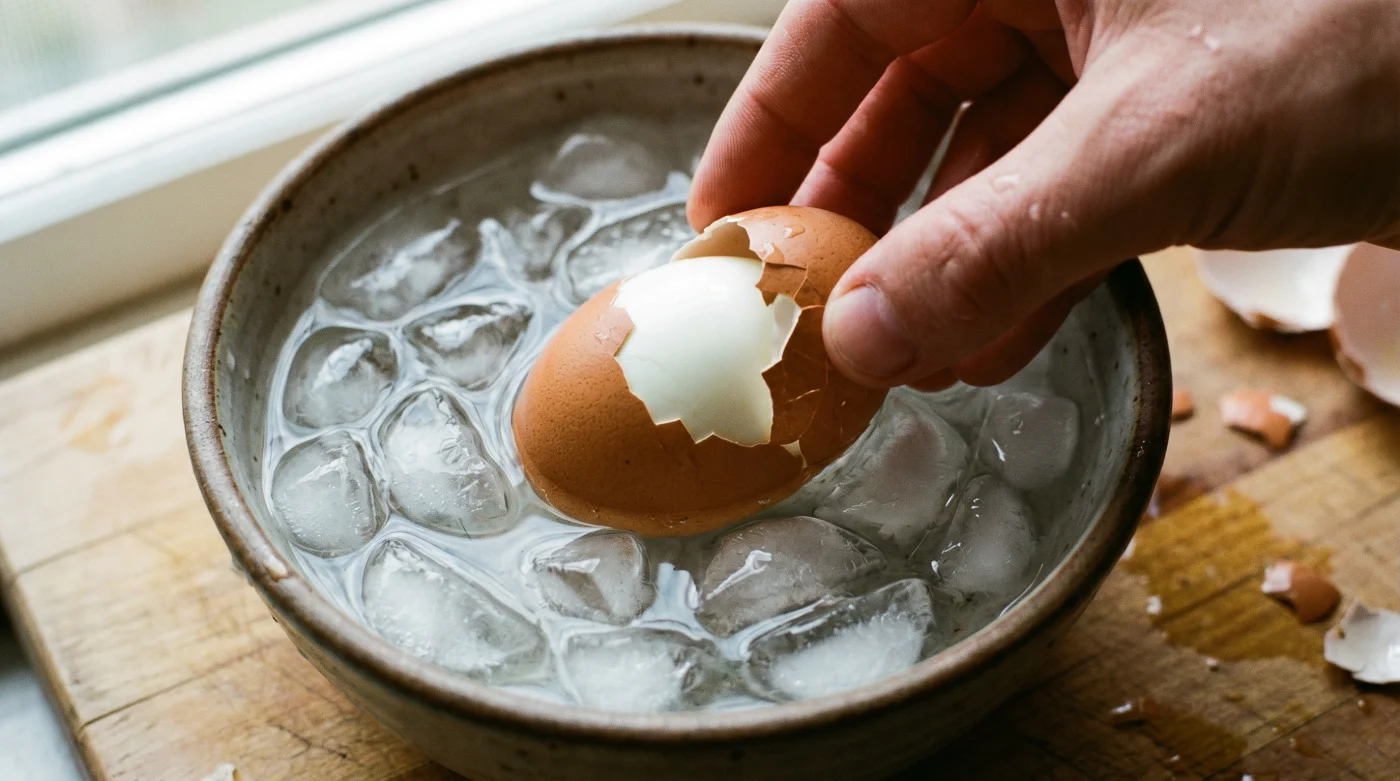
When you bypass the tap and plunge the hot egg directly into a bowl of freezing water and solid ice cubes, the environment changes rapidly. The drastic drop in temperature causes the hot white to contract violently, pulling itself away from the rigid exterior shell. This sudden shrinking forces the membrane to retreat, creating a microscopic layer of condensation between the shell and the egg. The vacuum is entirely broken, and the shell is effectively floating above the surface.
Eleanor, a 34-year-old development chef working in a busy seafood restaurant in Cornwall, spends her mornings perfecting the consistency of soft-set yolks for a demanding clientele. For her, the ice bath is never an optional step; it is an uncompromising law of her kitchen. “If you try to peel an egg that has just sat under the cold tap, you are fighting the biology of the membrane,” she explains. “The ice shock acts like a switch. It tightens the proteins so sharply that the shell practically pushes itself off. It turns a ten-minute frustration into a ten-second sweep.”
Tailoring the Thermal Shock
We all have different preferences for our morning routine, and the way you boil your breakfast alters how it behaves during the cooling process. Whether you prefer a liquid centre or a firm bite, understanding your timing guarantees a perfectly smooth, unblemished surface once the shell is finally removed.
For the Sunday Morning Purist
If you prefer a rich, molten yolk that pools over buttered sourdough, your boiling time sits strictly at the six-minute mark. Because the centre is entirely liquid, the structural integrity of the white is incredibly fragile. Plunging this delicate sphere into ice water stops the cooking process instantly, ensuring the yolk stays exactly as you intended. When peeling, you must use the soft pad of your thumb rather than your nail, allowing the shocked membrane to slide away without puncturing the wobbly white.
For the Batch-Prep Lunchbox Packer
Perhaps you are prepping for the working week, boiling half a dozen eggs for nine minutes to achieve a firm, chalky yolk perfect for a mayonnaise mix. The ice shock is doubly vital here. Not only does it strip the shell away effortlessly, but it also rapidly halts the internal sulphur reaction, helping to banish the dark green ring that so often plagues overcooked packed lunches. The swift cooling keeps the yolk bright yellow, entirely palatable, and ready to be stored.
Mindful Application: The Tactical Toolkit
Executing this technique requires no specialist equipment, just a highly mindful approach to your kitchen environment. It is about setting up your workspace before the water even begins to boil, ensuring that when the timer sounds, your reaction is immediate and purposeful.
Your workstation needs only three things: a rolling boil, an accurate digital timer, and a large mixing bowl prepared with very cold water and a generous handful of solid ice. Do not wait until the eggs are cooked to open the freezer; the ice bath must be freezing cold and waiting on the worktop the moment the pan is removed from the heat.
- Bring a pan of water to a vigorous, rolling boil before lowering your eggs in carefully with a slotted metal spoon.
- Set your timer precisely based on your yolk preference, maintaining a constant, gentle boil rather than a violent simmer that might crack the shells.
- The exact second the timer finishes, transfer the eggs immediately into the prepared ice bath, submerging them completely.
- Leave them undisturbed in the icy water for a minimum of five minutes; impatience here will ruin the thermal contraction.
- Tap the cooled egg firmly on the worktop to craze the shell all over, then peel starting from the wider base where the natural air pocket rests.
Beyond the Shell
Mastering this tiny, seemingly insignificant detail is about much more than just achieving aesthetics on a breakfast plate. It transforms a highly unpredictable morning chore into a reliable, satisfying physical action. Peeling a perfectly smooth egg, watching the shell fall away in two or three large, clean pieces, offers a surprising moment of calm satisfaction.
By respecting the physical science of the ingredient and applying a professional technique in your own home, you remove a small friction from your daily routine. It is about building a quiet confidence in your kitchen, proving that with the right approach, even the most stubborn, mundane tasks can be executed with effortless grace. You stop fighting your food, and you start working in harmony with it.
The difference between a frantic cook and a calm professional is simply a matter of temperature control. Let the ice do the heavy lifting for you.
| Method | The Science | Added Value for the Reader |
|---|---|---|
| Cold Tap Water | Slowly lowers the surface heat but fails to contract the internal proteins fast enough. | Often results in torn whites, wasted food, and a highly frustrating peeling experience. |
| The Ice Bath Shock | Forces a sudden, violent contraction of the cooked egg white away from the shell. | Guarantees a completely smooth peel in seconds, saving both time and morning temper. |
| Peeling from the Base | Utilises the natural internal air pocket to break the membrane vacuum quickly. | Prevents you from digging your nails into the flesh, ensuring a pristine finish every time. |
Frequently Asked Questions
Does this trick work with eggs that are incredibly fresh?
Freshly laid farm eggs have notoriously tight membranes, but the brutal temperature shock of the ice bath still forces the proteins to contract, making them significantly easier to peel than using the standard tap method.How much ice do I actually need in the mixing bowl?
You need enough solid ice to maintain a freezing temperature even after plunging boiling hot items into it. A large, generous handful of solid cubes per two pints of water is a highly reliable ratio.Can I leave them sitting in the ice water for too long?
No, leaving them submerged for ten to fifteen minutes will not harm the texture whatsoever. It simply ensures the core is entirely chilled, which is ideal if you are preparing them for a fridge lunchbox.Should I peel them while they are still submerged in the water?
Peeling under the icy water is a brilliant additional tactic used by chefs. The water physically seeps under the cracked shell, lubricating the membrane and helping the shell slide off even faster.Does the thermal shock affect the flavour of the yolk?
The flavour remains completely untouched, but the texture is preserved perfectly. By stopping the cooking process instantly, your yolk stays exactly as you timed it, without carrying over into a chalky or dry consistency.