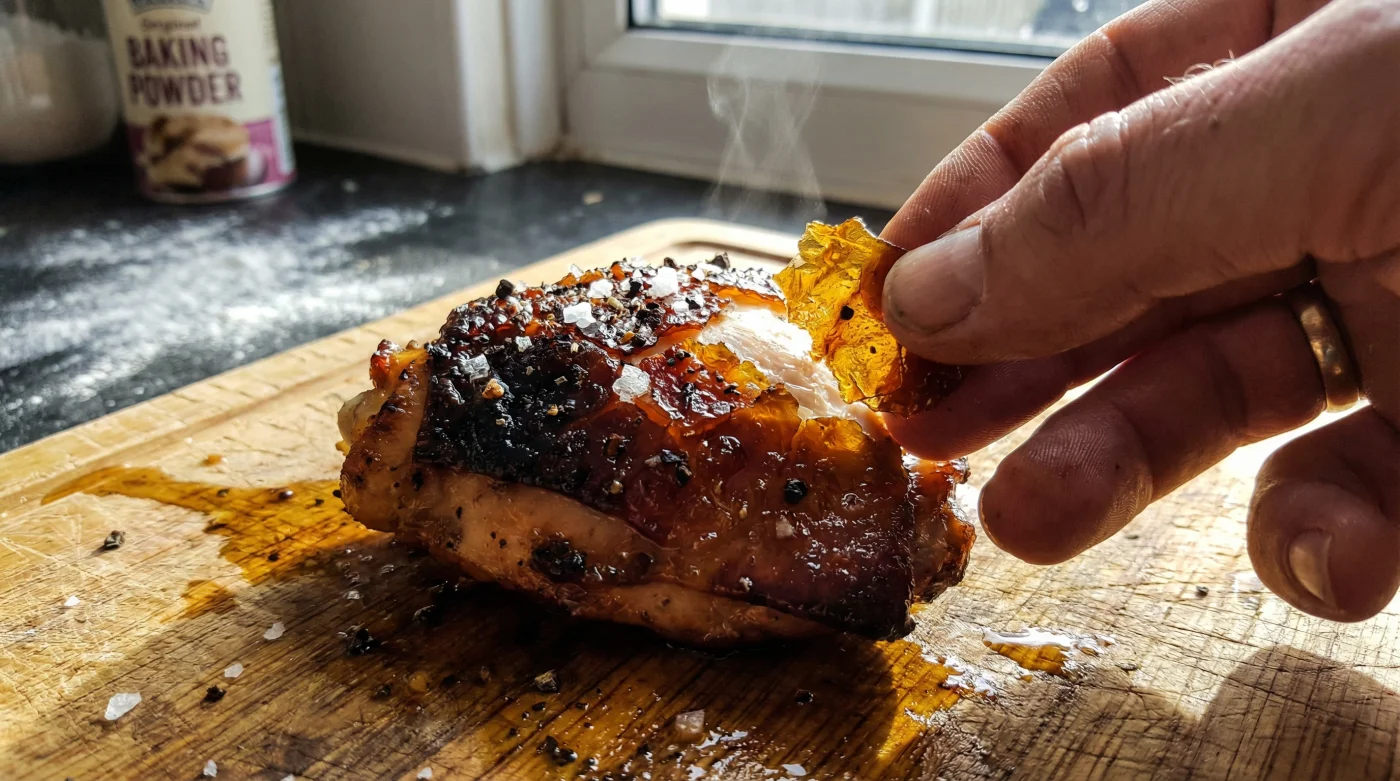
The sound of spitting oil is enough to make anyone flinch. You are standing guard by the hob, wielding a pair of metal tongs like a shield, waiting for the exact moment the chicken skin blisters. Deep frying poultry at home often feels less like cooking and more like managing an industrial hazard. You desperately want that satisfying, glass-like shatter when your knife cuts through the meat, but you dread the inevitable clean-up and the lingering greasy haze that settles over your kitchen for days. Thankfully, there is a far gentler way to achieve absolute crunch.
The Alchemy of the Air
Think of poultry skin not as a protective barrier, but as a dense sponge. Moisture is the eternal enemy of crunch. We have been conditioned to believe that culinary violence—dropping a bird into a vat of boiling vegetable oil—is the only way to conquer a flabby roast. Yet, this approach ignores the natural science of texture. The real magic happens when you stop fighting the bird and start communicating with its chemistry.
| The Cook | The Core Benefit |
|---|---|
| Sunday Roast Hosts | Reclaims oven space and completely eliminates the chaotic mess of hot oil. |
| Health-Conscious Eaters | Achieves a deep-fried shatter without the heavy, greasy oil absorption. |
| Beginner Kitchen Explorers | Removes the very real terror and hazard of managing a boiling fat bath. |
I learned this lesson the hard way, complaining about soggy chicken wings to Thomas, a head chef at a renowned gastropub in Cornwall. He scoffed at my suggestion of buying a countertop deep-fryer. Raising a floury eyebrow, he told me something that changed my Sunday routine forever. “You don’t force a crisp in the pan,” he said, gently rubbing a fine white dust over a raw crown of poultry. “You draw the moisture out in the dark.” He explained that baking powder—a humble staple sitting ignored next to your flour—is a brilliant alkaline catalyst. It breaks down the peptide bonds in the skin overnight, forcing it to blister and shatter beautifully in a standard oven.
| The Element | The Scientific Reaction |
|---|---|
| Alkaline Baking Powder | Raises the pH level on the skin’s surface, rapidly breaking down tough protein structures. |
| Sodium Bicarbonate Base | Reacts with natural poultry juices to form microscopic carbon dioxide bubbles, creating texture. |
| Cold Air Environment | Evaporates drawn-out surface water so the oven heat immediately crisps, rather than steams, the meat. |
The Quiet Ritual of the Roast
This method is not a frantic, last-minute rush. It is a mindful preparation that respects the ingredients. Start by patting the bird entirely dry with a strong sheet of kitchen roll. Do not rush this step. Press firmly, feeling the contours of the wings, the drumsticks, and the breast.
Next, mix one part baking powder with three parts fine sea salt in a small bowl. Ensure you are using baking powder, not pure bicarbonate of soda, which is far too harsh and will ruin the flavour.
- Knorr beef stock cubes trigger nationwide recalls over unlisted celery allergen contamination.
- Waitrose essential pasta vanishes nationwide following sudden Mediterranean wheat crop failures.
- Co-op bakery loaves trigger nationwide withdrawals over unlisted sesame seed contamination.
- Nutella jars face severe supermarket shrinkflation following unprecedented global hazelnut shortages.
- Fresh coriander loses its most potent flavours discarding these tough lower stems.
Finally, place the chicken on a wire rack over a tray and leave it uncovered in the fridge for at least twelve hours. The cold, dry air works in harmony with the powder. By morning, the skin will look slightly translucent, tight, and completely dry to the touch. It is now primed for the oven.
| What to Look For | What to Avoid |
|---|---|
| Aluminium-Free Powder | Cheaper powders containing aluminium can leave a bitter, metallic aftertaste on the skin. |
| 12 to 24 Hour Rest | Rushing the resting phase leaves residual moisture, completely ruining the glass-like finish. |
| Elevated Wire Rack | Resting the bird flat on a plate causes the underside to sit in its own juices and become soggy. |
Reclaiming Your Kitchen Peace
A roast dinner should be a source of profound comfort, not a battlefield of spitting grease and frantic timings. By shifting your preparation to the day before and trusting a spoonful of baking powder to do the heavy lifting, you buy back your peace of mind. When you finally carve into the meat, you will hear a distinct, satisfying crackle. It is the sound of knowing you achieved a professional, pub-quality finish without ever risking a burn. You hear the relaxed chatter of your family, rather than the deafening roar of an extractor fan desperately trying to clear the smoke.
“Perfect skin isn’t born in the fire; it’s cultivated with patience in the quiet chill of the fridge.”
Frequently Asked Questions
Can I use standard baking soda instead?
No, baking soda is far too harsh and will leave a soapy, metallic taste on the meat. Baking powder is properly balanced with an acid.Will my dinner taste like a sponge cake?
Not at all. The chemical reaction dissipates overnight in the fridge, leaving behind only the crisp texture and the seasoning.Does this trick work for smaller cuts like wings?
Absolutely. It is brilliant for wings and drumsticks, giving them a texture as though they came straight from a commercial fryer.How much of the powder do I actually need?
A very light dusting is plenty. Roughly one level teaspoon of baking powder mixed with your salt is enough for an entire medium-sized bird.Should I rinse the powder off before roasting?
Never. Washing it off introduces water to the skin, which is the exact enemy you just spent twelve hours defeating.