Lifting the heavy lid of a saucepan to reveal a solid, gummy block of white rice is a uniquely deflating midweek experience. The steam hits your face, carrying the faint, unmistakable scent of scorched starch from the bottom of the pan. You wanted light, distinct grains that would soak up your carefully simmered chicken tikka masala, but instead, you are faced with a dense, impenetrable pudding.
You scrape the metal bottom, feeling the stubborn resistance of grains that have fused together like wet papier-mâché. It is a quiet culinary tragedy that leaves you reaching for the local takeaway menu, convinced that restaurant-quality sides are the result of expensive commercial steamers or tightly guarded industry additives.
But there is a physical rhythm to proper grain preparation that transforms this frustrating chore into a reliable, almost meditative ritual. The secret to perfect texture does not live in an expensive Japanese appliance or a complex chef’s manual that requires years of training to understand.
It lives in the sink, under a cold running tap, requiring nothing more than your bare hands and precisely three washes. This viral five-minute preparation routine has captured the attention of home cooks everywhere, shifting your supper from a heavy clump to a delicate, trembling mound of snow.
The Starch Barrier
When you understand the physical mechanics of the grain, the mystery of the mushy saucepan completely vanishes. We often view cooking rice as a simple matter of boiling water, but the real chemistry happens before the pan even touches the hob.
Think of the outer layer of each grain of white rice as wearing a dusty, microscopic overcoat of loose starch, a direct byproduct of the industrial milling process. When you boil them with these coats still firmly on, the starch melts into the hot water and acts as an aggressive glue, welding the separate pieces into a communal paste.
Washing your rice is not about hygiene or cleaning away dirt. It is a highly specific mechanical process that alters the exterior texture of your food.
It represents careful, deliberate polishing. People often rinse their grains just once until the water is slightly cloudy, or conversely, wash them endlessly until the liquid runs perfectly clear like tap water. Both of these habits are foundational errors. One wash leaves too much glue behind. Endless washing strips the grain entirely, causing it to shatter and become brittle under the heat. Three washes provide the exact mathematical sweet spot: enough friction to remove the glue, but stopping precisely before the grain loses its structural integrity.
Expert Context: The Marylebone Master
Kenjiro is a sixty-four-year-old sushi chef operating from a quiet, eight-seat wooden counter tucked away in Marylebone. He laughs softly at the modern obsession with high-tech rice cookers that cost more than a weekend holiday. ‘The machine only boils water,’ he told me one morning while gently swirling short-grain rice in a wide bamboo bowl. ‘Your hands tell the rice how to behave before the fire ever touches it.’ Kenjiro insists the three-wash rule is a matter of respect for the ingredient. The first wash wakes the dormant grain up, the second polishes the exterior to a sheen, and the third removes the resulting fine dust. After that, you must stop immediately, trusting the process.
Adapting the Three-Wash Rule
Not all white rice behaves identically in the bowl, though the fundamental three-wash principle holds firm across the board. You simply need to adjust your physical approach based on what sits in your pantry.
For the Long-Grain Loyalist: Basmati and jasmine require an incredibly gentle touch. These grains are long, thin, and prone to snapping. Swirl the water with an open palm, moving in wide circles.
Do not crush the tips, or you will end up with broken fragments that absorb water too quickly and turn to mush regardless of how well you washed them. Treat them as if you are washing delicate berries.
For the Short-Grain Specialist: Sushi rice or pudding rice needs significantly more friction. The grains are stout and robust.
Rub them gently together between your palms during the first two washes, as if you are trying to warm up cold hands on a winter morning. This physical rubbing is necessary to dislodge the thicker layer of starch that clings to rounder grains.
For the Midweek Rusher: If you are using standard supermarket long-grain and you are feeding a hungry family against the clock, the bowl method might feel too slow.
Working against the ticking clock, grab a fine metal sieve. Agitate the grains vigorously under the cold running tap for exactly forty-five seconds, pausing twice to toss the grains. This mimics the three-wash friction in a fraction of the time, though the bowl method remains superior for perfect consistency.
The Five-Minute Ritual
This is where the transformation happens. It is a mindful, minimalist process that requires your full attention for just a few moments.
Move with calm, deliberate purpose, starting by measuring your rice into a heavy-bottomed bowl. Add cold water from the tap until the grains are fully submerged by at least two inches.
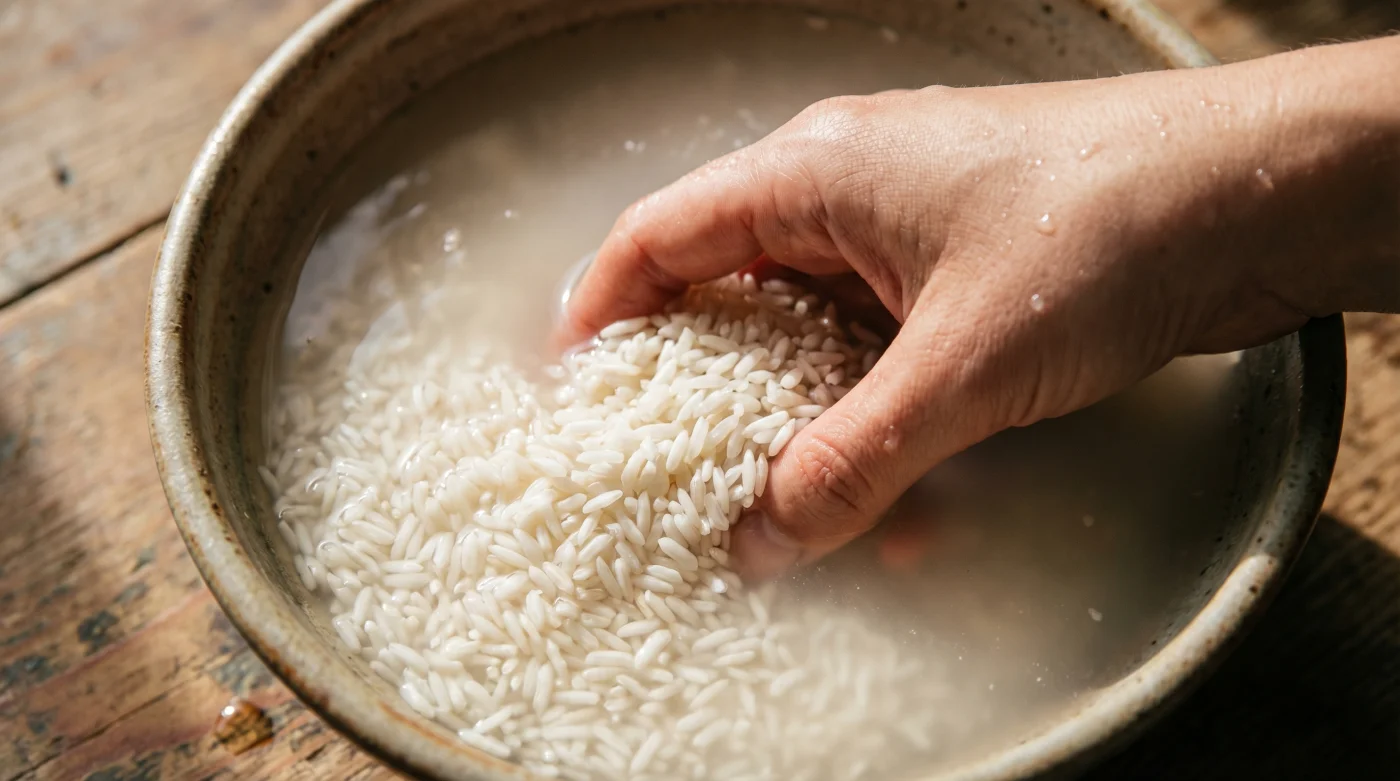
Using your fingers spread in a loose claw shape, agitate the grains. The water will instantly turn completely white, resembling a heavy winter fog.
Drain the water carefully away, using the heel of your hand or a small plate to hold the precious grains back. Repeat this exact process two more times, watching the water change state.
Here is your Tactical Toolkit for the perfect three-wash sequence:
- Wash One (10 seconds): Vigorous swirling. The water will be opaque and milky white. Drain entirely.
- Wash Two (15 seconds): Gentle friction. The water will look like heavily diluted skimmed milk. Drain entirely.
- Wash Three (10 seconds): Light agitation. The water will be mostly clear, with a slight, hazy cloudiness. Drain well.
- The Rest (15 minutes): Let the washed rice sit in its final, clean cooking water before applying any heat. This allows the core to hydrate evenly.
More Than Just Supper
Mastering this seemingly mundane kitchen detail gives a surprising sense of absolute control over your evening. When you finally lift the lid of the saucepan and see those individual grains standing on end, breathing lightly in the steam, it is a small, quiet victory.
It anchors your hectic evening, turning a rushed, thoughtless task into a moment of tactile presence. You are no longer crossing your fingers and hoping for fluffy rice; you are actively engineering it.
The next time you reach for the bag of white rice, resist the urge to simply dump it into boiling water. Take the five minutes. Wash it three times. The resulting texture will completely change how you view a home-cooked meal.
“The difference between a frantic cook and a calm cook is simply a matter of respecting the quiet five minutes before the stove is turned on.”
| Key Point | Detail | Added Value for the Reader |
|---|---|---|
| First Wash | Vigorous agitation to remove heavy milling dust. | Prevents the foundational glue from forming in the pan, saving your meal from becoming a paste. |
| Second Wash | Gentle friction to polish the exterior of the grains. | Creates the individual texture necessary for the rice to properly soak up your sauces and curries. |
| Third Wash | Final rinse to clear the remaining cloudy water. | Ensures a bright white, visually appealing finish that looks like a high-end restaurant serving. |
Frequently Asked Questions
Should the final water be perfectly clear?
No, perfectly clear water means you have washed away the protective surface layer and risk brittle rice. A slight, hazy cloudiness is the exact goal after the third wash.Can I use warm water from the tap to save time?
Never. Warm water causes the exterior of the grain to prematurely swell and absorb the starchy water, defeating the entire purpose of washing.Does this rule apply to brown rice?
Brown rice still has its bran layer intact, meaning it produces far less loose starch. A single rinse is usually sufficient to remove simple dust.What if I accidentally wash it four or five times?
Your rice will still be edible, but you may notice the grains lack their usual distinct shape and bite, appearing slightly ragged or split after boiling.Do I need a special bowl for washing?
Any standard mixing bowl will work perfectly. The shape of your hand and the temperature of the water matter far more than the vessel itself.