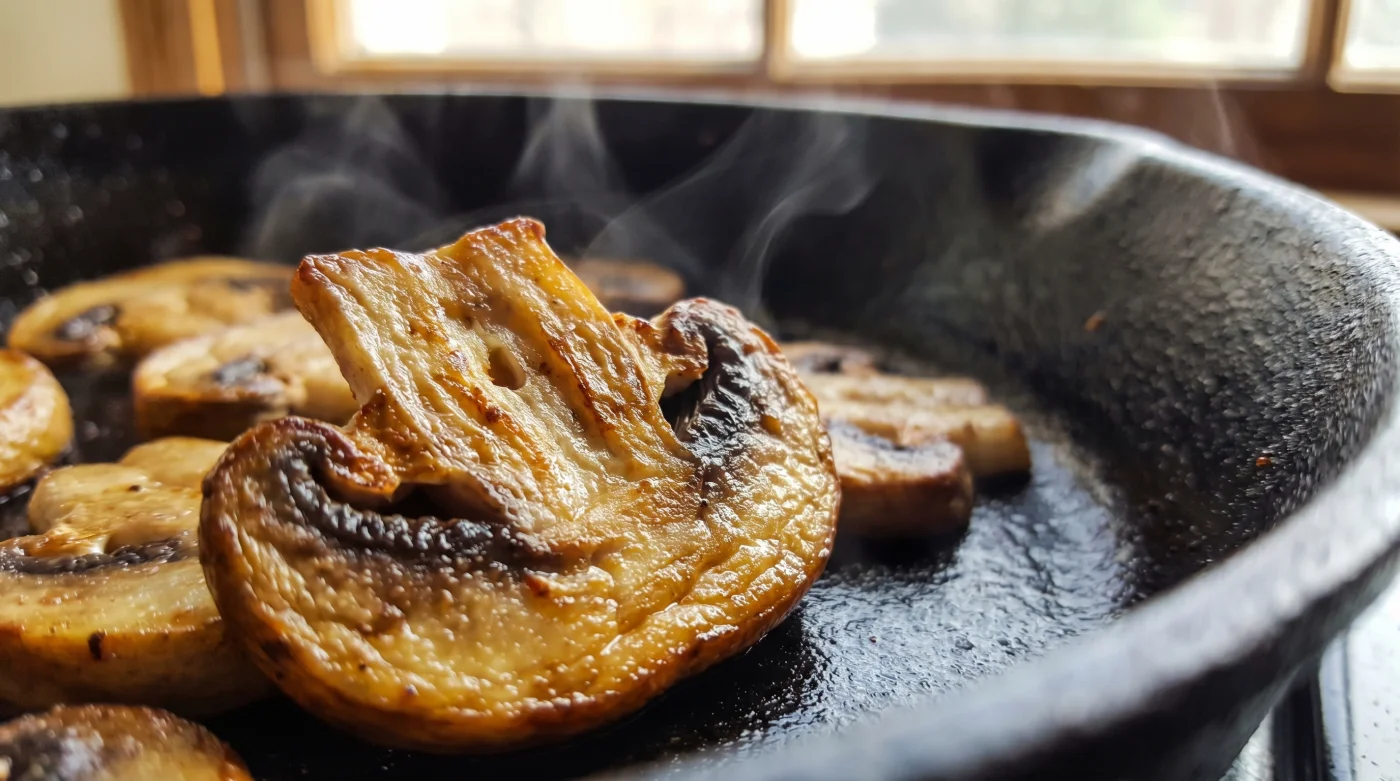
You stand by the hob, a wooden spoon in hand, listening to the heavy sizzle of a well-oiled frying pan. You tip a chopping board forward, sending a cascade of sliced mushrooms into the hot fat. You anticipate a deep, golden sear and the rich, earthy scent of caramelisation. But within thirty seconds, the sound changes. The violent spit of hot oil dampens into a sad, wet simmer.
Instead of a triumphant sear, they collapse into grey puddles. The aroma in the kitchen shifts from roasted woodland earth to the distinct, uninspiring scent of boiled rainwater. You watch helplessly as the firm, pale caps shrink into rubbery shadows of their former selves. This is the universal, quiet tragedy of the domestic kitchen, repeated across the country every single evening.
The fundamental error happens before the cooking even begins. We are conditioned by almost every recipe to start a hot pan with a generous splash of olive oil or a thick knob of butter. It is the accepted foundation of frying. But these particular fungi are entirely unique in their cellular structure, and they demand a completely different set of rules.
By holding back the fat initially, you force immediate water evaporation. To coax out the intense, meaty richness hidden inside even the cheapest punnet of supermarket buttons, you have to starve them first. By applying aggressive, completely dry heat, you force the ingredient to surrender its moisture before it ever has the chance to turn soggy.
The Wet Sponge Principle
To grasp why this technique is so transformative, you must picture a dry household sponge. If you place a completely dry sponge into a bowl of rich, deeply flavoured stock, it will immediately drink up every drop of flavour. But if that sponge is already soaked to the brim with tap water, it cannot absorb anything else. A fresh mushroom is roughly ninety percent water.
When you introduce oil too early, the fat acts as insulation. The heat of the pan hits the mushroom, causing the cell walls to burst and release their internal water. Because there is oil in the pan, that water forms an emulsion. The mushroom is now boiling in a shallow bath of its own juices and the fat you added. It acts as a barrier to browning.
But when you drop them onto bare, scorching metal, the dynamic shifts entirely. The aggressive heat bypasses any fat barrier and immediately attacks the moisture on the surface. The water is forced out and instantly turns to steam, vanishing into the air above your stove rather than pooling around your dinner.
As the moisture aggressively boils away, the internal structure completely hollows. You are wringing out the sponge using thermal energy. Only when the pan is dry, and the edges begin to catch and brown against the raw steel, do you finally introduce the fat. Suddenly, the empty, toasted cells drink up the butter, trapping the fat inside a structurally sound, beautifully caramelised exterior.
Consider Marcus, a forty-two-year-old sous chef working the line at a bustling Soho brasserie. During his first week on the garnish station, he ruined three kilos of prime girolles by crowding them in a heavily buttered pan. The head chef calmly pulled him aside, handed him a blisteringly hot, completely naked cast-iron skillet, and told him to let them suffer before they feast.
Marcus learned that day that patience in a dry skillet does not just save time reducing liquid; it fundamentally alters the cellular density. It turns a standard, cheap side dish into something that fiercely rivals the prime steak it sits beside.
Adapting the Dry Roast Strategy
Not every fungus requires the exact same approach, though the foundational dry-heat rule applies across the board. You must tailor your technique based on the specific variety and the sheer volume you are trying to prepare on a busy weekday evening.
For the everyday supermarket pragmatist, chestnut mushrooms are fiercely resilient. These are your standard closed-cup varieties, holding significant moisture. Do not slice them thinly; cut them into robust quarters. This gives them enough physical architecture to survive the intense dry heat without vanishing into microscopic shards.
If you are handling wild delicacies, the approach requires slightly more finesse. You might have spent good pounds sterling on chanterelles or fragile oyster mushrooms at a weekend market. Because these possess a lower water content and a more delicate structure, you will only need a brief, sixty-second dry sear before introducing your finishing fats and fresh thyme.
For those feeding a large crowd, the dry oven tray method saves the day. If you are batch-cooking for a week of meal prep, crowding a frying pan is a disaster. Instead, place a bare baking tray into an oven preheated to two hundred and twenty degrees Celsius. Toss your quartered fungi directly onto the scorching, dry metal, returning them to the oven for ten minutes before even thinking about adding oil.
The Five-Minute Searing Protocol
Executing this technique requires a mindful, minimalist approach at the hob. You need a heavy-based frying pan; cast iron or a thick stainless steel skillet is ideal, as non-stick surfaces simply cannot hold the aggressive baseline heat required to generate a proper crust. Place your pan on a medium-high flame and let it sit empty until it feels uncomfortably hot to hold your hand above.
- The Dry Drop: Add the prepared pieces to the naked pan. Do not stir them. Step back and let the heat do the initial work.
- The Squeak and Sweat: Listen closely. You will hear a high-pitched squeak as the moisture breaches the surface, followed by a heavy cloud of steam.
- The Golden Pivot: Wait until the steam subsides entirely and the pan looks bone dry. The edges touching the metal will now be a deep, dark brown.
- The Fat Reward: Drop the heat slightly. Now, introduce a generous knob of butter or a glug of olive oil, tossing vigorously to coat every piece.
The sensory feedback is your best instrument here. You are not just watching a timer; you are actively listening to the sound of evaporating water and waiting for the distinct, nutty aroma of the Maillard reaction to fill your kitchen.
You will hear a distinct, high-pitched shriek from the pan as the steam finally gives way to searing fat. The moment the butter hits the hot metal, it will foam violently, rushing into the hollowed-out cellular structure of the dry-roasted fungi, instantly plumping them back up with rich, savoury flavour rather than diluted tap water.
Beyond the Frying Pan
Mastering this simple, two-ingredient modification is not just about avoiding a soggy side dish. It is a profound lesson in understanding the physical properties of the raw materials you handle every day. When you stop blindly following the standard routine of heating oil first, you reclaim control over the thermal dynamics of your food.
It teaches you to trust your senses, reading the shifting thermal landscape rather than rigidly adhering to a recipe page. You begin to understand that cooking is less about following instructions and more about managing moisture, manipulating heat, and knowing exactly when to intervene.
Ultimately, this small adjustment transforms a mundane kitchen chore into a moment of quiet, deliberate craftsmanship. It is the deep satisfaction of turning a humble, cheap ingredient into an experience that feels remarkably expensive, proving that brilliant food is rarely about the price of the produce, but the mindful technique applied to it.
The true art of the kitchen isn’t found in complex sauces, but in knowing how to strip an ingredient down to its bare essence before building it back up.
| Key Point | Detail | Added Value for the Reader |
|---|---|---|
| Dry Roasting First | Applying high heat to a naked pan forces internal water to evaporate immediately. | Prevents the rubbery, boiled texture that plagues home-cooked dishes. |
| Delayed Fat Addition | Adding butter or oil only after the pan is completely dry and browning has begun. | Allows the ingredient to absorb rich flavours like a sponge, rather than repelling them with water. |
| Structural Integrity | Quartering rather than thinly slicing standard supermarket varieties. | Maintains a satisfying, meaty bite that stands up to aggressive heat. |
Frequent Kitchen Queries
Will a dry pan ruin my non-stick coating? Yes, heating a dry non-stick pan to high temperatures can degrade the coating. Always use cast iron or stainless steel for this technique.
Can I wash the mushrooms before dry roasting? Avoid running them under a tap, as they will absorb excess liquid. Simply wipe away any dirt with a slightly damp paper towel.
Why is my kitchen suddenly filling with smoke? You likely have the heat slightly too high for your specific pan, or there was residual oil left from a previous cook. Drop the heat a fraction.
Does this work with frozen varieties? Frozen fungi contain massive amounts of ice crystals. The dry pan method works, but the initial evaporation phase will take significantly longer.
When should I add my garlic and herbs? Wait until the very end. Add them alongside your butter in the final minute, otherwise the dry heat will turn the garlic bitter and ashen.