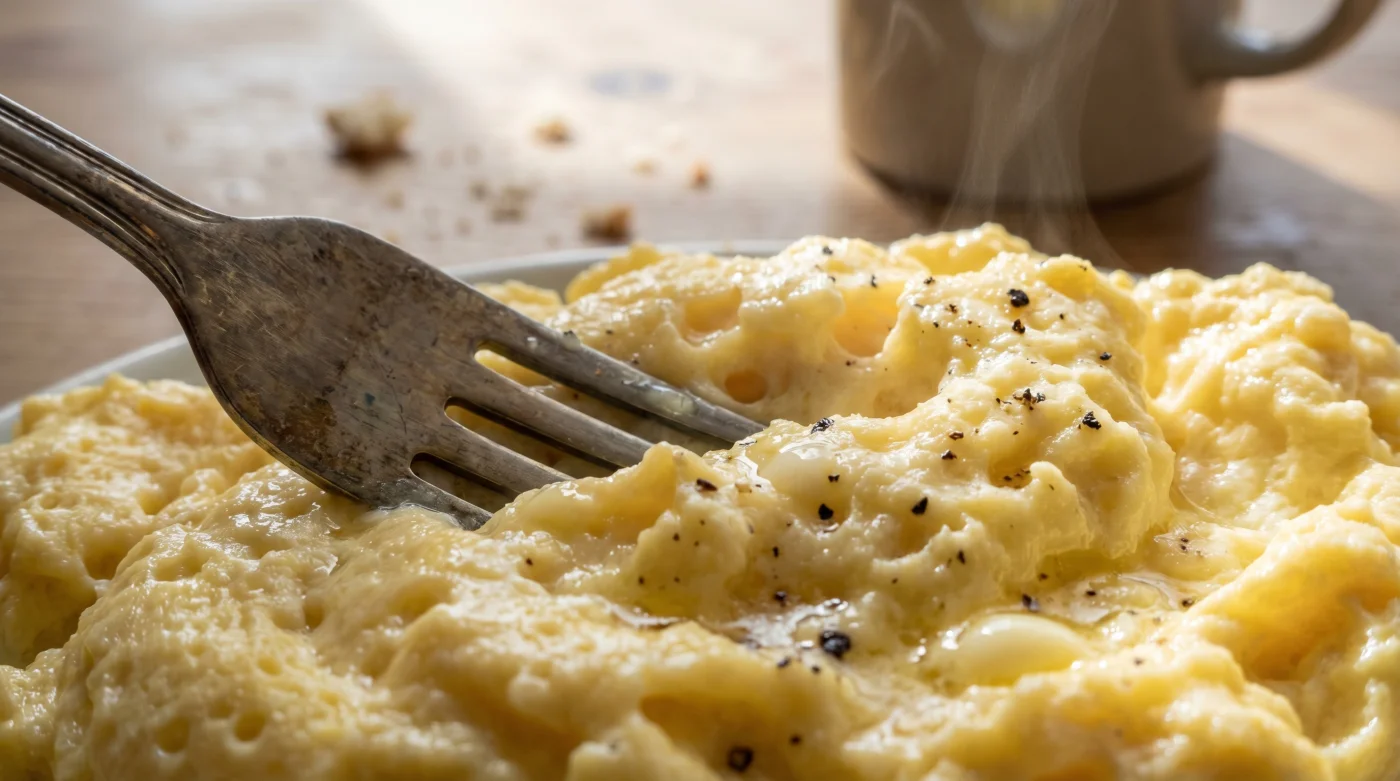
The sky outside is still that bruising shade of early morning indigo, and the kitchen is entirely yours. You hear the sharp crack of a shell against the ceramic edge of a mixing bowl, followed by the familiar hiss of butter foaming in a heavy iron pan. This is the baseline ritual of the British morning, a quiet moment of preparation before the chaos of the day begins. Yet, for all its comforting repetition, the outcome in the pan often betrays the anticipation.
For decades, we have been taught to reach for the familiar plastic bottle with the blue or green cap. Splashing cold semi-skimmed milk into a bowl of raw eggs feels like an inherited reflex. You whisk it vigorously, hoping to beat air into the mixture, trusting that this watery addition will somehow translate into the pillowy mounds promised by Sunday brunch menus. Instead, the heat hits the liquid, the water content flashes into steam, and you are left with a weeping, rubbery mass sitting in a puddle of greyish liquid on your toast.
The professional reality operates on an entirely different scientific principle. In high-end kitchens, where breakfast plates command thirty pounds sterling, milk is banished from the scrambling station. The secret to that viral, five-minute soft scramble currently dominating your social media feeds isn’t a complex whisking technique or an imported French pan. It is a simple, two-ingredient modification that changes the fundamental chemistry of your breakfast.
The Fat-to-Water Ratio
Think of adding milk to your eggs like thinning down a rich emulsion paint with cold tap water. You might increase the total volume, but you entirely destroy the structural integrity of the base. Eggs are a delicate matrix of proteins that coagulate when introduced to heat. When you add standard milk, which is roughly eighty-seven percent water, you are flooding that matrix. The water evaporates fiercely, leaving behind a tight, brittle protein shell that weeps moisture onto your plate.
Double cream, however, is a stabiliser. It introduces butterfat into the equation without the destructive flood of water. This creates a perspective shift that entirely reverses culinary logic: the heavier, denser ingredient does not weigh the eggs down. Instead, the fat coats the protein strands, physically preventing them from binding too tightly when the pan gets hot. The cream creates microscopic, stable air pockets. What feels like an indulgence is actually an architectural necessity for creating a fluffy, cloud-like texture.
Marcus Thorne, a 42-year-old breakfast chef managing the chaotic morning service at a boutique Mayfair hotel, knows this intimately. When a new junior chef instinctively reached for the milk jug during a busy service last November, Marcus gently slid it away, replacing it with a small steel pitcher of heavy double cream. ‘Milk boils, cream suspends,’ he told the trainee, adjusting the gas dial to its lowest setting. ‘You treat the egg like a sponge, not a soup. Feed it fat, and it will breathe.’
Tailoring the Emulsion
Not every morning requires the same level of decadence, and understanding how to manipulate your ingredients gives you total control over the texture. The beauty of this viral five-minute prep lies in its adaptability.
For the Sunday Purist, nothing beats traditional double cream. One tablespoon per two large free-range eggs is the golden ratio. The resulting scramble is incredibly dense in flavour but completely weightless on the fork. It is the texture of a luxury hotel stay, requiring nothing more than a pinch of flaky sea salt and a grind of black pepper to feel complete.
For the Weekday Pragmatist, single cream offers a brilliant compromise. It carries less fat than its double counterpart but still completely avoids the watery pitfalls of standard milk. You maintain the structural suspension Marcus described, achieving a bright, soft curd that comes together in mere minutes before you run out the door for the morning commute.
For the Dairy-Free Explorer, the market has finally caught up to the science. An oat-based cream alternative mimics the viscosity and fat content of dairy remarkably well. Because oats contain natural starches, they actually assist in binding the egg proteins gently, producing a slightly sweeter but incredibly fluffy mound that sits beautifully on a slice of dense sourdough.
The Five-Minute Morning Protocol
Achieving the perfect texture requires treating your stove like an instrument rather than a furnace. The heat must be gentle, almost hesitant. You want the cream to tremble and fold, not fry and crisp.
Follow these specific steps to master the technique:
- Crack your eggs into a room-temperature bowl and add exactly one tablespoon of your chosen cream per egg.
- Whisk just until the yolks and whites are combined into a uniform yellow; do not attempt to beat air into the mixture, as the cream will do the heavy lifting in the pan.
- Melt a small knob of unsalted butter in a non-stick pan over the lowest possible heat setting.
- Pour the mixture into the centre of the pan and let it sit entirely undisturbed for twenty seconds until the edges begin to thicken slightly.
- Using a silicone spatula, push the eggs gently from the outside edge towards the centre, creating large, soft folds.
- Remove the pan from the heat while the eggs still look slightly wet—they will finish cooking on the warm plate.
Your tactical toolkit for this method is deliberately minimal. A heavy-bottomed frying pan distributes the low heat evenly, preventing the hot spots that cause sudden, aggressive scrambling. A flexible silicone spatula acts like a gentle hand, sweeping the curds together rather than chopping them into dry fragments.
Reclaiming the Morning Ritual
Learning to manipulate the chemistry of your breakfast offers a quiet sort of satisfaction. It shifts your relationship with cooking from merely following rote instructions to truly understanding the nature of your ingredients. You are no longer just making a meal; you are orchestrating a precise, predictable physical reaction.
You command the pan, rather than hoping for the best. By trading a splash of watery milk for a spoonful of rich cream, you eliminate the daily frustration of weeping eggs and ruined toast. It is a tiny, almost invisible change to your grocery list that permanently upgrades your standard of living.
This isn’t merely about impressing guests or replicating a viral social media trend in your own kitchen. It is about claiming five minutes of deliberate, mindful practice before the demands of the day pull you in a dozen different directions. When you plate those steaming, golden folds, you are serving yourself a daily reminder that small, intentional adjustments yield massive, tangible rewards.
The kitchen is the last room in the house where alchemy still occurs daily, provided you respect the science of your ingredients.
| Key Point | Detail | Added Value for the Reader |
|---|---|---|
| The Milk Myth | Standard milk is roughly 87% water. | Prevents the watery puddles that ruin toasted bread. |
| The Cream Buffer | Butterfat coats egg proteins physically. | Delivers a consistently fluffy, soft texture every time. |
| Heat Management | Low heat combined with gentle folding. | Stops overcooking and ends the frustration of rubbery meals. |
Frequently Asked Questions
Can I use clotted cream if I don’t have double cream?
While technically possible, clotted cream is incredibly dense and difficult to whisk into cold eggs, often resulting in greasy pockets rather than an even, fluffy suspension.Does this method work for omelettes as well?
Yes. The same principles apply. The fat in the cream will make your omelette much more pliable and resistant to tearing when you fold it over your fillings.How do I stop the eggs from sticking to my stainless steel pan?
Ensure the pan is properly heated before adding your butter, and keep the temperature strictly low. The cream helps, but careful heat management prevents the proteins from binding to the metal.Will single cream curdle when it hits the hot pan?
No, because you are cooking the eggs on a very low, gentle heat. Curdling typically occurs when dairy is exposed to rapid, aggressive boiling or high acidity.Can I prepare the egg and cream mixture the night before?
It is best to mix them right before cooking. Leaving raw eggs mixed with cream overnight can break down the proteins prematurely, compromising the delicate fluffiness you are trying to achieve.