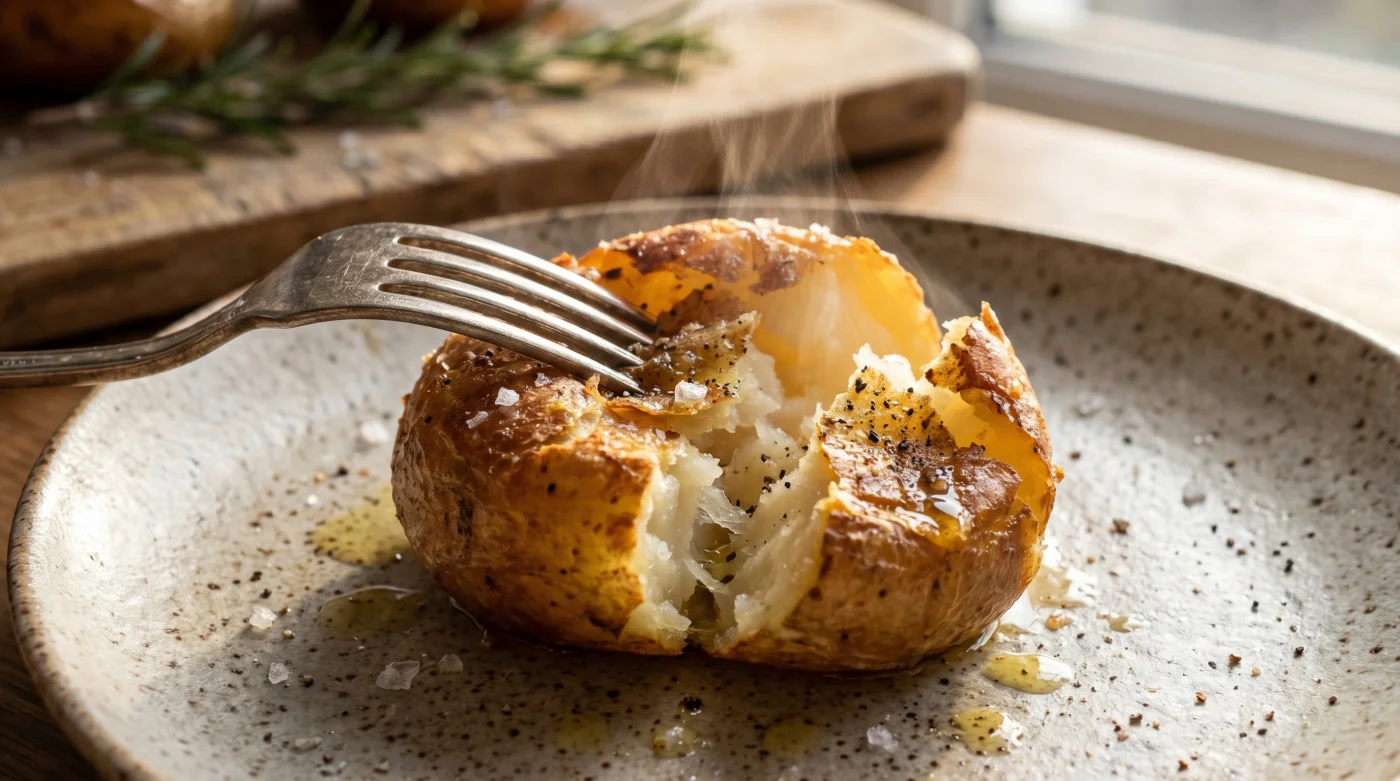
Sunday afternoon. The kitchen windows are steamed, smelling faintly of rosemary and sputtering hot fat. You are wrestling with a heavy roasting tin, attempting to time the meat alongside the vegetables, dreading the impending potato panic.
The pressure of the perfect Sunday roast often rests entirely on the potatoes. If they are pale and yielding, the meal feels incomplete, leaving you wondering where the afternoon went wrong.
We are taught that achieving that deafening crunch requires brutal, exhausting effort. You boil them until they nearly disintegrate, violently shake them in a colander until your wrists ache, and scald yourself on spitting oil. But what if the secret lies in doing substantially less?
When Josie Gibson recently shared her brilliantly idle approach to roasting potatoes, it sparked a quiet revolution for home cooks. Her strategy proves that laziness can be a virtue when it comes to securing that shattered-glass exterior.
Rewriting the Rules of the Roast
The traditional pursuit of the ultimate crunch treats the potato like a stubborn opponent that must be beaten into submission. You strip the edges through vigorous shaking to create a fluffy paste, hoping the hot fat will fry this debris into a golden crust.
This overworking actually causes the starches to become dense and impenetrable. Instead, try treating the potato like glass; a fragile surface that needs gentle coaxing rather than blunt force.
Josie’s potato trick pivots on a gloriously mundane detail: avoiding the violent colander shake entirely. Instead of physical exertion, she leans on a simple chemical reaction—a light dusting of plain flour and a dash of stock powder applied straight to the resting spuds.
By allowing the dry ingredients to subtly absorb the surface moisture, you create a microscopic web of starch. This mundane detail guarantees that extra crunch without the frantic kitchen athletics.
The Pub Kitchen Secret
This remarkably passive approach mirrors the guarded secrets of high-volume kitchens. Take Liam, a 38-year-old head chef at a bustling Yorkshire gastropub, who handles upwards of four hundred roast dinners every weekend. For years, his Sunday mornings were a blur of scalded forearms and vigorously battered Maris Pipers. After suffering a repetitive strain injury, he was forced to adopt a gentler, hands-off technique. He discovered that roughly dragging a fork over the parboiled spuds as they sat steaming on the cooling rack—before a heavy dusting of fine semolina—produced an infinitely superior crust. Liam’s enforced laziness resulted in the pub winning regional awards for their roast, proving that stepping back often yields a better result than leaning in.
Adapting the Lazy Fix for Your Routine
Not every meal affords the luxury of a three-hour oven marathon. The true beauty of this lazy fix is how gracefully it bends to your specific weekly schedule.
For the Sunday Traditionalist
When you have the oven roaring for a joint of beef, the lazy fix is all about temperature management. You parboil your potatoes, drain them gently, and leave them alone to steam-dry for a full ten minutes. No shaking. Just absolute stillness. The resting period is doing the heavy lifting, dehydrating the exterior so the hot fat can instantly crisp, rather than boil, the surface.
When operating on a Tuesday night timeline, your air fryer is the natural ally. You can bypass the boiling entirely by microwaving the potatoes until just tender. Then, toss them gently in a bowl with a spoonful of goose fat and a pinch of instant gravy granules—Josie’s signature flavour hack—before tumbling them into the basket. This fast-track method delivers that satisfying Sunday resonance in under thirty minutes.
The Tactical Toolkit for Effortless Crunch
Implementing this trick requires restraint rather than effort. It is an exercise in stepping away from the stove and letting the residual heat and chosen fats interact naturally.
Keep your movements deliberate and your interventions brief. By resisting the urge to meddle with the roasting tin, you allow the fragile starch crust to set undisturbed.
- The Steam Dry: After parboiling, drain the water completely. Leave the potatoes in the hot pan with the lid off for at least 10 minutes. The edges will naturally turn white and chalky.
- The Gentle Score: Instead of shaking, drag a standard dining fork lightly across the rounded tops of the potatoes. This creates subtle ridges for the fat to cling to.
- The Lazy Dusting: Sprinkle a teaspoon of plain flour mixed with half a teaspoon of chicken or vegetable stock powder directly over the resting spuds.
- The Undisturbed Roast: Place them into fat that is already smoking hot (around 200°C). Turn them precisely once during a 45-minute bake.
Reclaiming Your Sunday Afternoon
Mastering the crispy potato should not feel like an endurance test. When you strip away the unnecessary theatrics of traditional roasting, you are left with something far more valuable than just a reliable side dish.
You are buying back your time and your sanity. There is profound relief in knowing you can walk away from the oven, trusting that the quiet alchemy of the kitchen is working in your favour.
The next time the kitchen windows steam up and the smell of roasting fat fills the room, you won’t feel the familiar tightening in your chest. You will pour yourself a drink, sit down, and let the lazy fix do the talking.
The sharpest tool in a cook’s arsenal is often the patience to do absolutely nothing.
| Key Point | Detail | Added Value for You |
|---|---|---|
| The Steam Dry | Rest potatoes for 10 minutes post-boil | Eliminates wet, soggy bottoms and prepares the surface for maximum fat absorption. |
| The Fork Score | Lightly scrape the surface instead of shaking | Saves wrist strain while creating the perfect texture for a shattered-glass crust. |
| The Dry Dust | Use plain flour and stock powder | Delivers professional flavour and an extra layer of crunch for pennies. |
Do I need to use goose fat for the lazy fix?
Not at all. While goose fat offers a deeply savoury flavour, a high-quality cold-pressed rapeseed oil works beautifully and gets hot enough to create that blistering crust.Why do my potatoes stick to the tin?
Your fat wasn’t hot enough when the potatoes went in. The oil should practically tremble in the tin before you add the spuds; this instantly seals the starch.Can I prepare these in advance?
Yes. You can parboil, steam-dry, and dust the potatoes early in the morning. Leave them uncovered in the fridge; the cold air dries the exterior further, amplifying the crunch.What potato variety works best?
In the UK, Maris Pipers remain the gold standard. Their high starch content guarantees a fluffy interior while responding perfectly to the flour-dusting trick.Does the stock powder make them too salty?
It can, which is why you must omit your usual sea salt sprinkle until after they are roasted. Taste the finished potato first before reaching for the salt pig.