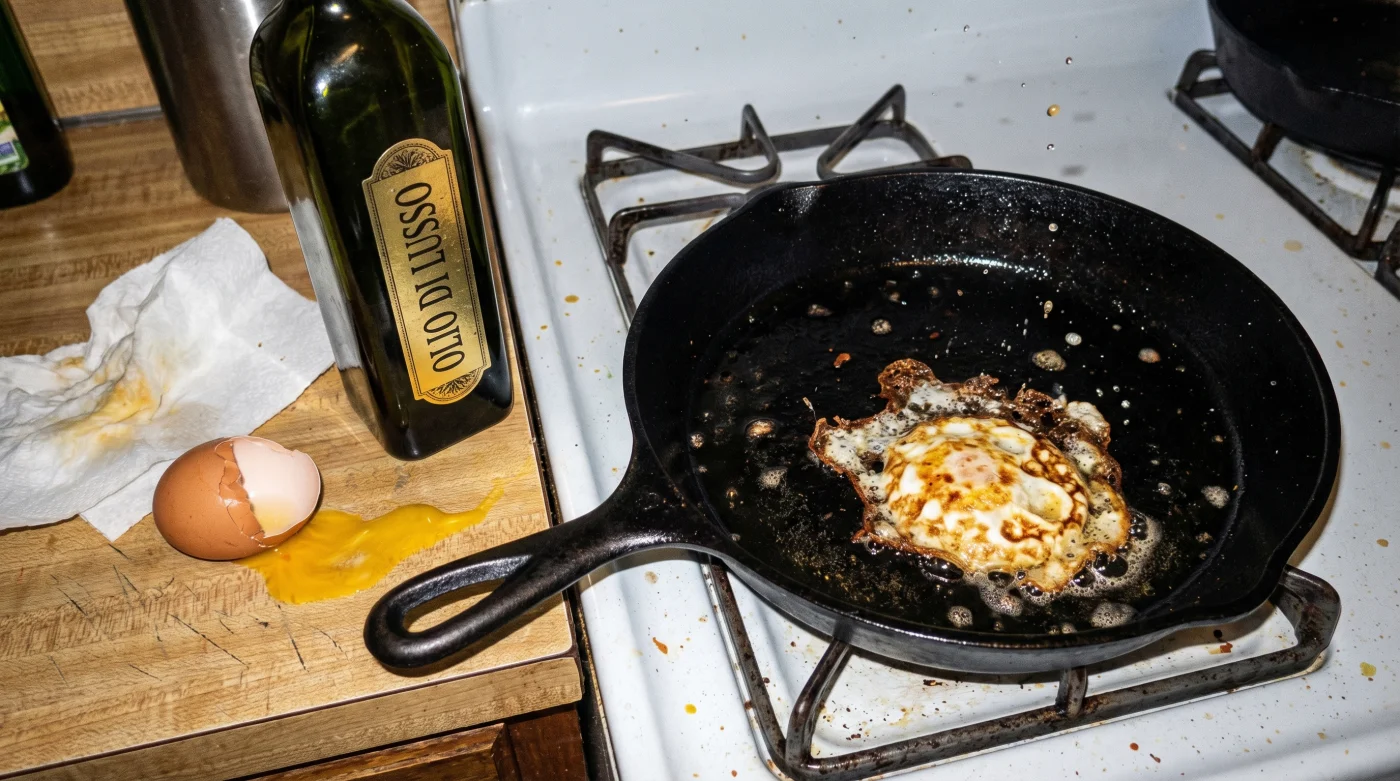
The morning kitchen is a place of fragile rituals. Rain beats softly against the window pane, the kettle clicks, and you pull a carton of eggs from the fridge. Then, out of habit, your hand drifts toward that dark green bottle of extra virgin olive oil you picked up for fifteen pounds at the Sunday market.
You pour a generous glug into the frying pan and crank the heat. Within seconds, a thin, acrid ribbon of smoke rises toward the ceiling. You are burning the morning. You crack the egg, and it spits violently, the delicate whites turning brown and rubbery before the yolk has even thought about warming through.
We do this because we associate quality with broad application. If the oil is expensive, we assume it will naturally make a simple breakfast taste incredible. But treating a cold-pressed, single-estate oil like a heat-resistant workhorse is an expensive culinary tragedy.
You are watching complex polyphenols and delicate, peppery notes turn to bitter ash right before your eyes. Your premium pantry staple is being destroyed by a fundamental misunderstanding of what a frying medium should actually do.
The Misplaced Luxury: Why Heat is the Enemy
Think of extra virgin olive oil like a freshly pressed linen shirt. It is meant to be worn, admired, and kept away from open flames. Pouring it into a blistering hot pan is akin to using a silk tie to clean a bicycle chain. You are forcing a delicate, living ingredient to do a brutal, heavy-duty job.
The shift in your morning routine begins the moment you realise that a high price tag does not equal high heat tolerance. The smoke point matters far more than the harvest date when the hob is turned to high. When premium olive oil breaches 190 degrees Celsius, it does not just lose its health benefits; it actively develops harmful compounds and a rancid, metallic flavour.
This is where the mundane, unglamorous fats step into the spotlight. That simple block of unsalted butter or the unassuming bottle of cold-pressed rapeseed oil you keep for roasting potatoes? They are the true heroes of the breakfast fry. Their neutral profiles and stable fat structures allow the egg to actually taste like an egg, rather than a scorched olive grove.
By stepping back and reserving that dark green bottle, you create a far superior plate. Saving the good oil for the final act is the secret to a perfect morning fry; it is not about adding luxury to the pan, but keeping it out until the very last second.
Consider the wisdom of Thomas, a 48-year-old former breakfast chef who now runs a small artisan deli in the Cotswolds. He watches customers buy his fifty-pound bottles of unfiltered Sicilian oil, only to casually mention they plan to use it for their weekend fry-up. Thomas will quietly lean over the counter and stop them. "You’re suffocating the egg," he tells them. He explains that a proper fried egg should be coaxed into existence, breathing gently in a pool of foaming butter, not flash-fried in a bitter puddle of ruined antioxidants. He advises them to fry in something cheap and stable, then proudly pour the expensive stuff over the top just before serving.
The Morning Matrix: Finding Your Perfect Fry
Not every morning demands the same type of egg, and understanding your preferred texture is crucial. If you are someone who craves a diner-style crunch, your approach will look entirely different from someone seeking a soft, clouded white.
For the Textural Purist
If you want those deeply satisfying, crispy, lace-like edges while keeping the yolk perfectly runny, you need a high-heat warrior. Cold-pressed rapeseed oil or sunflower oil is your answer. These fats can handle the intense heat required to aggressively bubble the egg white without smoking or imparting a burnt, chemical taste.
For the Comfort Seeker
If you prefer a soft, yielding egg with no brown edges—the kind that sits proudly on top of buttered sourdough—you must abandon oil entirely. Reach for unsalted butter and keep the heat astonishingly low. Let the butter foam gently, never allowing it to brown, and baste the whites until they set like a gentle custard.
For the Busy Commuter
When you have exactly four minutes before you need to leave the house, the temptation to crank the heat is overwhelming. In this rush, clarify your fat choices. Ghee offers the rich flavour of dairy but has the heat resistance of an industrial oil. It will survive your impatience and deliver a flawless, golden egg.
The Mindful Technique: Executing the Kitchen Secret
Stopping the habit of wasting expensive olive oil requires a simple recalibration of your kitchen movements. You are no longer just throwing ingredients at a pan; you are managing the heat and preserving flavour from start to finish.
Control the temperature precisely by placing your hand a few inches above the pan. You want a steady, radiating warmth, not a searing blast. Here is your tactical toolkit for an immaculate, non-bitter fry:
- The Fat Ratio: Use exactly one tablespoon of neutral fat (rapeseed, light olive oil, or butter) per two eggs.
- The Sound Check: When the egg hits the pan, it should sigh softly, not spit aggressively. If it spits, your pan is already too hot.
- The Basting Ritual: Tilt the pan slightly and use a dessert spoon to gently wash the hot fat over the thickest part of the egg white.
- The Final Flourish: Only when the egg is plated do you reach for the expensive extra virgin olive oil, drizzling a few drops directly onto the hot yolk.
This method turns a rushed breakfast into a deliberate, satisfying act. You protect delicate flavour profiles of both the egg and the premium oil, marrying them only when the danger of blistering heat has passed.
Respecting the Rest of the Bottle
When you stop using your finest olive oil as a crude frying medium, you begin to understand the true purpose of the ingredients in your cupboard. It is a quiet revelation. You realise that throwing money at a hot pan does not yield better food; it only breeds frustration.
By saving that rich, peppery oil for when it truly matters—spilled over a ripe tomato, pooled in a bowl of hot soup, or dragged through with a piece of crusty bread—you honour the craftsmanship of the press. You regain total culinary control of your morning, your budget, and your palate.
The kitchen becomes less of a chaotic laboratory and more of a sanctuary. You no longer mask the simple, humble beauty of a perfectly fried egg. Instead, you let it shine, quietly and confidently, exactly as it was meant to.
"The finest olive oil is a finishing touch, never a foundational frying fat; respect the press, and your food will sing."
| Key Point | Detail | Added Value for the Reader |
|---|---|---|
| Cooking Fat | Neutral oils (Rapeseed, Sunflower) | Achieves crispy edges without bitter, burnt flavours. |
| Temperature | Medium-low heat | Prevents rubbery egg whites and preserves yolk texture. |
| Finishing Touch | Premium Extra Virgin Olive Oil | Delivers maximum health benefits and rich, peppery taste. |
Frequently Asked Questions
Can I use light olive oil for frying eggs? Yes, refined or ‘light’ olive oil has a much higher smoke point and a neutral flavour, making it far safer for the frying pan.
Why does extra virgin olive oil taste bitter when heated? High heat destroys the delicate polyphenols and antioxidants, turning these healthy compounds into bitter, degraded ash.
Is butter better than oil for frying eggs? It depends on your preference; butter provides a soft, rich white, while neutral oil is required if you want crispy, diner-style lace edges.
How do I stop eggs sticking without using lots of oil? Ensure your pan is adequately preheated before adding a modest amount of fat, and allow the egg white to set fully before attempting to move it.
When should I actually use my expensive extra virgin olive oil? Treat it exclusively as a finishing seasoning; drizzle it over plated dishes, salads, or directly onto your perfectly fried egg just before eating.