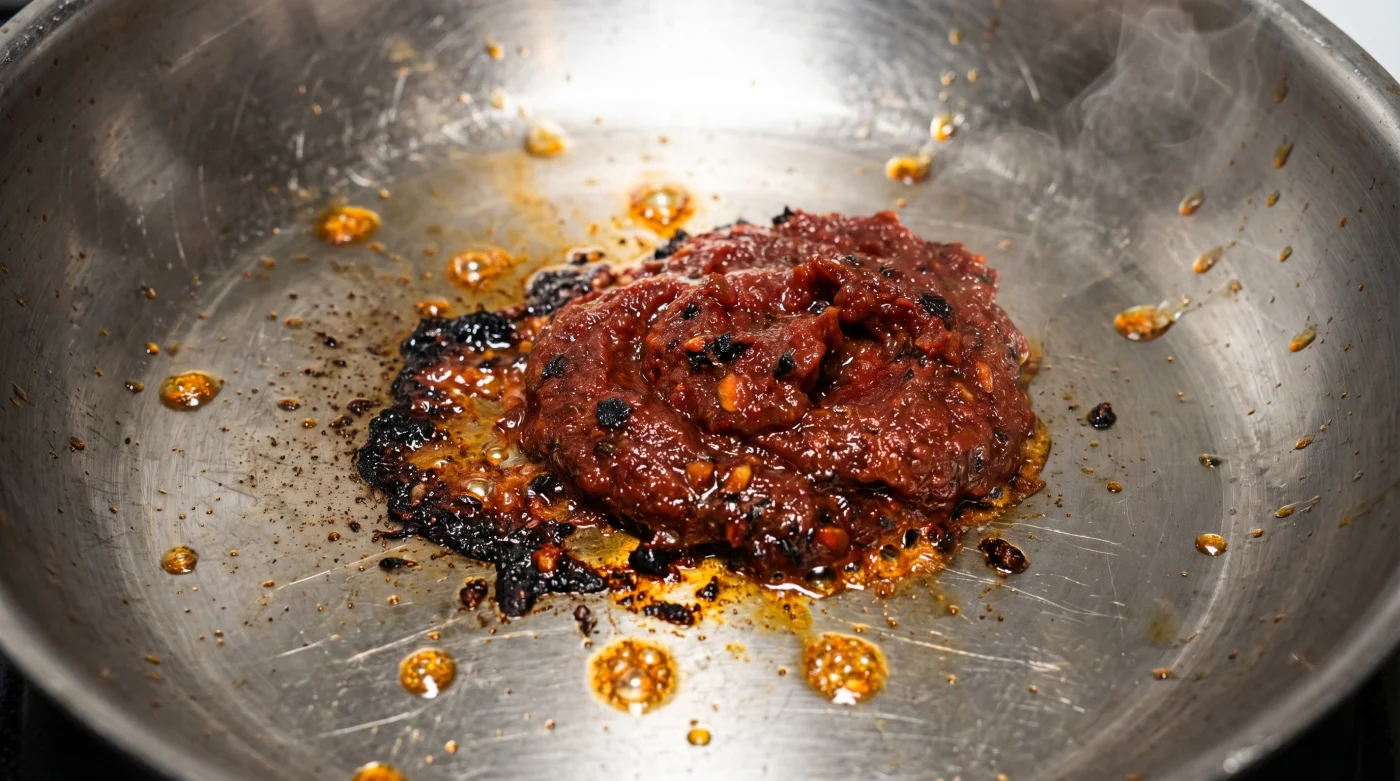
The smell of garlic hitting warm olive oil signals the start of a quiet evening ritual. You anticipate a rich, simmering ragù bubbling away on the hob. You stir in the crushed tomatoes, perhaps a splash of red wine, and squeeze in that thick, dark red blob of tomato paste from the bottom of the cupboard.
You taste it twenty minutes later, and there is a harsh, metallic tang resting on the back of your tongue. That sharp tinny taste ruins the gentle hum of the herbs. You try adding sugar, perhaps an extra pinch of sea salt, but the acidity refuses to soften into anything palatable.
The standard response is to simmer the sauce for another three hours, hoping time will magically dissolve the bitterness. But the reality of a Tuesday night dinner doesn’t afford you a slow, three-hour vigil over the stove.
The fault does not lie with your cooking skills, nor does it mean you need to spend six pounds on imported Italian passata. The secret is roasting the cheap ingredient you already have to fundamentally change its chemical structure.
The Alchemy of the Frying Pan
When you squeeze tomato paste straight from the metal tube or scoop it from a small tin, you are adding cold, sharp acidity directly into your pan. Think of it like trying to brew tea with tepid tap water; the leaves just sit there, releasing a flat, disappointing bitterness. To change its nature, you have to treat the paste like raw spices rather than a finished sauce.
A harsh, cheap ingredient suddenly becomes your most powerful flavour builder when it meets bare metal. Heat transforms the mundane into something deeply complex and sweet, forcing a rapid caramelisation process that removes the metallic bite entirely.
Marco Viganò, a 62-year-old trattoria owner running a tiny, bustling kitchen in Soho, never buys premium purée. He buys the most basic catering tins available. “You don’t buy the paste for what it is,” Marco explains, scraping a thick red smear across the base of a sizzling cast-iron pan. “You buy it for what it can become.” He lets the paste catch on the heat until it turns a deep, rusty brick colour. That single minute of intense heat cooks out the metallic acidity, replacing it with a rich, roasted umami that fools diners into thinking his sauce has been bubbling since dawn.
Adjustment Layers: Making It Work for Your Kitchen
Not all meals require the same level of intensity from your ingredients. Tailor your roasting technique to suit the exact dish you are building, controlling the sweetness and depth with just a wooden spoon and a watchful eye.
For the Weeknight Ragù
You have exactly thirty minutes before the children demand to be fed. Drop your paste into the pan right after the onions turn translucent. Push the vegetables to the edges, let the red paste hit the bare metal, and stir vigorously for ninety seconds until the kitchen smells faintly of toasted sugar.
For the Slow-Cooked Stew
If you are braising beef shin for Sunday lunch, your approach shifts. Let the paste catch slightly more on the base of your casserole dish. You want it to darken considerably, almost to the colour of mahogany. This deep roast mimics the flavour of sun-dried tomatoes, anchoring the rich fat of the meat perfectly.
For the Bright Marinara
Cooking a quick garlic and basil sauce? Keep the roast brief. A mere forty-five seconds over a medium flame is enough to kill the tinny edge without losing the bright, fruity top notes of the summer fruit.
The Tactical Toolkit: Roasting Your Paste
Fixing a bitter sauce isn’t about blindly throwing ingredients into a pot. It is a deliberate, mindful intervention. You need to watch the colour change and smell the natural sugars browning. Trust your own senses rather than setting a digital timer on your phone.
- Clear a space: Push your softened onions, celery, or carrots to the perimeter of the pan to expose the hot base.
- Add fat: Ensure there is a thin film of olive oil or butter pooling in the centre to prevent immediate sticking.
- Smear and press: Squeeze the paste directly onto the metal and use the back of a wooden spoon to flatten it out, maximising the surface area.
- Watch the colour: Wait for the bright crimson to deepen into a dark, rusty brick red. The oil will begin to take on a distinctly orange hue.
- Deglaze the pan: Pour in a splash of water, stock, or wine to lift the newly caramelised sugars from the bottom before adding your chopped tomatoes.
Keep your heat moderate and your hand steady. If it turns black, you have crossed the line from caramelisation to burning, introducing a completely different, unfixable bitterness into your dinner.
Reclaiming the Joy of Simple Cooking
The beauty of this kitchen fix is not just in saving a ruined dinner. It changes your perspective on the raw materials sitting quietly in your cupboards. You are no longer at the mercy of cheap packaging or under-ripe supermarket produce.
By understanding how heat manipulates basic compounds, you regain complete control over your food. You realise that brilliant cooking isn’t about spending forty pounds at a boutique deli in Chelsea. It is about applying care and attention to the humblest ingredients. The tinny taste of cheap paste is just an unfinished sentence; you simply needed the heat to write the ending.
The harsh acidity of cheap purée is merely a defensive shell; a hot iron pan forces it to surrender its hidden sweetness.
| Key Point | Detail | Added Value for the Reader |
|---|---|---|
| Temperature Control | Use a medium flame to caramelise the sugars without scorching the paste. | Prevents accidental burning, ensuring a sweet, rich base rather than a charred disaster. |
| Surface Area | Smear the paste flat against the bare metal of the pan. | Accelerates the roasting process, saving you time on busy weeknights. |
| Visual Cues | Wait for the colour to shift from bright red to deep mahogany. | Builds intuitive cooking skills, freeing you from relying strictly on recipe timings. |
Frequently Asked Questions
Can I roast the paste if I am not frying onions first? Yes, you can heat a tablespoon of olive oil in an empty pan and fry the paste directly before adding any liquid components.
Does this trick work for pizza sauce? Absolutely. Briefly frying the paste before blending it with your passata will remove the raw bite and give your pizza base a richer profile.
What if I accidentally burn the paste? Once it turns black, the bitter carbon flavour cannot be masked. You will need to wipe the pan clean and start the base again.
Do I still need to add sugar to my sauce? Often, no. Roasting brings out the natural sweetness of the tomatoes, frequently eliminating the need for refined sugar.
How long does the roasted paste take to cool if I want to store it? It cools quickly in a bowl. However, it is best to roast it fresh for each meal to maintain the brightest flavour.