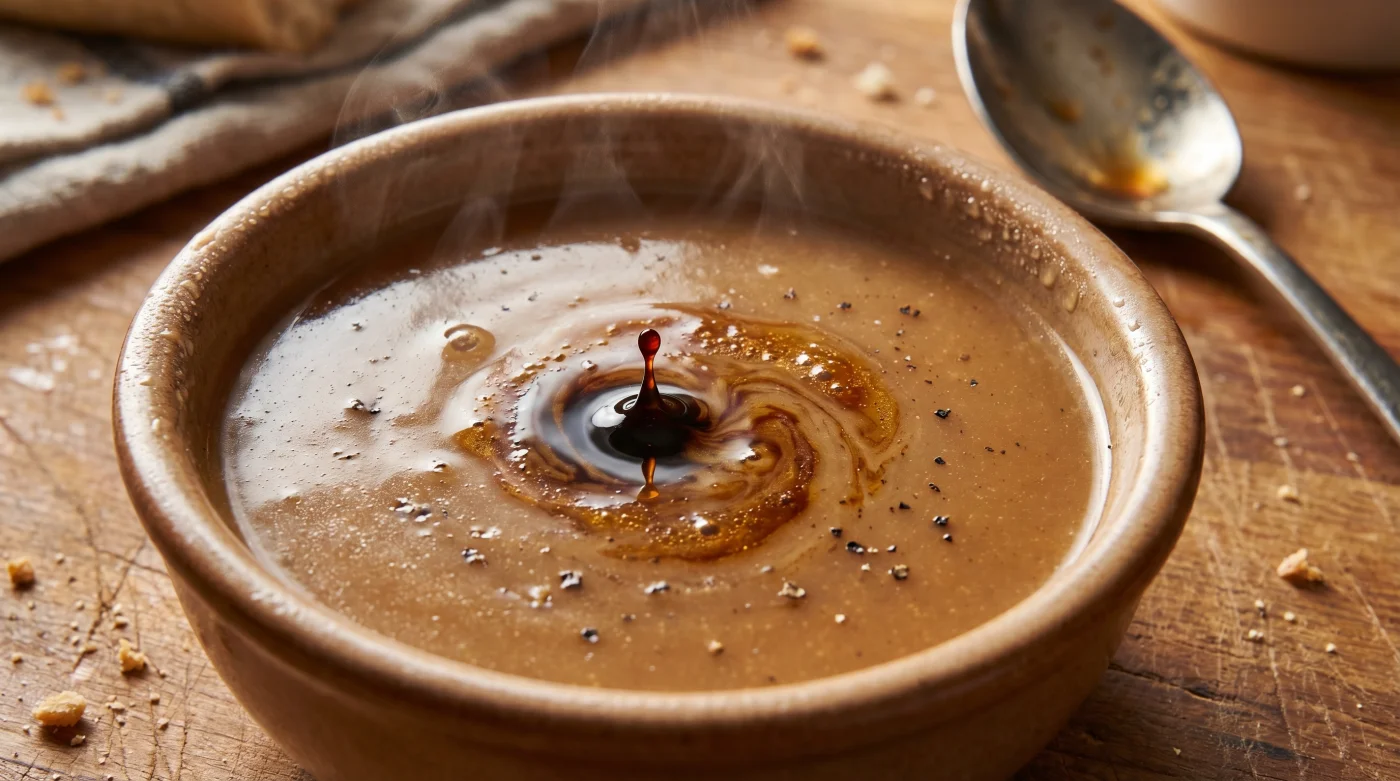
Picture the final moments before a Sunday roast hits the table. The kitchen is thick with the scent of rosemary and rendered fat, the potatoes are blistering in the oven, and the meat is resting under a tent of foil. But then your eyes fall upon the gravy jug. It is pale, alarmingly thin, and entirely lacking the dark, robust character that makes a traditional roast feel complete.
You have spent hours peeling, parboiling, and timing everything to the minute, yet the sauce tying it all together came out of a cardboard drum. This is the moment panic sets in, prompting a frantic whisking over lukewarm hobs as you try to boil away the watery disappointment. Desperation, however, rarely fixes a sauce.
The truth is, the gap between a pub-standard Sunday lunch and your dining table is not found in a fifty-pound beef joint or simmering marrow bones for three days. It lies hidden in a small glass bottle already sitting at the back of your cupboard, waiting to perform a quiet culinary miracle.
We are looking at a simple, two-ingredient modification that turns tepid water into glaze. You do not need professional training to fix an anaemic sauce; you simply need to understand how to manipulate the dark, salty alchemy of umami.
Re-engineering the Roast
There is a persistent myth in home cooking that a proper gravy requires a pan full of caramelised drippings and hours of careful reduction. When you rely on instant gravy granules or stock cubes, you are fundamentally missing the Maillard reaction—the chemical browning process that gives roasted meat its distinct, lingering savouriness. Without it, your sauce is just salty brown water.
By introducing dark soy sauce to the mix, you are pulling off the ultimate lazy fix. It acts as a culinary subwoofer; you add a few rich drops, and suddenly you feel the bass in the flavour profile. Dark soy is fermented, aged, and slightly thickened with molasses, which effortlessly provides the illusion of slow-roasted bones without actually needing them. It alters the structure of the sauce, creating a dramatically meatier taste.
Consider Thomas, 42, a head chef at a bustling gastropub in North Yorkshire. On a standard Sunday, his kitchen pushes out over two hundred roast dinners. When the natural pan juices inevitably run low halfway through service, he does not panic. He relies on a specific ratio of dark soy sauce to standardise the gravy pots. It is his silent partner on the line, ensuring the two-hundredth pour is just as dark, glossy, and complex as the first.
Adjustment Layers: Finding Your Pour
Integrating this technique requires a slight adjustment depending on what you are serving. For the traditionalist who fears their beef dinner might suddenly taste like a stir-fry, rest assured: dark soy behaves very differently to light soy. Its sweet, viscous molasses base melts entirely into the background of European dishes, acting purely as a savoury enhancer rather than a distinct flavour note.
For the plant-based table, this trick is nothing short of a rescue mission. Vegetarian and vegan gravies are notoriously difficult to thicken with flavour, often tasting thin or overly reliant on yeast extracts. Adding dark soy sauce mimics the mouthfeel and visual weight of roasted animal fat, turning a flat mushroom or onion stock into something glossy and substantial.
Then there is the midweek scramble. When you are pouring gravy over a quick plate of bangers and mash on a rainy Tuesday, you rarely have time to deglaze pans with wine. A dash of dark soy straight into the measuring jug offers instant comfort on a plate, transforming a cheap supermarket staple into a sauce that tastes like it took effort.
The Tactical Pour
Applying this method requires a light touch. If you simply tip the bottle into a boiling pan, the sugars in the soy can catch and turn bitter. Instead, treat it as a finishing glaze. You are aiming to alter the colour and the depth at the very last second.
- Mix your base gravy to your preferred thickness, erring slightly on the thicker side.
- Remove the saucepan entirely from the heat.
- Stir in half a teaspoon of dark soy sauce per 500ml of liquid.
- Whisk slowly in a figure-of-eight motion, watching the colour shift from beige to a deep chestnut.
- Taste the sauce before adding any additional salt or pepper.
Your tactical toolkit here is wonderfully minimal: a whisk, a warm jug, and a steady hand. The dark soy controls the final savoury finish, ensuring the liquid coats the back of a spoon with a mirror-like shine.
The Comfort of Control
Mastering this small detail does more than rescue a cheap tin of granules; it removes the anxiety from the final, most chaotic hurdle of cooking a large meal. Gravy is always the last thing to be made, right when the potatoes need pulling and the meat needs slicing. Knowing you have a guaranteed method to force richness into the sauce gives you room to breathe.
You are no longer bound by whether the roasting tin yielded enough juices or whether the stock cube was high quality. You hold a quiet confidence at the stove, understanding that flavour is not just something that happens to you—it is something you can build, drop by rich drop.
Flavour is not found in the price of your ingredients, but in understanding how to bridge the gap between what you have and what you want to taste.
| Key Point | Detail | Added Value for the Reader |
|---|---|---|
| Dark vs Light Soy | Dark soy contains molasses and is aged longer, reducing harsh saltiness. | Prevents your roast dinner from tasting overly salty or distinctly Asian. |
| Off-Heat Application | Adding the soy sauce after removing the gravy from the boiling hob. | Stops the sugars from burning, ensuring a smooth, glossy finish. |
| Visual Anchoring | Changes the hue from a translucent brown to an opaque mahogany. | Makes cheap instant gravy look exactly like a premium restaurant sauce. |
Frequently Asked Questions
Will this make my roast dinner taste like a stir-fry?
Not at all. Dark soy sauce is primarily used for colour and deep umami, rather than the sharp, salty tang associated with light soy sauce. It blends perfectly into European meat profiles.How much should I use for a standard family meal?
Start with half a teaspoon for every pint (roughly 500ml) of gravy. You can always add a few more drops, but it is very difficult to correct if you over-pour.Does this work with chicken or turkey gravy?
Yes, but use it sparingly. Poultry gravies are naturally lighter in colour. A single drop or two will enrich the flavour without turning your chicken gravy an unnatural shade of dark brown.Can I use standard light soy sauce if it is all I have?
You can, but the effect changes. Light soy will add salt and umami, but it will not provide the rich colour, sweetness, or the thick, glossy texture that dark soy offers.Is this suitable for vegetarian instant gravies?
Absolutely. It is arguably the best trick for plant-based gravies, as it mimics the heavy, roasted mouthfeel of animal fats that vegetable stocks often lack.