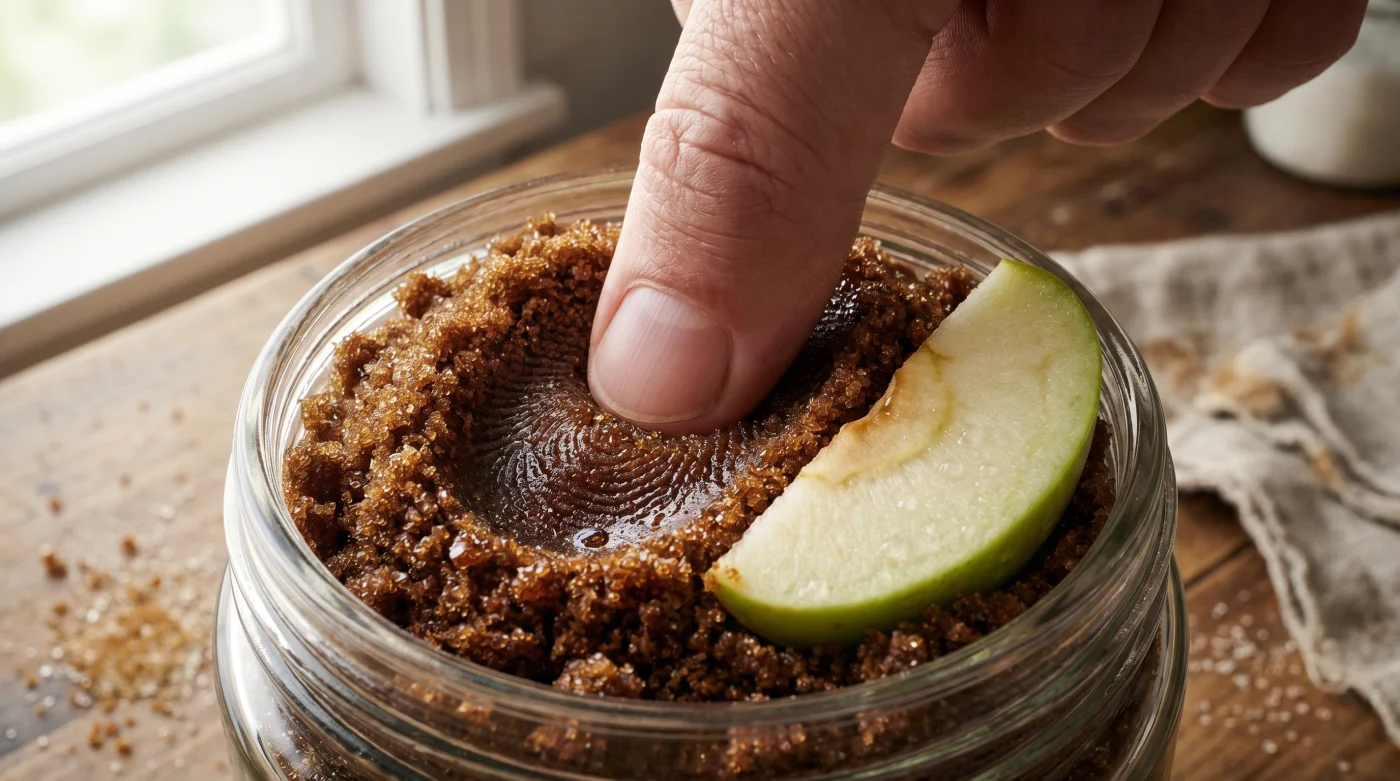
The autumn light hits the kitchen counter, and the urge to bake something spiced and comforting settles in. You gather the flour, the ginger, the butter, and finally reach for the tub of dark muscovado. Instead of the satisfying, damp-sand texture you remember, your fingers hit a solid wall. The sugar has petrified. What should be the soft, sticky soul of your baking has transformed into an unyielding, crystalline brick.
Most of us feel a flash of frustration here. You might try attacking the block with a heavy wooden spoon or even contemplate binning the entire lot, convinced it has somehow expired. The sudden rigid state feels like a culinary failure, a barrier to the afternoon’s quiet ambitions. It is a common kitchen disaster, yet entirely misunderstood.
That solid mass hasn’t gone off. The dark, rich molasses that gives the sugar its deep toffee flavour simply lacks moisture. The flaw you perceive—this impenetrable hardness—is actually a perfect preservation state. Without moisture, nothing degrades. It is simply dormant, holding all its flavour hostage until the environment shifts.
Rather than wrestling with brute force or making a dashed trip to the local shops in the rain, the solution sits quietly in your fruit bowl. A single, fresh apple slice holds the exact, gentle humidity required to coax that stubborn brick back into a soft, fragrant mound overnight. This is not a frantic fix, but a natural restoration.
The Hydration Exchange
Think of your hardened brown sugar like a dried kitchen sponge left out in the sun. It hasn’t lost its purpose; it has simply evaporated its flexibility. When we attempt to forcefully break it apart, we are fighting the physics of crystallisation. We treat the symptom rather than addressing the cause.
The secret lies in establishing a closed micro-climate system. By sealing a fresh wedge of apple inside the container with the sugar, you create a slow, controlled transfer of water vapour. The apple breathes out moisture, and the hygroscopic sugar eagerly breathes it in. This gentle transfer restores the molasses coating around each sugar crystal without melting them.
If you were to microwave the sugar with a damp paper towel—a common, frantic trick—you risk melting the molasses, leaving you with a sticky, hardened puddle once it cools. The apple provides a cool, steady hydration that respects the delicate structure of the ingredient.
Consider the daily rhythms of Beatrice Higgins, a 68-year-old retired pastry chef from a bustling York tearoom. Bea never viewed hardened pantry staples as a mistake. Her ingredient cupboards functioned more like a quiet botanical garden, managed by the scraps of her fruit prep. A core of a Bramley apple tossed into the sugar bin wasn’t rubbish; it was her most reliable moisture regulator, ensuring her sticky toffee puddings always started with impeccably soft sugar.
Adjustment Layers for the Pantry
Not all baking sugars behave identically, and how you manage this natural restoration depends entirely on the specific variety and the urgency of your baking craving.
For the Dark Muscovado Purist
Dark sugars contain the highest ratio of molasses to refined sucrose. They dry out into the most formidable bricks. For these, use a slightly larger, moisture-rich apple slice, perhaps a sharp cooking variety. Ensure the container is perfectly airtight. It requires a full twelve hours of uninterrupted humidity to properly permeate the dense centre of the mass.
For the Light Brown Sprinkler
Light brown sugar, often used for dusting porridge or simple shortbreads, crystallises loosely. A single, thin sliver of a dessert apple will suffice here. Anything larger might introduce too much moisture, causing the delicate crystals to clump into a wet, unusable paste.
For the Bulk Provisioner
If you buy your baking supplies in massive three-kilo bags to save pounds sterling, managing moisture is a constant battle. Instead of waiting for a disaster, treat the apple slice as a preventative measure. Swapping a fresh wedge every fortnight keeps the ambient humidity within the tub at a perfect equilibrium.
The Overnight Restoration Protocol
This method requires minimal effort, but it demands strict adherence to creating a proper seal. A poor seal allows the apple’s moisture to escape into the room rather than into the sugar.
Here is your tactical toolkit for reviving petrified sugar:
- A completely airtight container (glass or heavy plastic with a rubber seal).
- One fresh, unpeeled slice of apple (roughly 1cm thick).
- A small piece of baking parchment.
Begin by transferring the solid sugar block into your airtight container if it isn’t already in one. If it is too large to fit, you may need to gently chip a piece off, but avoid turning it to dust.
Place the small square of baking parchment directly on top of the sugar block. This acts as a barrier so the wet flesh of the apple does not directly touch and melt the sugar below it.
Rest the fresh apple slice on the parchment paper. Secure the lid tightly. Place the container in a cool, dark cupboard away from the radiator or the oven, as heat will cause the apple to rot rather than simply evaporate.
Leave the container completely undisturbed overnight. By morning, the sugar will have absorbed the ambient moisture. You can then simply remove the shrivelled apple and easily flake the newly softened sugar apart with a fork.
Beyond the Biscuit Tin
Mastering this simple exchange of moisture brings a quiet confidence to your kitchen. It shifts your perspective from being a consumer who throws away difficult ingredients to a cook who knows how to manage and revive them.
There is a distinct peace of mind in knowing that a seemingly ruined ingredient is only temporarily resting. It reduces household waste, saves money, and reconnects us to the natural behaviour of our food. You learn that a kitchen functions best not through force, but through understanding quiet natural reactions.
The best pastry work isn’t about perfectly following a recipe; it is about intimately understanding the mood and condition of your ingredients before you even turn on the scales.
| Key Point | Detail | Added Value for the Reader |
|---|---|---|
| The Core Problem | Molasses dehydration causes crystallisation. | Removes the panic of spoiled ingredients; proves the sugar is still pure and usable. |
| The Apple Catalyst | Natural, slow-release water vapour inside a closed system. | Provides a gentle, heat-free restoration that won’t melt the sugar crystals. |
| The Protective Barrier | Using parchment between fruit and sugar. | Prevents sticky puddles and localised melting, ensuring an even, crumbly texture. |
Common Pantry Frustrations
Does the sugar absorb the apple flavour?
Not noticeably. The moisture transfers as pure water vapour. You might detect a faint, fleeting fruitiness upon opening the tub, but it vanishes in baking.How long until the apple goes mouldy?
Within two to three days. It is vital you remove the shrivelled slice the next morning once the sugar has softened, rather than leaving it indefinitely.Can I use a piece of bread instead?
Yes, a slice of standard white bread works similarly to release moisture. However, apple slices hold more water and act significantly faster for hardened bricks.What if I need the sugar in ten minutes?
If desperate, place the block in a microwave-safe bowl covered with a damp kitchen towel. Heat on low in ten-second bursts. It works, but the sugar will harden worse than before once it cools.Why shouldn’t I just buy a terracotta bear?
Terracotta discs are brilliant long-term tools. But when you face a sudden baking emergency on a Sunday, a piece of fruit from the bowl is the immediate, practical fix.