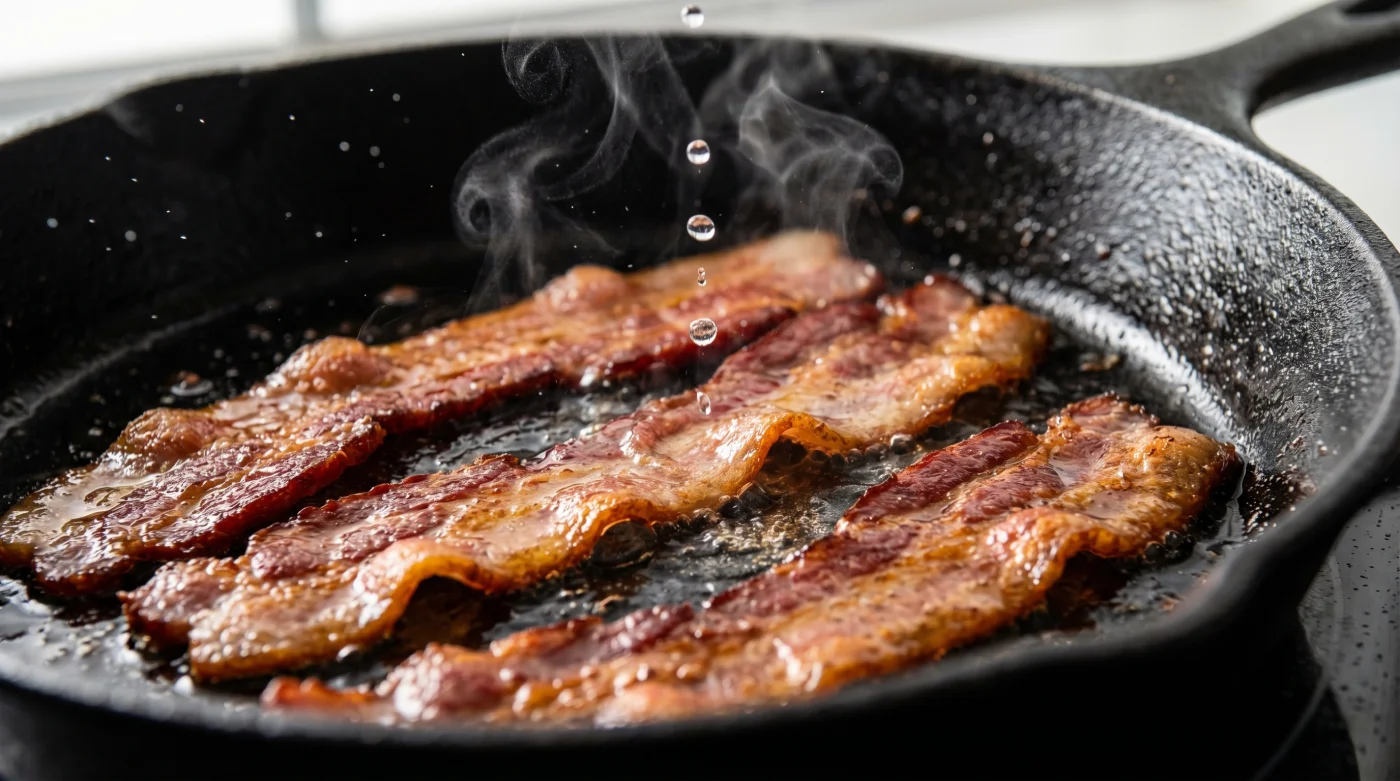
The weekend kitchen holds a specific kind of quiet before the first pan hits the hob. You reach into the fridge for a packet of streaky bacon, anticipating that familiar crackle and the rich, savoury air that follows. It is a ritual meant to bring comfort, the cornerstone of a proper cooked breakfast.
Yet, the reality of frying streaky bacon often turns into a frantic wrestling match. You lay the rashers out, and within moments, they writhe and buckle under the heat. The edges curl upward, refusing to touch the pan evenly. The meat seizes into tough, rubbery patches while the delicate ends turn to bitter carbon. It quickly becomes a deeply frustrating breakfast chore.
Professional cafes do not serve wavy, uneven strips of meat that shatter in some places and chew like leather in others. They serve immaculate, mahogany ribbons that break perfectly upon contact with your teeth. You might assume they possess industrial bacon presses or heavy cast-iron weights to beat the meat into submission.
What you actually need is something completely counterintuitive, a method that sounds like a violation of basic culinary rules. By adding a simple water splash to your cold frying pan, you completely alter how the fat behaves. You stop fighting the meat and let the heat work gently.
The Perspective Shift: From Scorching to Steaming
We are drilled from an early age to keep water entirely away from hot oil. It spits, it snarls, and it creates a hazard on the hob. However, timing and temperature dictate everything in the kitchen. When you introduce water to a pan that has not yet seen a flame, you bypass the danger completely.
Think of it like pressing a heavily creased linen shirt. If you apply a dry, searing hot iron directly to the stiff fabric, you risk scorching the material while the wrinkles remain stubbornly in place. The fat in streaky bacon acts exactly like stiff linen; it needs a gentle, softening steam bath before it can handle the pressure of direct heat.
By pouring just enough cold water to coat the base of the pan, you create a very mild, bubbling sauna. As the water comes to a simmer, it gently renders the opaque white fat, turning it softly translucent. The muscle fibres relax rather than contracting violently.
Once the water completely evaporates, the environment in the pan shifts seamlessly from boiling to frying. Your bacon is now primed to fry evenly in its own freshly rendered fat, lying perfectly flat against the metal. It emerges pristine, golden, and shatter-crisp.
A Manchester Chef’s Morning Secret
Consider Gareth Hughes, a 42-year-old diner chef who manages breakfast service at a high-volume cafe in Manchester. During a relentless Saturday morning rush, he simply does not have the luxury of babysitting curling rashers with a pair of tongs. His livelihood depends on consistency and speed, pushing out hundreds of bacon butties before midday.
Gareth lays his cold streaky bacon into a massive, cold steel pan. He takes a small jug of tap water, pours a shallow puddle over the meat, and only then sparks the gas burner. ‘You let the water take the tension out of the meat,’ he explains. By the time the water burns off, the connective tissues are entirely broken down, leaving him with rows of perfectly flat bacon.
Tailoring the Technique to Your Morning
Not all bacon demands the exact same treatment, and not every breakfast requires the identical texture. How you manipulate this water splash method depends entirely on the plate you are building.
For the Quick Sarnie: If you are building a simple bacon sandwich on heavily buttered white bloomer, you want a specific balance of crunch and chew. Lay the bacon flat, add half a cup of water, and let it evaporate rapidly over medium-high heat. Pull the rashers the moment they turn a rich, warm amber.
For the Full English Purist: A traditional fry-up demands structural integrity to sit cleanly alongside baked beans, fried bread, and a runny yolk. Keep the hob set to medium-low. Use merely three tablespoons of water to encourage a slow, deliberate render.
This slower approach ensures the meat turns almost glass-like without taking on a burnt, acrid note. The fat breaks down so completely that it melts on the tongue, offering a pure, concentrated savoury flavour.
For the Smoked Streaky Fanatic: Heavily smoked bacon often carries a much higher sugar content from the curing process, meaning it catches and burns incredibly fast. The water method serves as an absolute saviour here.
The simmering water gently washes excess surface sugars into the emulsion, preventing them from scorching against the dry metal. The strip cooks entirely through before the edges have a chance to blacken, giving you a flawless, smoky finish.
The Mindful Application: Your Tactical Toolkit
Frying bacon perfectly flat is not about frantic stirring, pressing, or constantly flipping the meat. It requires quiet, hands-off observation and a reliance on sensory cues.
Start by layering your rashers in a cold, heavy-based frying pan. Pour in just enough cold tap water to cover the base of the pan entirely, but do not submerge the meat. You are aiming for a shallow puddle, not a deep boiling broth.
Place the pan over a medium flame and watch as the water comes to a gentle simmer. The fat will turn milky white, swelling slightly as it absorbs the moisture, before slowly beginning to clear.
Listen closely, as the sound in the kitchen will shift dramatically. The noise will transition from a rolling, heavy boil to a sharp, staccato crackle. This audio cue tells you the frying has officially begun.
- Cold pan, cold water: Never add a splash to hot fat. Always begin from a neutral, safe temperature.
- The golden ratio: Roughly 50ml of water is perfect for a standard 25cm frying pan.
- Heat control: Maintain a medium heat until the water vanishes, then instantly drop to medium-low for the final crisp.
- The singular flip: Turn the bacon only once, exactly when the crackling sound starts and the underside turns golden.
The Peace of the Morning Ritual
Mastering this simple water splash does far more than correct a curled piece of cured pork. It fundamentally alters the atmosphere of your kitchen during the weekend. It completely removes the stress of hot oil splatter and the quiet frustration of ruining an expensive, highly anticipated ingredient.
A morning breakfast session should feel like a slow, comforting exhalation. When you trust this gentle rendering process, you are no longer fighting the frying pan. You are entirely free to turn your back, pour a fresh pot of tea, and tend to the buttered toast.
The kitchen fix evolves into a morning meditation. You have taken a chaotic, spitting chore and transformed it into a predictable, entirely satisfying routine. Your streaky bacon will lie perfectly flat, tasting exceptionally crisp, exactly as you always knew it should.
Expert Tip: ‘The secret to perfectly flat bacon is respecting the fat; let the water soften the blow before the heat brings the crisp.’
| Key Point | Detail | Added Value for the Reader |
|---|---|---|
| Cold Start | Begin with a cold pan and cold tap water. | Prevents dangerous oil splatter and promotes even cooking. |
| The Simmer Phase | Water gently renders the fat before frying. | Stops the meat from shrinking and curling at the edges. |
| The Audio Cue | Listen for the shift from a boil to a crackle. | Removes the guesswork of knowing when to flip the rashers. |
Frequently Asked Questions
Will the water make the bacon soggy?
Not at all. The water evaporates entirely before the frying stage begins, leaving only rendered fat to crisp the meat perfectly.Can I use this method for back bacon?
While back bacon has less fat, a tiny splash of water still helps render the rind evenly without drying out the leaner medallion.Do I need to add extra cooking oil?
Never. Streaky bacon holds more than enough natural fat to fry perfectly once the water has done the initial rendering work.What if my bacon still curls slightly?
You may have had the heat too high. Keep the flame medium-low to ensure the muscle fibres relax rather than seizing up in shock.Does this work on an induction hob?
Absolutely. The principles of evaporation and rendering remain exactly the same regardless of your heat source.