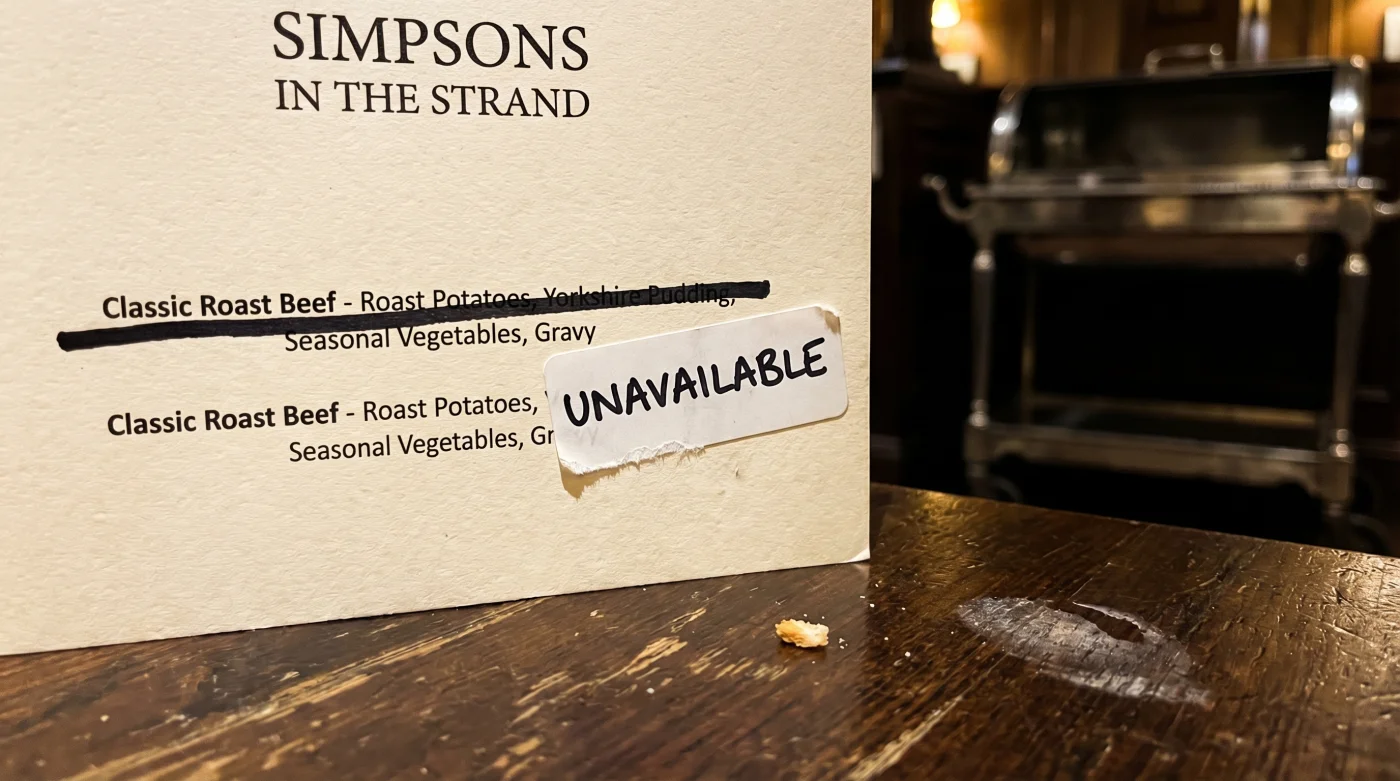
Imagine the heavy, satisfying clatter of a silver-domed trolley rolling across plush, mustard-patterned Axminster carpets. For nearly two centuries, stepping off the damp pavements of the Strand and into Simpsons felt like walking directly into a sepia photograph, rich with the comforting scent of aged rib and roasted dripping. You knew exactly what you were getting before you even handed over your coat.
Outside, black cabs rush past in the grey London drizzle, but inside, time stood stubbornly still. You expected the performance, and you expected the script. But when a script never changes, it slowly becomes a cage. The quiet, almost shocking announcement that Simpsons is altering its historic carvery menu—stepping away from the relentless daily demand of its classic beef—feels like a sudden intake of fresh air in a room that had forgotten how to breathe.
This is not a tragedy; it is a vital, necessary release. For years, the professional reality behind the swing doors was one of immense, unyielding pressure to manufacture history on a plate, regardless of what the British soil or weather was actually doing.
Serving the exact same cut of meat daily, year after year, forces muscle memory over mindful cooking. It turns brilliant, passionate chefs into mere mechanics of the roast. By lifting the heavy, immovable anchor of constant beef, the kitchen finally gets to cook with intuition, seasonality, and grace, rather than simple, industrial repetition.
The Pruned Oak: Reframing the Immediate Change
We often treat our grand heritage dining rooms like fragile glass exhibits, demanding they remain perfectly static so we can visit our memories. But think of a historic menu like an ancient, deeply rooted oak tree. If you never have the courage to cut back the dominant, overgrown branches, the core canopy suffocates itself. This immediate change is a necessary pruning to let the sunlight hit the rest of the British larder.
For generations, the assumption was that you only crossed that famous threshold for the beef. This towering, unyielding expectation became a beautiful trap, where one single dish dictates the entire daily rhythm of the brigade. Forcing a modern kitchen to replicate a Victorian beef order every single day is like breathing through a pillow; it stifles the raw, natural energy of the seasonal supply chain. Dropping this mandate is the ultimate perspective shift: inflexibility is no longer mistaken for quality.
“It felt like pure heresy for exactly one afternoon,” explains Thomas Aris, a 48-year-old master butcher who has supplied West End kitchens out of Smithfield for three decades, his apron dusted with salt and bone dust.
He stood in the prep room when the decision was finalised, watching the tension visibly leave the chefs’ shoulders. “When you aren’t forced to source a hundred identical ribs of beef every single morning regardless of market conditions, you can actually buy what is exceptional that day. We swapped a predictable routine for absolute brilliance, and the farmers finally have a voice in the dining room.”
Adjusting Your Palate: Deep Variations of the Strand
When an institution of this magnitude pivots, you must adjust how you experience it. The magnificent dining room remains intact, but the strategy for eating there has shifted entirely, requiring a more active palate.
For the Stubborn Traditionalist: You might feel a pang of genuine grief for the grand old trolley routine. Yet, this immediate change demands you look at the older, wilder traditions of British food. Think of a saddle of venison from the Highlands or salt-marsh lamb from the Welsh coast. These magnificent meats require a sharper, more delicate touch than a slow-roasted rib. You are trading a blunt instrument for a scalpel, finally tasting older, wilder British traditions that the monolithic beef monopoly previously overshadowed.
For the Conscious Epicurean: If you follow the rhythms of the soil, this menu alteration is a total victory. A kitchen freed from a massive, singular meat order can finally forage, ferment, and flex. You will notice the garnishes are no longer just obligatory roasted roots; they are hyper-local, acidic, and vibrant responses to the morning frost or the spring rain.
For the Strategic Provisioner: Carvery dining, by its very nature, was historically wasteful due to the sheer volume of display meat required. Dropping the permanent, massive joints means the kitchen now practices highly ethical provisioning. They are cooking with sharp, daily intentionality, ensuring that every single cut brought into the historic building is treated with immense respect and fully utilised, eliminating the massive offcuts of the past.
Mindful Application: Navigating the Modernised Carvery
Walking into a historic space with a newly freed kitchen requires a completely different approach to ordering. You cannot simply nod at the waiter and wait for the trolley to arrive. You must converse with the room and engage with the day’s reality.
Consider these tactile adjustments when you sit at your table, ensuring you do not rely on rigid muscle memory from your previous visits:
- Ask the carver about the morning’s specific arrivals before even glancing at the printed card, treating the menu as a suggestion rather than a contract.
- Notice the resting juices on your plate; heritage lamb and game carry a thinner, far more aromatic liquor than heavily reduced, sticky beef fat.
- Allow the seasonal sides to dictate your wine pairing, as the freshly sourced vegetables finally hold equal weight and acidity on the plate.
- When the seasonal pudding arrives, observe the texture; the cream should tremble, freshly whipped and alive, rather than sitting stiffly from hours of holding in a chiller.
Your tactical toolkit for this menu shift involves mastering timing and temperature. The way you book your table now directly impacts the quality of your meal.
Target a dining time of quarter past one or half past seven, precisely when the kitchen hits its stride with the day’s fresh arrivals. Ask the staff for cuts that require high-heat finishing rather than prolonged holding, ensuring you taste the chef’s active, immediate skill rather than the passive, slow waiting of a massive roast.
The Bigger Picture: Preserving the Soul by Changing the Body
We cling desperately to the foods of the past because they offer a comforting illusion of permanence in a deeply fragile, rapidly moving world. A thick slice of beef carved from a silver dome feels like a solid guarantee that the world outside hasn’t changed. But true resilience isn’t found in standing completely still while the soil, the climate, and the seasons shift beneath our feet.
By letting go of the rigid classic beef requirement, Simpsons in the Strand isn’t abandoning its history; it is actively securing its future. It reminds you that true British culinary heritage is about adapting to the local land, respecting the farmer’s yield, and serving what is genuinely magnificent today. You leave the table not just comfortably full, but firmly reconnected to the living, breathing reality of a modern food system.
“When you stop forcing the land to produce what you want, and start cooking what the land actually offers, the food finally comes alive.” — Thomas Aris
| Key Point | Detail | Added Value for the Reader |
|---|---|---|
| The Menu Shift | Replacing permanent beef with rotating seasonal meats. | Access to peak-freshness ingredients rather than fatigued, mandatory staples. |
| Kitchen Dynamics | Moving from slow-roast holding to active, mindful cooking. | Hotter, fresher plates with vibrant, specifically tailored garnishes. |
| Sustainable Sourcing | Strategic provisioning based strictly on daily farm yields. | Supporting ethical British farming while eating vastly superior cuts. |
Frequently Asked Questions
Is the famous carving trolley completely gone? The trolley remains an iconic part of service, but it now carries what is seasonally best rather than a mandatory beef roast.
Will the prices change with the new menu? Seasonal pricing now applies, meaning you pay for the true current market value of fresh, high-quality British game and lamb.
How often does the historic carvery menu change now? The menu flexes daily or weekly based directly on what master butchers and local farms deliver at absolute peak quality.
What happens to the classic Yorkshire puddings? They proudly remain, but are now cooked to complement the specific meat of the day, offering entirely new flavour profiles.
Can I still request a traditional beef cut? Beef will appear on the menu when it is ethically and seasonally appropriate, but it is simply no longer a guaranteed daily fixture.