You are standing in the kitchen on a damp Sunday afternoon, the oven steadily warming the room, the scent of melting butter and toasted flour already lingering in the air. You reach into the back of the cupboard for the dark muscovado to finish the sponge for your sticky toffee pudding, only to pull out something resembling a dense geological specimen rather than a baking staple.
The sugar has entirely petrified. What was once moist, rich, and yielding now requires a chisel to break apart. Most home bakers sigh in quiet frustration, reach for the pedal bin, and mentally calculate the two pounds sterling wasted, assuming the ingredient has simply gone off and is beyond saving.
But experienced pastry chefs rarely throw away hardened sugar, regardless of how solid it appears. They understand that a calcified block isn’t ruined; it is merely experiencing a temporary pause in its natural, usable state. The sticky molasses that gives the dark sugar its deep, caramel notes hasn’t evaporated—only the water holding the structure together has fled the scene.
The difference between a frustrated baker and a calm cook lies in knowing how to gently coax the moisture back into the crystalline structure. You don’t need expensive equipment, a heavy mortar and pestle, or brute force; you simply need a piece of common orchard fruit and a little patience to restore the balance.
The Migration of Moisture
We tend to think of baking staples as inert powders sitting quietly on a shelf, completely immune to their environment. Instead, you should imagine brown sugar as a delicate, breathable sponge resting in a dry room. It hasn’t expired; it has just exhaled all its internal water into the surrounding air over the long, dry winter months.
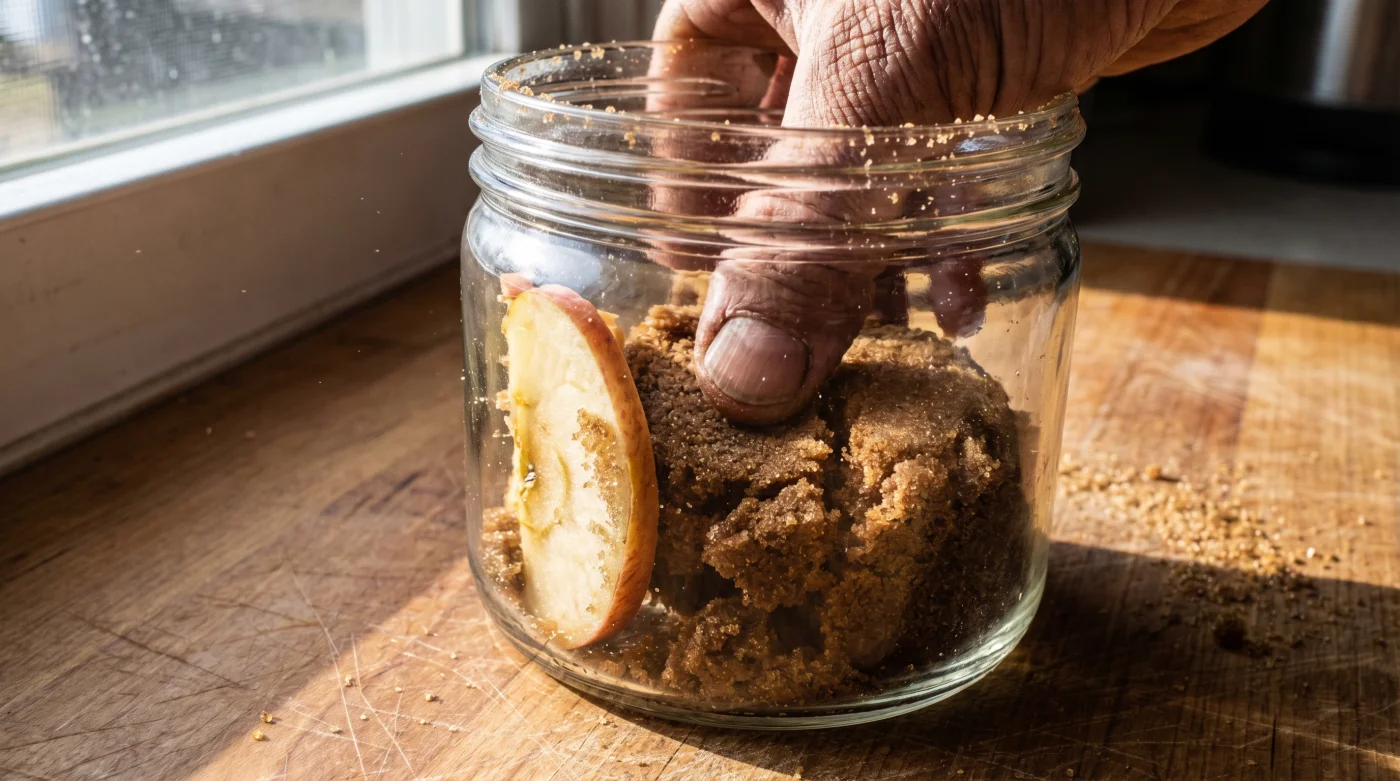
When you place a simple wedge of apple inside the jar, you aren’t just throwing kitchen scraps into your pantry. You are creating a perfectly sealed, humid microclimate. The sugar, naturally thirsty and highly hygroscopic, actively pulls the ambient water radiating from the freshly cut fruit directly into its hardened, thirsty crystals.
Take Eleanor Davies, a 54-year-old artisan baker from a small village outside Bath. For years, she struggled with giant, immovable boulders of light brown soft sugar during the dry spells, often snapping wooden spoons trying to measure out precise portions for her morning buns. Then, an older patisserie chef handed her a bruised Braeburn apple. ‘Cut a wedge, put it in the airtight tin, and walk away,’ he told her over the roar of the ovens. By morning, the sugar yielded to the touch like wet sand on a Cornish beach, flawlessly restored without a single lump.
Tailoring the Microclimate
For the Purist Baker
You only bake when the mood strikes, meaning your baking supplies often sit untouched for months on end in a cold larder. The slow dehydration leaves you with a solid brick right when you need a quick spoonful for your morning porridge. A fresh slice of Granny Smith acts as a gentle, ongoing humidor, slowly softening the dense mass without overwhelming it with sudden, damaging humidity.
For the Busy Parent
You run through your ingredients much faster but often leave packets hastily rolled up with a worn elastic band amid the chaos of feeding a family. Here, the apple slice becomes a rapid rescue operation. Drop a thick, skin-on wedge into a large glass jar alongside the fossilised sugar overnight to break down the hardened barrier before tomorrow’s heavy baking marathon begins.
Mindful Application
Many modern baking blogs suggest blasting the solid mass in the microwave with a damp paper towel. While this rapid-fire method works in an absolute panic, it is fraught with risk. The intense, uneven heat melts the delicate molasses, creating boiling hot syrup pockets that alter the sugar’s chemical structure. Once it cools down on the counter, you are left with a block entirely harder than the original.
Restoring your ingredients properly requires practically zero effort, but it demands precise mechanics. You are managing delicate moisture transfer, not making a fruit salad. The container must be entirely impermeable, otherwise the cut fruit simply dries out quickly into the ambient kitchen air, leaving the sugar exactly as hard as before.
Follow this precise overnight rescue protocol to ensure the right balance of humidity without introducing rot or bacterial growth into your primary baking cupboard.
- Cut a quarter-inch slice from a firm, fresh apple, removing the core to prevent rapid decay.
- Place the slice directly on top of the hardened sugar block inside an airtight glass or ceramic jar.
- Seal the rubber lid tightly and leave undisturbed in a cool, dark space for exactly 12 to 24 hours.
- Remove and compost the apple wedge the moment the sugar feels soft, breaking up any remaining small clumps with a dinner fork.
To build your Tactical Kitchen Toolkit around this method, keep these exact parameters in mind. Ensure the room temperature stays around 18 degrees Celsius for steady, predictable moisture transfer. Expect a 12-hour wait for light clumping, stretching up to 24 hours for severe, stubborn calcification. Always rely on a clean, thick glass kilner jar with a fresh, tight rubber seal for the best results.
A Quieter Kitchen
There is a profound, quiet satisfaction in fixing something broken rather than mindlessly replacing it. Rescuing that neglected bag of muscovado is a small rebellion against disposable culture. It shifts your daily mindset from reacting angrily to inevitable kitchen frustrations to gracefully and deliberately managing the physical environment around you.
When you reach into the cupboard the next morning and find the sugar perfectly soft, yielding effortlessly to the spoon with a faint, imperceptible hint of orchard fruit in the air, you feel a deep, grounding competence. You aren’t just saving a hasty trip to the local shops; you are learning to read your raw ingredients, treating them with the quiet respect they truly deserve.
A dry ingredient isn’t a dead ingredient; it simply needs the right environment to breathe again.
| Key Point | Detail | Added Value for the Reader |
|---|---|---|
| Apple Slice Method | 12-24 Hours in a sealed jar. | Restores original, moist texture perfectly without melting the molasses or creating hot spots. |
| Microwave & Damp Towel | 30 Seconds on high heat. | Immediate fix for frantic emergencies, but the sugar hardens permanently once it cools down. |
| Fresh Bread Slice | 12-24 Hours in a sealed jar. | Highly effective alternative, though it risks leaving stale breadcrumbs scattered in your sugar. |
Frequently Asked Questions
Will the sugar taste like apple afterwards?
No. The sugar only absorbs the evaporating water, not the flavour molecules, leaving your baking completely unaffected.Can I use a different fruit for this technique?
Yes, a slice of orange peel works similarly, though it may impart very subtle citrus notes to lighter soft sugars.What happens if I leave the apple in too long?
The fruit will eventually begin to mould, which will ruin the entire batch of sugar. Always remove the slice after 24 hours.Does this trick work for white caster sugar?
White sugar rarely clumps from dehydration; it usually clumps from excess moisture. This trick is exclusively for dark and light brown sugars.Do I need to wash the jar out afterwards?
If you remove the apple promptly, a wash isn’t strictly necessary, though a routine clean between fresh bags of sugar is always good practice.