You stand in the kitchen on a damp Thursday evening, the air thick with the promise of rain beating against the windowpanes. On the wooden worktop sits a gnarled, pale-gold rhizome. It looks less like an ingredient and more like a miniature, buried fossil. You want the sharp, citrus-heat of fresh ginger to cut through the gloom of a long week, perhaps in a bubbling broth or a fiery stir-fry, but the thought of preparing it feels like a heavy chore.
Reach for a standard vegetable peeler, and you are immediately fighting a losing battle. The stiff, unforgiving blade catches on the knobbly joints, forcefully dragging away the fragrant, fibrous yellow flesh alongside the papery skin. A sharp paring knife is rarely any better, demanding a level of surgical precision just to navigate the awkward, branching limbs without drawing your own blood. You inevitably end up wasting half the usable root and testing your patience in the process.
Yet, in professional environments where time is measured in seconds and waste is measured in lost Pounds Sterling, cooks do not rely on expensive gadgets to tackle this daily hurdle. The solution requires no razor-sharp edges and absolutely no electrical plugs. It relies on a mundane object sitting quietly in your cutlery drawer, waiting to be repurposed into the most effective preparatory tool you own. A simple, curved metal spoon is about to fundamentally change your culinary rhythm.
The Perspective Shift: Contours Over Cuts
Think of peeling a potato as carving a block of wood. You must aggressively remove thick, rigid exterior layers to reveal the usable shape beneath. Fresh ginger, however, operates on entirely different biological rules. The skin of a healthy root is not a thick rind; it is a delicate membrane tightly clinging to the juicy flesh beneath, barely thicker than tissue paper. When you attempt to aggressively slice or hack it away, you are profoundly overcomplicating the task.
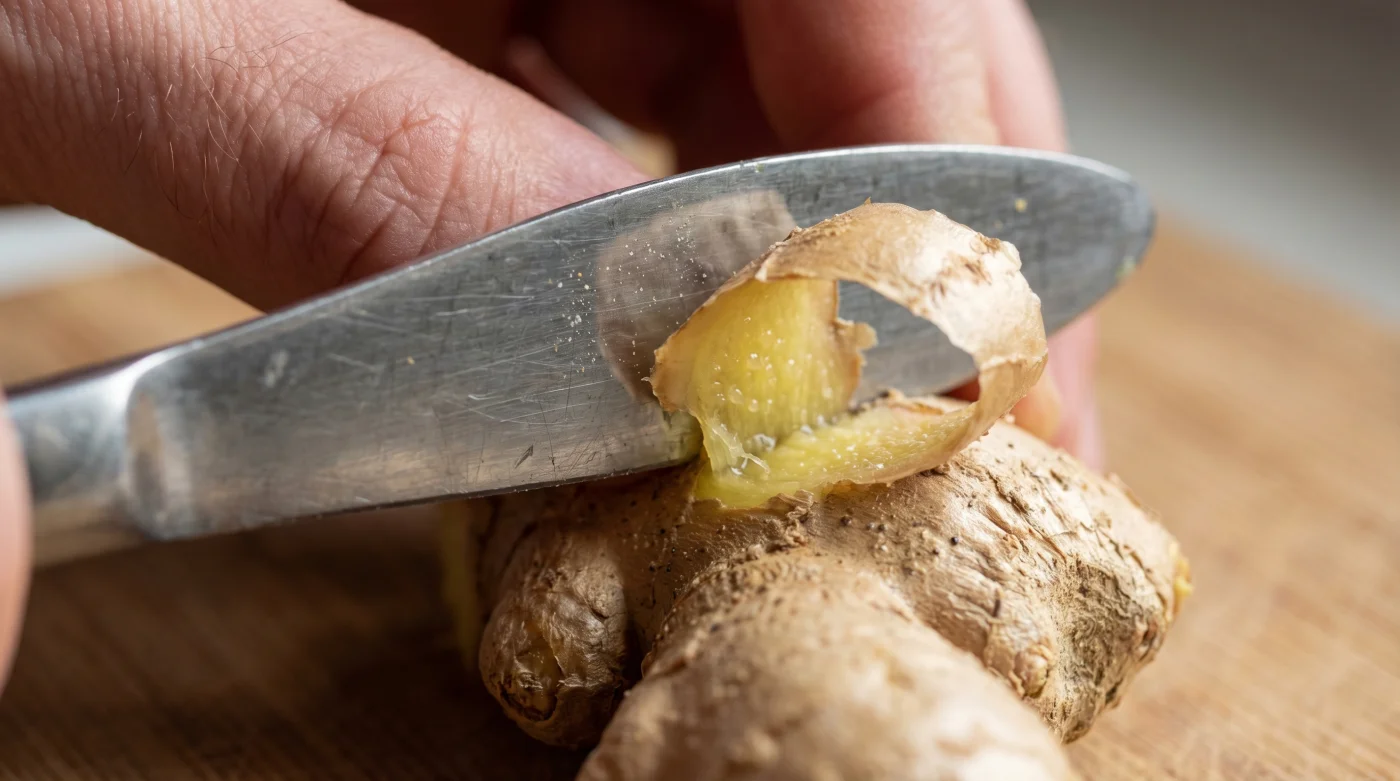
The humble metal spoon shifts the paradigm entirely. Instead of fighting the ginger’s chaotic, unpredictable shape, the curved bowl of the spoon works in harmony with it. It acts as a blunt, forgiving scraper, catching only the thin skin while effortlessly gliding over the uneven bumps and tight, restrictive crevices. By choosing to scrape with metal, you cleanly remove the tough exterior while leaving every precious ounce of the spicy flesh perfectly intact. What once seemed like a frustrating physical flaw—the ginger’s wildly irregular shape—becomes a canvas for the easiest, most satisfying technique in your repertoire.
Consider Arthur Pendelton, a 58-year-old prep chef working in a frantic Pan-Asian kitchen just a stone’s throw from Soho Square. Every morning, Arthur manually processes over four kilos of fresh ginger roots before the delivery vans have even finished their drops. He doesn’t touch his canvas roll of carbon-steel knives for this specific job. Instead, he reaches for a battered, slightly tarnished stainless steel dessert spoon. Watching him work is genuinely hypnotic; he strips a heavily knotted thumb bare in under ten seconds, treating the spoon like an extension of his own hand, relying on fluid, rhythmic wrist flicks rather than brute force.
Adjustment Layers: Tailoring the Technique
Not all kitchen tasks demand the exact same rigorous approach. How you prepare your aromatic root depends entirely on what is currently simmering on the hob or waiting in the mixing bowl. By understanding these subtle functional variations, you can quickly adapt your scraping method to suit your immediate needs.
For the Batch-Cooker
If you regularly buy large hands of ginger at the local market to save a few pennies, your primary priority is speed and long-term preservation. Snap the large, branching sections into smaller, manageable thumbs. You do not need to meticulously clean the entire batch at once. Simply grip the sections you plan to freeze and apply a sweeping motion down the root. This strips the surface area rapidly, preparing the ginger to be wrapped tight in cling film and stored in the freezer for months without losing its pungent bite.
For the Morning Tea Drinker
Brewing a fiery morning infusion requires maximum surface area to release those vital, warming oils into the hot water. Here, gentle precision matters more than speed. Use the very tip of the spoon to carefully nudge the skin away from the tightest joints. You only need to expose an inch or two of the flesh before slicing it thinly into your favourite mug. The remaining unpeeled root stays much fresher for far longer sitting in your fridge drawer.
For the Weekend Baker
When making a sticky ginger parkin or heavily spiced biscuits, you almost always need finely grated flesh. The outer skin, if left intact, quickly turns into unpleasant, stringy fibres that ruin the texture of your batter. Scrape the root meticulously, ensuring absolutely no papery remnants remain behind. Turn your wrist and buff the flesh smooth using the side of the spoon, ensuring your fine grater glides flawlessly over the pure, wet ginger underneath without catching.
Mindful Application: The Tactile Toolkit
Mastering this process requires a small, intentional shift in how you hold your everyday tools. It is a wonderfully tactile, grounding action that connects you directly to the raw ingredients on your worktop.
Here is the exact, tactile, almost grounding process required to execute the perfect scrape without frustration:
- Wash the root thoroughly under the cold tap to remove any lingering soil or dust.
- Dry the ginger completely with a clean tea towel to ensure a totally secure grip.
- Hold the ginger firmly in your non-dominant hand, gripping the thickest, most stable part of the root.
- Take a standard teaspoon and grip it quite close to the bowl, resting your index finger near the curve for maximum pressure control.
- Press the hard metal edge against the ginger skin at roughly a 45-degree angle.
- Pull the spoon firmly towards you in short, decisive, overlapping strokes until the skin flakes away.
Your required kit for this method is refreshingly minimal, but specific. Avoid heavy soup spoons or flimsy plastic alternatives. The firm metal edge is absolutely non-negotiable for generating the correct amount of friction needed to sever the tough skin without bruising the fragile flesh beneath.
The Bigger Picture: Reclaiming Kitchen Confidence
There is a deep, quiet satisfaction in discovering that the most elegant solution requires no spending, no ongoing maintenance, and no electricity. In a modern culture thoroughly obsessed with purchasing a highly specific gadget for every minor domestic inconvenience, turning back to a basic piece of cutlery feels like a quiet mastery of tools.
Scraping fresh ginger roots in this manner permanently removes a layer of friction from your evening routine. It immediately lowers the barrier to cooking from scratch with fresh, vibrant, intensely flavoured ingredients.
When the dread of preparation disappears, you will naturally find yourself reaching for that spicy, golden root far more often, elevating your midweek meals without a second thought. It pulls you away from the noise of the day and grounds you in the reality of physical cooking—the sharp smells, the wet textures, and the simple, undeniable physics of cold metal gliding against natural membrane.
“True culinary confidence isn’t found in a drawer full of gadgets, but in the quiet mastery of your most humble tools.”
| Key Point | Detail | Added Value for the Reader |
|---|---|---|
| Tool Selection | Thin-edged metal teaspoon. | Prevents flesh wastage and effortlessly navigates awkward bumps. |
| Grip Technique | Hold spoon close to the bowl. | Maximises pressure control for a clean, safe scrape. |
| Storage Preparation | Scrape only what you need. | Extends the fridge-life of the remaining root significantly. |
Common Ginger Prep Queries
Does this work on older, wrinkled ginger?
Older roots lose moisture and the skin turns leathery, making the spoon method slightly harder. Soaking the root in warm water for five minutes helps soften the exterior.Can I leave the skin on for cooking?
Yes, the skin is entirely edible. However, scraping it provides a much cleaner texture for stir-fries and baking, preventing stringy bits in your final dish.What is the best way to store scraped ginger?
Once peeled, wrap it tightly in cling film or beeswax wrap and keep it in the fridge, or pop it in a sealed container in the freezer.Why do my fingers sting after handling it?
Fresh ginger contains potent essential oils that can irritate sensitive skin. Washing your hands immediately with cold tap water and mild soap will neutralise the heat.Does a larger spoon make the job faster?
A tablespoon is often too clumsy for the intricate joints. A teaspoon offers the perfect balance of surface area and manoeuvrability.