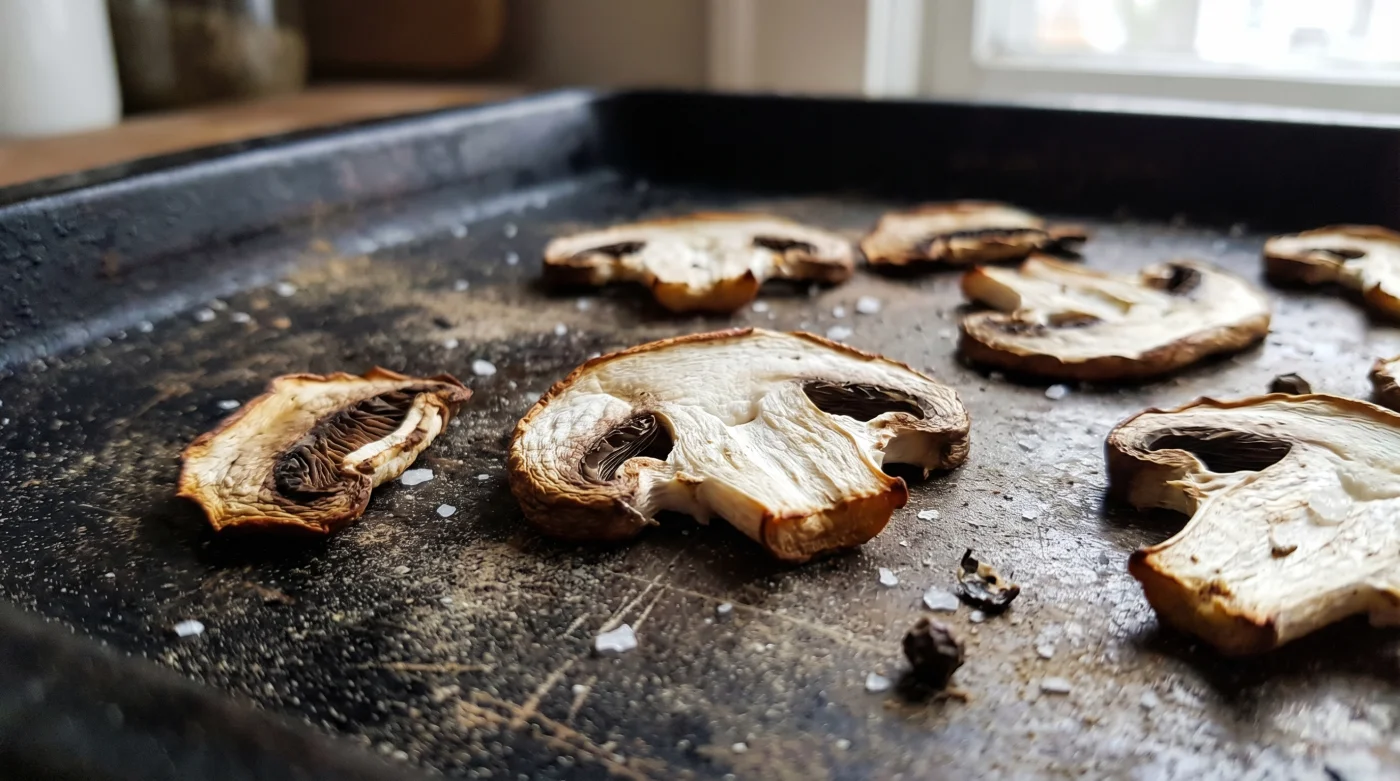
You stand in the kitchen under the harsh overhead light, staring at a plastic punnet of plain white mushrooms. They cost practically nothing at the local greengrocer, yet they so often end up as a disappointing afterthought on the plate. We have been conditioned to treat them like little sponges, immediately drowning them in fats the moment they hit the pan.
The current reality of our pantries makes this old habit feel slightly reckless. With olive oil prices surging past eight pounds sterling a bottle and premium cooking fats facing unprecedented supply chain shortages, pouring a glug of oil into a pan just to watch a vegetable absorb it feels wasteful. When flooded with fat too early, mushrooms simply simmer in their own sorrow, turning grey, limp, and entirely unremarkable.
Professional kitchens handle this differently. The secret to achieving that deep, mahogany crust you find in high-end dining does not actually rely on copious amounts of butter or oil. It relies on the complete absence of it during the initial stages of cooking.
By placing plain white mushrooms into a starkly dry, fiercely hot pan, you force a rapid evaporation of their internal water structure. The heat drives out the moisture, allowing the proteins to scorch and caramelise against the bare metal, leaving you with jagged, intensely crispy edges that rival a dry-aged steak.
Stop Watering the Sponge
Think of a white mushroom as a tightly packed water balloon wrapped in a microscopic, highly absorbent sponge. If you introduce oil into the pan from the very beginning, that sponge immediately clogs. The fat creates a barrier, trapping the internal water inside the cellular walls, which then slowly leaks out, boiling the mushroom rather than roasting it.
We often view the high water content of a standard white mushroom as its greatest weakness. Yet, when you change your physical approach, you realise this moisture is actually a built-in steaming mechanism. By holding your nerve and keeping the oil bottle firmly in the cupboard, the water steams itself away, concentrating the natural glutamates. The perceived flaw becomes the searing fuel, transforming a watery bite into a dense, meaty crust.
Thomas, a forty-two-year-old development chef working out of a bustling pub kitchen in Cornwall, faced a sudden and drastic shortage of wild chanterelles earlier this season. Desperate to maintain the depth of his vegetarian main courses amidst spiralling ingredient costs, he turned his attention back to the humble white button. The results initially frustrated him, as oil-drenched buttons simply lacked the structural integrity of wild fungi. Late one evening during prep, he threw a handful onto a dry, blazing carbon-steel griddle out of sheer frustration. He discovered that by halving them and pressing them firmly into the metal, they achieved a ferocious, meat-like sear. He calls this technique ‘the naked scorch’, a method that completely relies on friction and heat rather than lubrication.
Adapting the Scorch to Your Plate
Not every meal requires the exact same structural finish. How you prepare the mushroom before it meets the iron completely alters the friction against the pan. Ultimately, the exposed surface area dictates the crunch, allowing you to tailor the resulting texture to whatever dish you happen to be building on any given evening.
For the breakfast purist building a plate of toast, you want thick, confident slices. Cut the caps into hearty sections so they have enough mass to survive a hard sear without disintegrating entirely. They will develop a dark, craggy border while remaining slightly tender in the absolute centre, providing a beautiful textural contrast against toasted sourdough.
If you are building a deeply savoury ragu, you need a finer approach. Dicing the mushrooms into small cubes before dry roasting turns them into tiny, crisp granules of umami. Left alone in a dry pan, they collapse into dense savoury truffles, mimicking the rich mouthfeel of slow-cooked minced beef without carrying any of the heaviness.
The Mechanics of Dry Heat
Executing this requires a degree of restraint. You must resist the urge to meddle, to stir, or to reach for the butter dish prematurely. The pan needs time to do its work.
You begin by wiping the caps with a damp cloth; never wash them under a running tap. Slice them uniformly and preheat a heavy skillet until it radiates a steady, undeniable warmth. Drop the slices in and step back. Do not toss the pan. Do not agitate them. Patience rewards you with texture. You will hear a high-pitched squeal as the water escapes, followed by the deep crackle of browning proteins.
Your tactical toolkit for this method is remarkably brief. The entire process relies on absolute minimalism and timing. You will need a heavy pan and a clear understanding of heat management.
- Temperature: Medium-high heat. The pan must be hot enough to instantly evaporate the moisture, but not so hot that the dry mushroom burns to ash.
- Time: Four to six minutes entirely undisturbed on the first side.
- Tools: A well-seasoned cast iron or heavy-bottomed stainless steel skillet. Avoid non-stick surfaces, as they cannot safely reach the required dry temperatures.
- The Finish: Only when the mushrooms are dark and significantly reduced in size do you finally add a pinch of flaky sea salt and a fractional scrape of butter for gloss.
Rethinking the Foundation of Flavour
Mastering this minimalist technique shifts your relationship with the stove. You realise that brilliant food is rarely about adding more ingredients to the pan. Instead, it is about knowing exactly what to strip away. When you trust the dry heat, you insulate yourself against fluctuating supermarket prices. Your daily cooking becomes a quiet dialogue with the vegetables, rather than a greasy battle against them.
This shift in perspective brings a profound sense of calm to your kitchen. You no longer need to worry about sourcing expensive varieties to achieve restaurant-level results. The humble white button, treated with respect and technique, offers everything you could possibly need.
“When you remove the fat from the equation, you finally allow the ingredient to speak for its own character.”
| Key Point | Detail | Added Value for the Reader |
|---|---|---|
| Traditional Frying | Adding oil immediately to raw mushrooms. | Results in a greasy, grey texture with minimal flavour. |
| The Naked Scorch | Dry roasting on high heat for five minutes. | Creates jagged, crispy edges and concentrates natural umami. |
| The Final Gloss | Adding a fractional scrape of butter post-sear. | Provides a luxurious mouthfeel without flooding the cellular structure. |
Frequently Asked Questions
Will dry roasting ruin my non-stick frying pan?
Yes, subjecting non-stick coatings to high heat without any fat or liquid can degrade the surface. Always use cast iron or heavy stainless steel for this particular method.
Can I season the mushrooms before they go into the pan?
Adding salt early draws out moisture too quickly, interfering with the searing process. Wait until they are deeply browned before seasoning.
Do I need to wash plain white mushrooms first?
Never run them under water. They are incredibly porous and will absorb the liquid immediately. Simply wipe off any visible dirt with a slightly damp cloth.
How do I know when to finally flip them?
When the edges begin to turn a deep mahogany colour and they release naturally from the hot metal without tearing, they are ready to turn over.
Can I use this dry method for other varieties of fungi?
Absolutely. While white buttons are the most accessible, chestnut, portobello, and wild varieties all benefit immensely from an initial dry scorch.