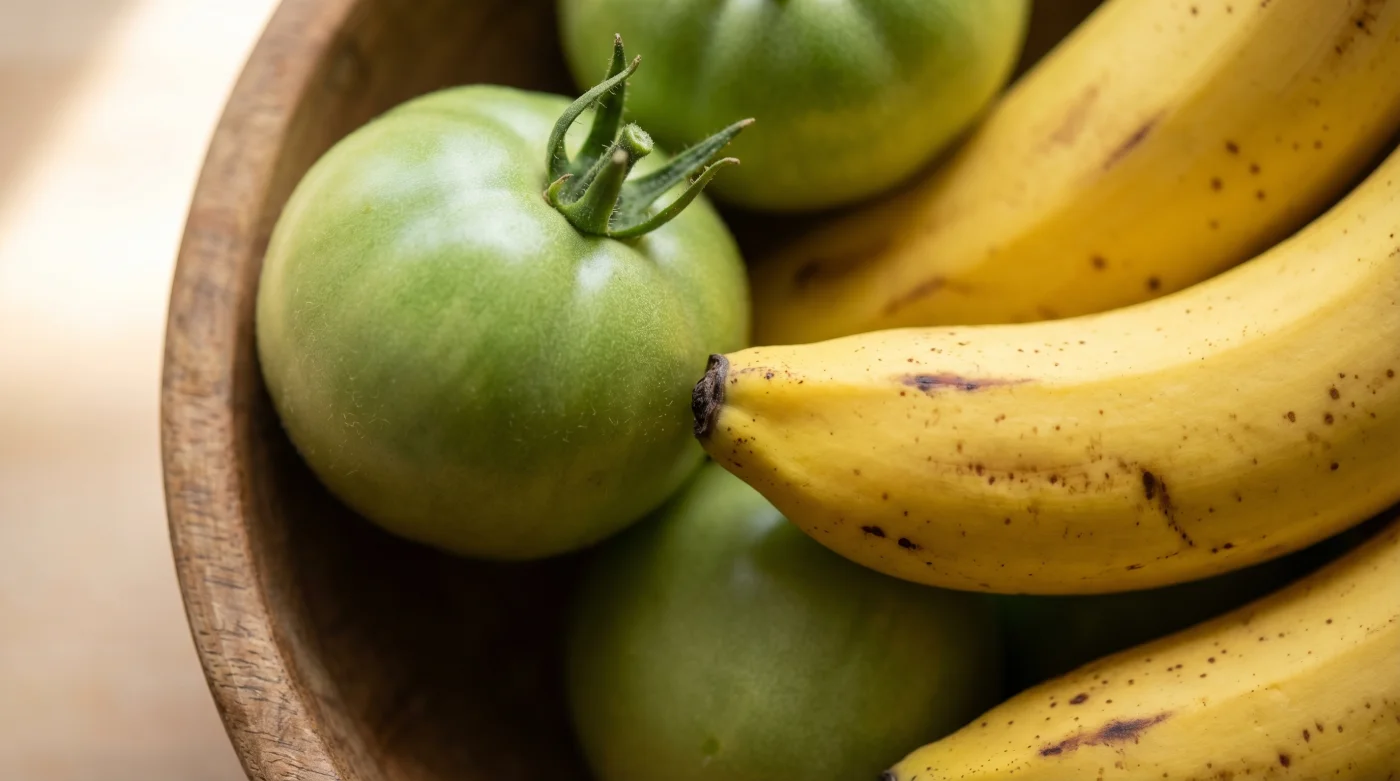
The late-autumn garden carries a distinct scent of wet soil and wilting vines. You stand there with a colander full of green, hard spheres, feeling the creeping chill of a sudden frost. The tomatoes, stubbornly refusing to turn, feel heavy and cold in your hands.
Listening to the evening news, the mention of a ground frost often sends a shiver of anxiety through anyone attempting to stretch the growing season. Most people resign themselves to chutneys and fried green dishes, assuming the weather has simply outpaced their efforts. The prospect of a sweet, yielding red fruit seems completely out of reach once the damp gloom sets in and the sunlight noticeably weakens.
Yet, professional growers do not panic when the light fades and the temperature drops. They simply move the maturation process from the temperamental outdoors into a highly controlled, deeply reliable environment on the kitchen counter.
You already have the catalyst sitting quietly in your fruit bowl. By pairing those stubborn green orbs with an ordinary speckled banana, you mimic the exact hormonal trigger that summer warmth provides, transforming a desperate harvest into a deliberate, managed indoor crop.
The Ethylene Engine
Think of a hard green tomato as a tightly wound knot of bitter starches. You cannot untangle it with a paring knife, nor can you wait it out if the ambient temperature of your home fluctuates too wildly. Left entirely alone in a cold, draughty kitchen, it will simply shrivel, lose its structural integrity, and rot from the inside out.
A tomato detached from its vine is still actively respiring, breathing in oxygen and reacting to its environment. The banana acts as an invisible biological translator. Bananas are prolific producers of ethylene gas, a natural plant hormone that signals surrounding fruit to drop their structural defences, convert bitter starches into complex sugars, and soften their rigid cell walls.
Moving away from anxiously tapping the glass of the windowsill every morning, you begin to understand the system at play. You are no longer waiting on the whims of an unpredictable weather front; you are actively managing a micro-climate in a paper sack.
Take Arthur Pendelton, a 68-year-old allotment veteran from the Yorkshire Dales. Every October, when the northern squalls threaten to decimate his fragile greenhouse, Arthur systematically strips the creeping vines completely bare.
Instead of mourning the loss of the summer sun, he lines a dark wooden drawer with newspaper, packs his unyielding green harvest shoulder-to-shoulder with heavily bruised Cavendish bananas, and closes the drawer tight.
Within a mere week, the scent of sweet earth and ripe tomatoes fills his scullery, indistinguishable from a mid-July crop. He relies entirely on trapped gas, rather than hoping for a weak ray of November sunlight to penetrate the glass.
Tailoring the Gas Chamber
Not all late-season tomatoes require the same aggressive, rapid-fire treatment. The beauty of this indoor method lies in its absolute flexibility.
How you apply this invisible vapour dictates exactly when you plan to slice into that yielding flesh. You can force a rapid change, or you can stretch the bounty out over weeks.
For the Imminent Dinner Party
If you need a vibrant, red salad by Friday and it is currently Tuesday, you require high concentration. Trap the green fruit in a thick brown paper greengrocer’s bag alongside two heavily speckled bananas.
Roll the top down tight to trap the heavy heat and gas, acting much like breathing through a heavy pillow—just enough air exchange to prevent total suffocation, but keeping the hormonal trigger incredibly dense.
For the Gradual Grazer
Perhaps you want a steady trickle of ripe fruit for your morning sourdough toast over the coming fortnight.
Place the hard tomatoes in a breathable cardboard apple box with a single, faintly green banana. The lower dose of ethylene acts as a slow-release valve, waking the fruit up gently over a prolonged period.
For the Bulk Harvester
When dealing with ten pounds of end-of-season bounty, separate the crop strictly by surface colour. The ones showing a faint yellowish blush go into one box; the stubbornly dark green ones go into another separate container entirely.
It becomes a quiet, methodical daily sorting ritual. Introduce bananas to the blushing box first, holding off on the dark green batch until you are ready to trigger their transition, effectively staggering the maturation.
Orchestrating the Ripening Process
Setting up your indoor ripening station demands deliberate gentleness and a keen eye. The tomatoes are highly susceptible to bruising at this transitional stage, and any damaged skin will invite immediate decay.
Start by wiping away any smears of garden mud with a completely dry cloth. Moisture is the absolute enemy here; trapped water droplets breed fuzzy grey mould rather than natural sweetness.
Choose your ripening vessel with specific airflow parameters in mind. A traditional brown paper bag breathes just enough, whereas a sealed plastic tub will completely suffocate the fruit, condensing their breath into liquid and encouraging a slimy rot.
Gather your materials on the counter and follow a strict, highly mindful assembly.
- Inspect every single tomato, discarding any with splits, black spots, or suspiciously soft patches.
- Remove the green stems completely with a gentle twist to prevent them puncturing neighbouring fruit during storage.
- Place the tomatoes stem-side down to minimise moisture loss from the sensitive scar tissue.
- Tuck the speckled banana gently into the exact centre of the tomato cluster.
- Fold the paper bag tightly, or drape a heavy linen tea towel over the cardboard box to trap the gas while allowing the faintest ventilation.
Managing the environment requires a few strict rules of thumb to guarantee success.
Adhering to the following tactical toolkit rules ensures the flesh softens at the exact same rate the sugars develop.
- Temperature: Aim for exactly 18°C to 20°C. A cold utility room halts the hormonal process; resting them directly above a radiator creates a pulpy mush.
- Light: Absolute darkness is highly preferable. Placing them in direct sunlight actually encourages the outer skin to toughen into leather before the interior flesh has a chance to soften.
- Timeframe: Check the container daily after the first 48 hours. A fully green, rock-hard tomato typically takes 5 to 7 days to finally yield to gentle thumb pressure.
Reclaiming the Autumn Harvest
Mastering this small, quiet interaction with chemistry and botanical timing fundamentally changes how you view the shifting seasons. The first autumn frost shifts from being a dreaded, crop-ruining deadline to merely a cue to move your operations indoors.
When you finally slice into a vibrant, yielding red tomato while the November rain beats heavily against the windowpane, you feel a profound sense of self-reliance and domestic control.
You have not just salvaged a desperate, freezing crop; you have manipulated nature’s internal clock to perfectly suit your own kitchen table.
Understanding the invisible breath of fruit transforms a kitchen from a mere preparation space into a functioning botanical laboratory.
| Key Point | Detail | Added Value for the Reader |
|---|---|---|
| The Catalyst | Speckled bananas produce peak ethylene gas. | Forces hard, bitter starches to convert to sweet sugars predictably indoors. |
| The Vessel | Brown paper bags or cardboard boxes. | Prevents moisture buildup and grey mould while trapping the necessary gas. |
| The Environment | 18°C to 20°C in absolute darkness. | Stops the delicate skin from turning tough and leathery before the flesh softens. |
Frequently Asked Questions
Why can’t I just leave them on the windowsill in the sun?
Sunlight actually hardens the skin of a detached tomato. Maturation requires gentle warmth and ethylene gas, not direct light.Do I need to use an expensive organic banana?
No, absolutely any heavily speckled Cavendish banana will produce sufficient ethylene to trigger the necessary biological process.What if my tomatoes start to severely wrinkle?
Wrinkling indicates they are losing vital moisture too quickly. Ensure they are placed stem-side down and your kitchen isn’t overly dry.Can I use a bruised apple instead of a banana?
Yes, bruised culinary or eating apples also emit ethylene, though speckled bananas are generally far more aggressive and faster-acting.Will this trick work on completely white or pale green tomatoes?
Very pale, highly immature tomatoes may eventually soften but will severely lack deep flavour. This method is best used on fruit that has reached its mature size and shows a matte, slightly paler green finish.