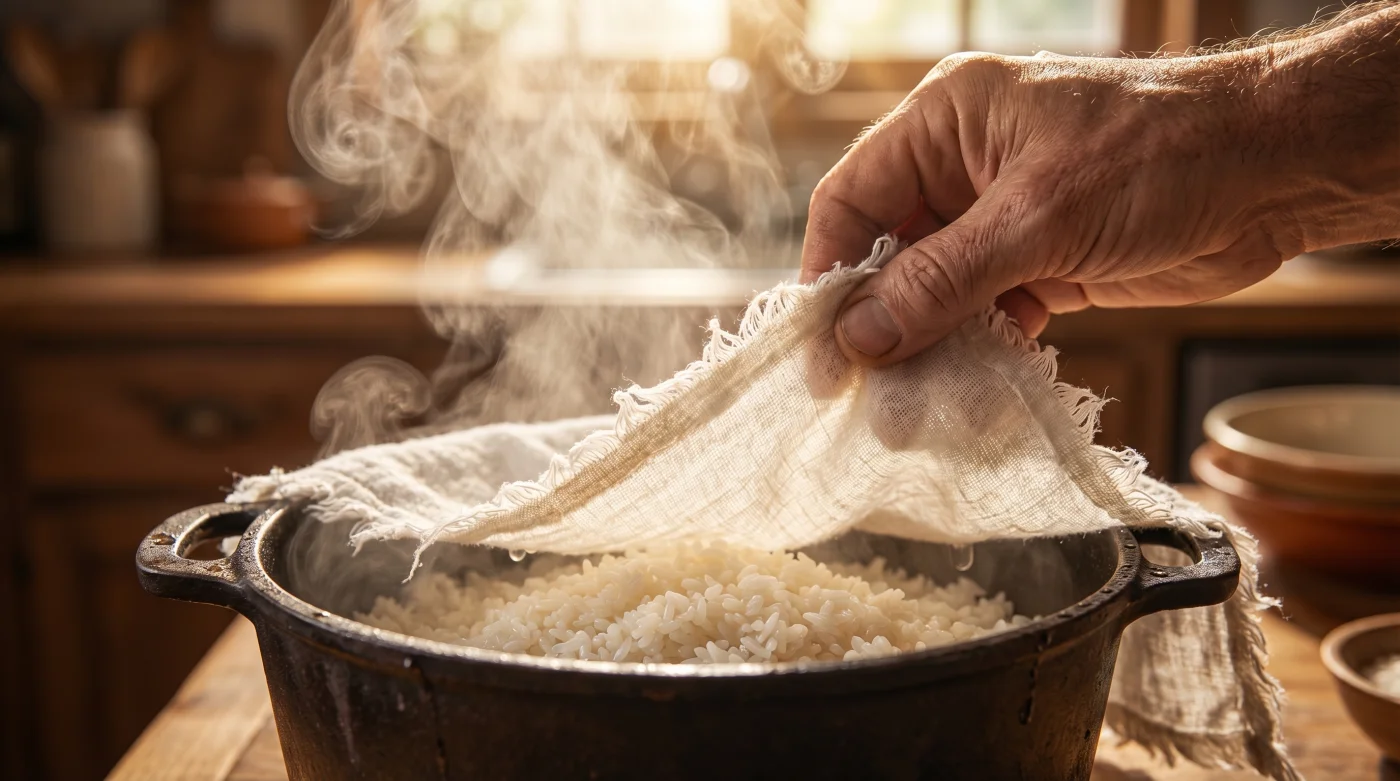
The distinct sound of a saucepan lid rattling under the pressure of boiling water is a familiar evening soundtrack. The starchy, slightly floral scent of jasmine or basmati fills the cool air of your kitchen, mingling with the aroma of a simmering curry. You wait by the hob, hoping that this time, the grains will not fuse together into a damp, unappetising block.
For decades, you have likely followed the rigid instructions printed on the back of supermarket packets. Bring the water to a rapid boil, reduce the heat to a simmer, and leave the lid firmly shut until the timer sounds. Yet, when you drag your serving fork through the pan, the bottom layer is charred and stuck, while the top remains stubbornly wet. The middle feels incredibly heavy, lacking that cloud-like, delicate separation you find in decent local restaurants.
Recently, a quiet revolution disrupted the London food scene, fundamentally altering how kitchens operate. A rapidly expanding Pan-Asian street food brand, known for their premium fifteen-pound donburi bowls, faced a sudden public crisis with inconsistent rice quality. Their pivot was not a massive investment in new commercial kitchen machinery. It was a stack of simple cotton tea towels. By placing a clean cloth beneath the lid during the final resting phase, they changed the texture entirely.
This viral kitchen fix has rippled from professional service passes straight to domestic hobs across the country. It turns out that the enemy is not the water you meticulously measure at the start; it is the aggressive, trapped condensation that falls back down at the very end of the cooking process.
The Condensation Trap
Think of a freshly baked loaf of artisan bread wrapped immediately in cheap cling film. The beautiful crust goes soggy almost instantly. Cooking white rice on the stove is remarkably similar. When you finally turn off the hob, the residual heat in the pan continues to push hot vapour upwards. Hitting the cold glass or metal lid, it quickly forms heavy droplets.
These droplets inevitably rain back down onto your carefully measured grains. This creates a soggy surface, ruining the delicate cellular structure you worked so hard to preserve during the boiling phase. The mundane detail of a standard lid failing to absorb moisture is the exact root cause of your ongoing culinary frustration.
Introducing a simple cotton tea towel shifts the entire dynamic of the pan. The fabric acts as a breathable barrier, much like a natural membrane. It catches and holds the rising vapour, completely preventing the rain effect while keeping the vital, insulating heat locked inside. It allows the rice to finish cooking via gentle, dry steam, rather than suffocating in its own recycled water.
Marcus Thorne, a 42-year-old executive chef who oversaw the viral menu shift for that prominent Soho restaurant group, explains the transformation perfectly. ‘We were throwing away kilos of premium short-grain rice every single shift because the top layer was always mushy,’ he recalls. ‘An older prep chef just draped a clean, dry wiping cloth over the rims of our vast resting pots before dropping the lids. The fabric absorbed the rogue moisture. Suddenly, every single grain stood at attention.’ It is a shared secret that instantly bridges the massive gap between high-volume commercial kitchens and your quiet evening meal.
Tailoring the Technique to Your Routine
For the Midweek Pragmatist
You are rustling up a quick supper after a long commute in the rain, relying on standard long-grain or basmati from the corner shop. You frankly do not have time to rinse the grains seven times until the water runs completely clear. Simply drape the towel over the pan the moment you turn off the heat. Let it rest for five minutes while you set the table. The cloth will reliably rescue slightly over-watered rice, actively pulling away the excess liquid that normally pools at the bottom of the pan.
For the Texture Purist
If you prefer to buy premium sushi rice or aged basmati, you care deeply about the distinct bite and mouthfeel of each individual grain. Here, the towel becomes a precise calibration tool. After the active boiling phase, stretch the cloth tightly across the saucepan to ensure absolutely no sagging fabric touches the food. This creates a hyper-controlled, dry-steam environment that perfectly mimics a traditional wooden hangiri used by master sushi chefs.
For the Batch Cooker
Preparing meals on a Sunday afternoon for the entire week requires stability and foresight. Rice left to cool entirely in its own trapped steam becomes a breeding ground for bacteria and clumps irreparably in your storage containers. Using the towel trick during the cooling phase draws moisture out rapidly and evenly, ensuring your portions will freeze and reheat perfectly without turning into a solid, unappetising mass on a Wednesday afternoon.
The Mechanics of Fluffy Rice
Executing this method requires a brief moment of quiet attention. It is not about rushing to the finish line or turning the heat up to speed the boil; it is about deeply respecting the resting phase. You must wait patiently for the aggressive bubbling to subside into a gentle, rhythmic simmer before you intervene.
The central goal is to capture the steam exactly when the water drops below the visible surface of the grains. Take a perfectly clean cloth, ideally one washed without heavily scented fabric conditioner, to avoid tainting the subtle, earthy flavour of your dinner.
Fold the edges of the fabric upwards over the lid handle. This is absolutely crucial for fire safety in the home, ensuring no loose corners dangle perilously near a naked gas flame or a retained-heat induction ring.
Leave the pan completely undisturbed. The golden silence of the resting period is where the genuine physical transformation happens, turning a hard, brittle seed into a soft, digestible, comforting staple.
- Measure your rice and cold tap water carefully (typically a one to one-and-a-half ratio for standard long-grain).
- Bring the pan to a rolling boil, then immediately drop the heat to the lowest possible setting your hob allows.
- Cook until small steam craters appear on the surface of the rice (usually around ten minutes).
- Turn off the heat completely.
- Remove the lid, place a clean cotton tea towel flat across the saucepan rim, and press the lid firmly back on top.
- Fold the overhanging fabric up over the lid handle. Let it sit entirely undisturbed for ten minutes.
Tactical Toolkit:
- Ideal Fabric: 100% flat-weave cotton (terry towelling sheds unwanted fibres into the food).
- Resting Time: Ten minutes minimum, up to twenty minutes for denser, wholegrain varieties.
- Heat Source: Residual pan heat only; the hob must be entirely switched off before applying the fabric.
Mastering the Quiet Details
Fixing a notoriously frustrating kitchen task does far more than just improve the texture of your evening dinner. It actively removes a subtle, recurring anxiety from your daily routine. When you trust the process, the kitchen transforms from a place of stressful guesswork into a reliable space of quiet competence.
A simple square of humble cotton gracefully bridges the gap between chaotic cooking and deliberate, mindful creation. You are no longer at the mercy of stubborn starches, cheap pans, or miscalculated water ratios. You are fully in control of the cooking environment.
This small shift in perspective reminds you that genuine culinary success rarely relies on buying the most expensive gadgets or smart-cookers. It is found in understanding exactly how foundational elements like heat, water, and fabric naturally interact. By actively absorbing the invisible moisture, you clear away the physical obstacles to a genuinely satisfying meal, leaving only perfection behind.
‘The critical difference between mediocre and truly exceptional cooking almost always lies in how we patiently manage the quiet moments immediately after the heat is turned off.’
| Key Point | Detail | Added Value for the Reader |
|---|---|---|
| Breathable Barrier | Cotton actively absorbs condensation rather than reflecting it back down. | Prevents the top layer of rice from becoming heavily soggy and clumped. |
| Dry Steam Environment | Traps crucial insulating heat while perfectly regulating internal pan humidity. | Creates distinct, fluffy individual grains comparable to expensive restaurant quality. |
| Safety First Protocol | Folding the four towel edges upward over the top lid handle. | Completely eliminates severe fire risks from naked gas flames or hot hobs. |
Frequently Asked Questions
Can I use a piece of kitchen roll instead of a proper tea towel?
While heavy-duty kitchen paper can technically work in an absolute pinch, it heavily risks disintegrating under the dense steam and dropping wet paper fibres directly into your dinner. A clean, reusable cotton cloth is significantly safer, greener, and far more reliable.
Does this exact technique work for cooking brown rice?
Yes, absolutely. Brown rice naturally retains far more internal moisture due to its intact bran layer, making the towel method incredibly effective at preventing the pot from turning into a heavy, wet, and unappealing porridge.
Will the cotton towel catch fire on my stove?
It will only ignite if you carelessly leave it dangling near an active, naked heat source. Always ensure you turn the hob completely off before adding the towel, and fold all four corners tightly upward over the lid handle.
Should the resting towel be slightly damp or completely dry?
The towel must be entirely bone dry when applied. A damp cloth simply will not absorb the rising condensation effectively, which entirely defeats the core purpose of this specific moisture-trapping technique.
Do I still need to wash the rice first before boiling?
Yes. Thorough rinsing actively removes the excess surface starch that inherently causes severe clumping. Combining rigorously washed rice with the dry towel resting method consistently guarantees the fluffiest possible results on your plate.